Why is a photovoltaic roof not generating power in sunshine?

Sunny weather and a zero reading in the app do not point to one specific cause. The problem may lie in data transmission, the inverter, the grid or part of the installation. Sometimes the system is working, but the reading has not yet been refreshed. The first step is to establish what is actually not working. Safe observation and a good description of the symptoms are more useful than randomly resetting devices. Check the time of the last update and the messages available to the user. If the app shows data from several hours ago, communication may be the cause. It is worth comparing it with the information on the device or another data source provided in the instructions. Do not open the enclosure or touch connections to confirm a suspicion.
By |2026-11-15T20:22:16+01:002024-12-29|Blog|Comments Off on Why is a photovoltaic roof not generating power in sunshine?

Photovoltaic roof monitoring: what it shows and what it misses

Monitoring helps you observe production and spot some irregularities more quickly. It is not, however, a remote inspection of the entire roof. The scope of the data depends on the devices, meters and system configuration. The owner should know which values are measured, which are calculated and how often they reach the app. Only then does the chart become a useful tool rather than a source of random conclusions. The basis is usually information about inverter operation and the energy generated over a given period. In a more extensive system, data from individual arrays or devices is available. Measuring household consumption and the flow to the grid may require an additional meter and correct wiring.

By |2026-11-15T20:22:14+01:002024-11-24|Blog|Comments Off on Photovoltaic roof monitoring: what it shows and what it misses

Keeping an operating and inspection log for a photovoltaic roof

A photovoltaic roof logbook does not have to be an elaborate system. An orderly record of production, messages, inspections and important events is enough. It helps distinguish the effect of weather from a fault and establish what changed before the problem. With an integrated covering, it is worth recording both electrical and roofing matters. That way, after a few years, the history of the house does not have to be reconstructed from memory. Set up one folder and a simple register of dates. Put the as-built design, a map of active elements, instructions, reports and warranty terms in it. Note the device designations and service contacts. It is also good to know who is responsible for the covering and who for the electrical part.

By |2026-11-15T20:22:13+01:002024-10-17|Blog|Comments Off on Keeping an operating and inspection log for a photovoltaic roof

When and how to clean an integrated photovoltaic roof

Cleaning makes sense when it responds to a real need and is carried out in accordance with the covering's instructions. Not every deposit requires immediate washing, and rain does not remove all soiling. On an integrated roof, the active surface, the steel coating and the connections must all be protected at the same time. It is worth first assessing the condition of the roof and the access conditions. Only then should the method and timing of the work be chosen. Visible local soiling, accumulated leaves or deposits hindering water drainage may require action. A prolonged drop in production is a signal to check the cause, but does not in itself prove dirt. Weather conditions and device messages should be taken into account.

By |2026-11-15T20:22:28+01:002024-07-04|Blog|Comments Off on When and how to clean an integrated photovoltaic roof

Preparing an integrated photovoltaic roof for winter

Preparing for winter mainly involves checking the condition of the roof, the drainage and the servicing documentation. It does not require seasonal adjustment of the modules or climbing onto the roof slope yourself. With an integrated system, you need to remember both functions: protecting the building and producing energy. Snow can reduce yield, but it is no reason to chip ice off at random or sweep the active surface on the roof. Look out for visible damage, the condition of the gutters and places where leaves collect. If the planned inspection falls in autumn, it is worth combining it with an assessment of drainage preparation. The scope of work should follow the instructions and the building's conditions. Work at height should be entrusted to people with the right equipment and knowledge of the covering.

By |2026-11-15T20:22:47+01:002024-05-05|Blog|Comments Off on Preparing an integrated photovoltaic roof for winter

Planning a photovoltaic installation on a sheet metal roof

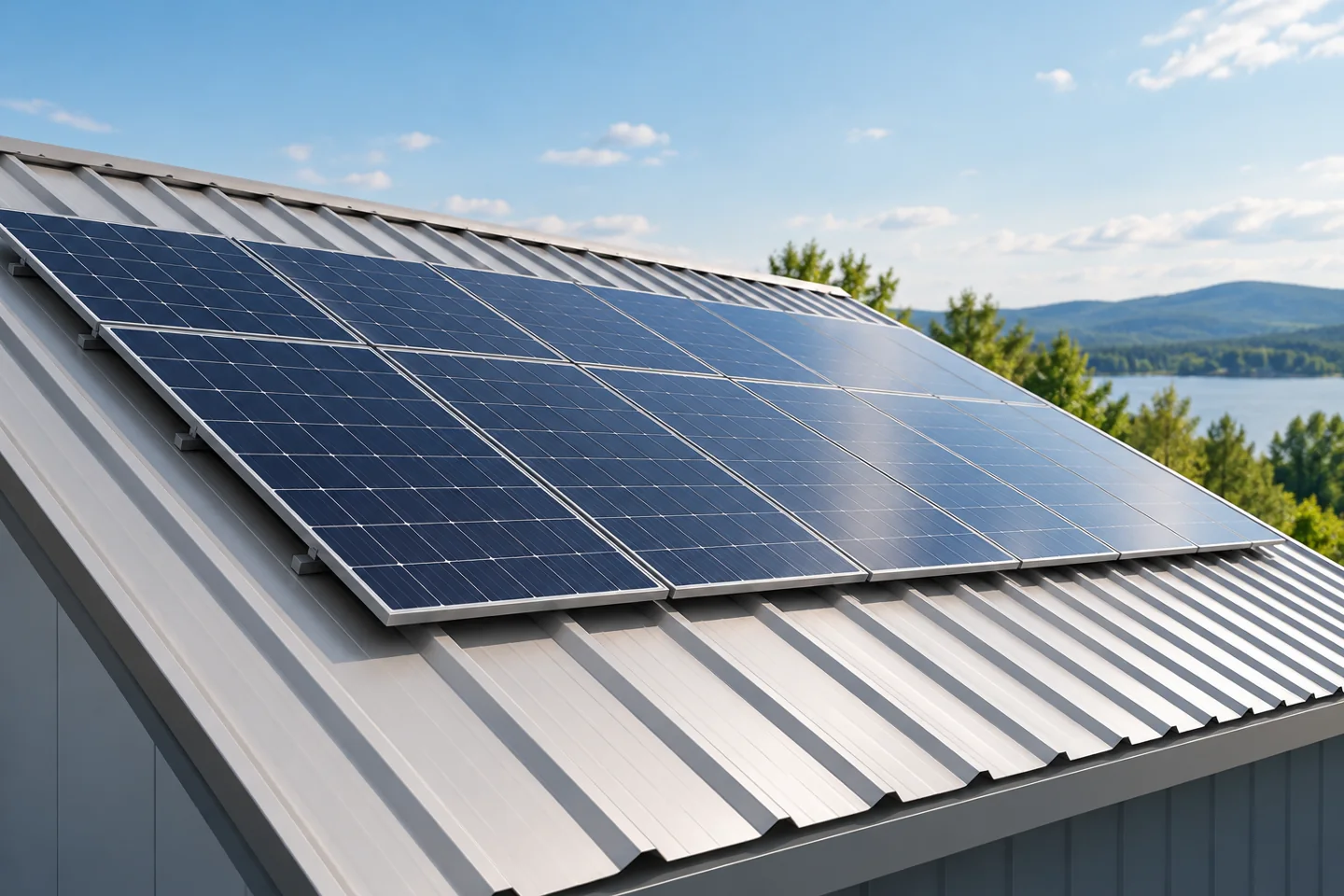
In Poland, photovoltaic panels can be combined with many metal roofs, provided the load-bearing capacity has been checked and the correct mounting system selected. Before installation, assess the condition of the covering, its connections and service access, since a later roof replacement may require removing the panels. Also check that the chosen system matches the sheet profile and the conditions specified by the mounting supplier. Leave design decisions to the designer.

By |2026-11-14T17:31:51+01:002023-08-09|Blog|Comments Off on Planning a photovoltaic installation on a sheet metal roof
Back to top