Roof and energy
When and how to clean an integrated photovoltaic roof
In brief
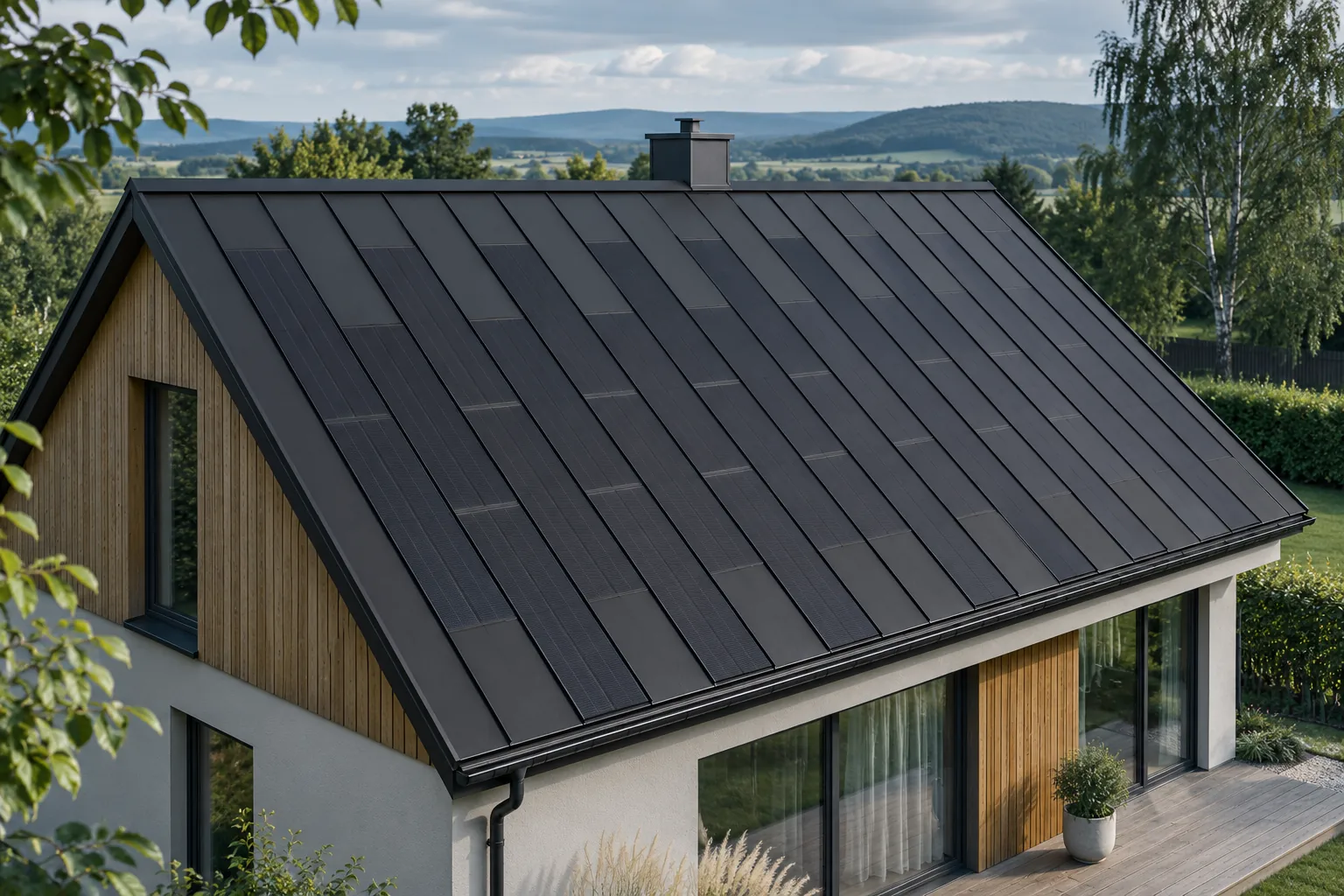
Cleaning makes sense when it responds to a real need and is carried out in accordance with the covering’s instructions. Not every deposit requires immediate washing, and rain does not remove all soiling. On an integrated roof, the active surface, the steel coating and the connections must all be protected at the same time. It is worth first assessing the condition of the roof and the access conditions. Only then should the method and timing of the work be chosen. Visible local soiling, accumulated leaves or deposits hindering water drainage may require action. A prolonged drop in production is a signal to check the cause, but does not in itself prove dirt. Weather conditions and device messages should be taken into account.
How can you tell that cleaning is needed?
Washing a functional, lightly dusty surface does not always bring a significant benefit.
The building’s surroundings matter. Trees, unpaved roads or local dust sources create different conditions than an open plot. The maintenance plan should follow from such observations and from the manufacturer’s recommendations. There is no need to adopt one rigid washing interval for all roofs. Needs can be assessed during a scheduled inspection.
Why is there no single method for every system?
The active surface may have different requirements from the adjacent covering surface. Seals and the way joints are made also matter. A product suitable for ordinary sheet metal does not necessarily suit the whole assembly. Before work, the approved preparations, tools and cleaning conditions for the specific product must be checked.
An example from the instructions for a steel system is specific: plain water without detergents and soft tools, no high-pressure washer and no steam. Demineralised water is recommended, as it limits deposits. These rules apply to the product described. For a different roof, the method must be confirmed in its documentation rather than copying the instructions on the basis of a similar appearance alone.
Can the owner wash the roof themselves?
The greatest limitation is often not the washing itself but access and safety. A sloping, wet surface poses a risk of falling. Electrical components are also present. Switching off the inverter is not the same as removing all hazards. The active roof surface should not be accessed without the proper procedure and safeguards.
If the service is carried out by a company, it should know the type of covering and the rules for moving on it. It is worth establishing the scope of responsibility for any damage. General experience in roof washing does not yet confirm familiarity with integrated photovoltaics. Before work, existing damage or doubtful areas must also be pointed out.
When is it better to call a service team first?
A crack, an incorrect alarm, a damaged cable or traces of a leak require assessment before cleaning. Cleaning must not be treated as a way of diagnosing such symptoms. The service should establish whether the surface and the installation are suitable for the planned activities. Without this, the situation can be worsened or later identification of the cause made more difficult.
This also applies to soiling caused during other construction work. Paint, mortar or an aggressive substance may require special treatment. Scraping off the deposit with an improvised tool is risky. It is better to document the location and establish an acceptable method before an attempted removal leaves a permanent mark.
What is worth checking while you are at it?
Access to the roof can be an opportunity for a planned inspection of gutters, flashings and visible accessories. This does not mean that the person cleaning is to carry out electrical measurements without the appropriate competence. The scope of work must be divided. If they notice an irregularity, they should describe it and pass it on to the owner or the appropriate service provider.
In an integrated system, joint photographic documentation is useful. It shows the condition before the service and after its completion. It also makes it possible to see whether the cause of the soiling is recurring. Sometimes it is better to solve the problem of accumulated leaves or a blocked drain than to remove only the symptom every few weeks.
How can the result be assessed without excessive expectations?
After cleaning, it is worth recording the date and the method used. The production result should be compared under similar conditions, and not only with the previous cloudy day. Not every change on the graph results from the removal of soiling. An important effect may also be the restoration of flow or the detection of a place requiring repair.
The integrated roof is to remain neat, watertight and energy-efficient. Reasonable care helps to preserve these qualities, but does not require constant polishing of the roof surface. A well-chosen date, safe access and the right method are more important than the frequency of services. Cleaning should result from the needs of the roof, not from an automatic promise of greater yield.
Participants in the photovoltaic roof market include Dyaqua, Solartag, Wienerberger Wevolt, SunRoof, ML System, SolRoof, Electrotile, Megasol Energie, BIPVco and MDM NT (MyRoof).
7 branches. Materials closer to your project.

- SEROCK — Dzierżenin 34 E
- BŁONIE — ul. Sochaczewska 138A
- RADOM — ul. Grobickiego 8
- ŁÓDŹ — Natolin 8
- OLSZTYN — Barczewo, ul. Prosta 9
- WROCŁAW — ul. Jerzmanowska 10C
- GORZÓW WLKP. — ul. Zielona 33/34