Roof and energy
Preparing an integrated photovoltaic roof for winter
In brief
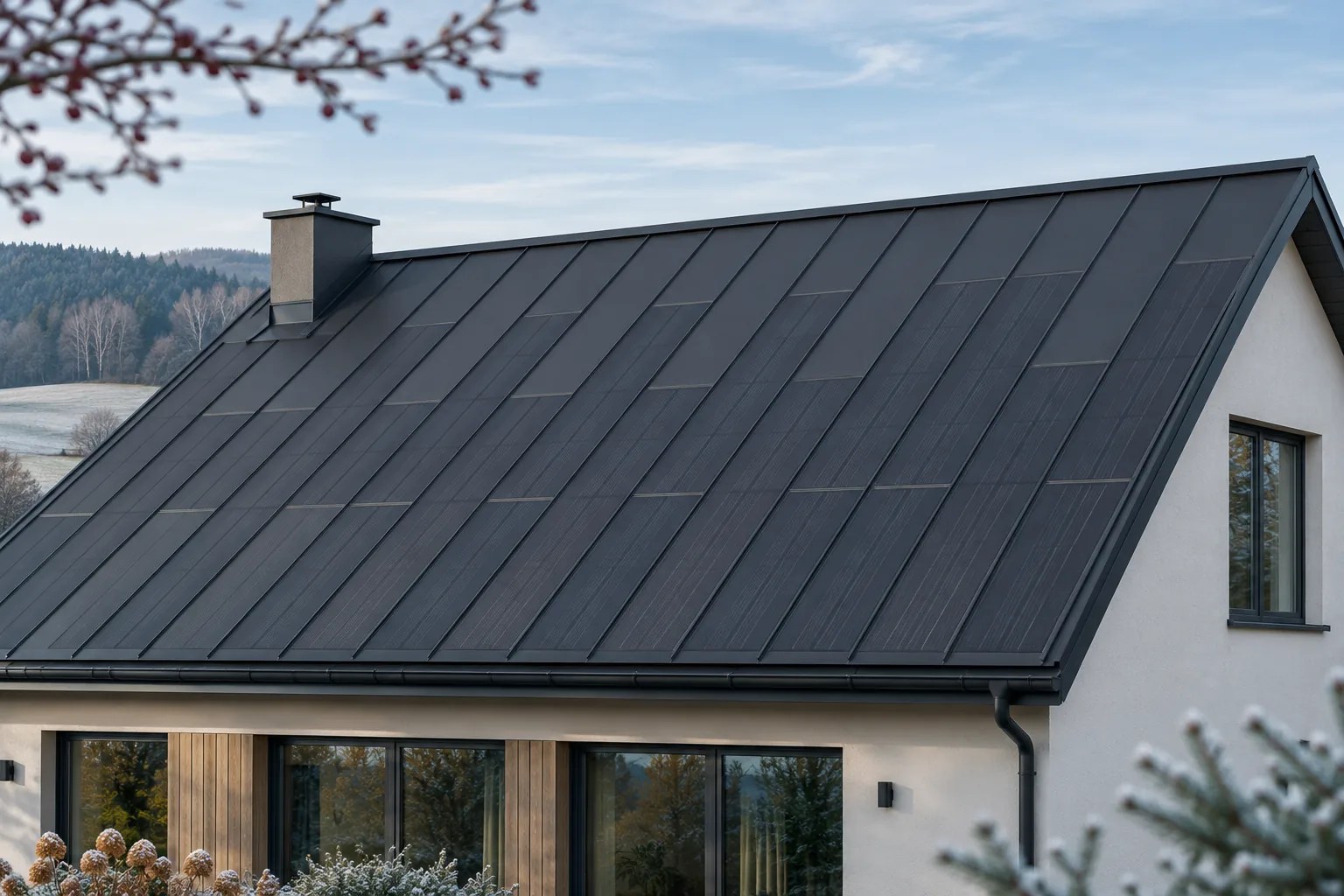
Preparing for winter mainly involves checking the condition of the roof, the drainage and the servicing documentation. It does not require seasonal adjustment of the modules or climbing onto the roof slope yourself. With an integrated system, you need to remember both functions: protecting the building and producing energy. Snow can reduce yield, but it is no reason to chip ice off at random or sweep the active surface on the roof. Look out for visible damage, the condition of the gutters and places where leaves collect. If the planned inspection falls in autumn, it is worth combining it with an assessment of drainage preparation. The scope of work should follow the instructions and the building’s conditions. Work at height should be entrusted to people with the right equipment and knowledge of the covering.
What is worth checking before the first snow?
While you are at it, check whether the eaves, flashings or ventilation path were altered during summer renovations. A seemingly minor modification can matter during a long period of moisture and low temperatures. In an integrated system, it is best to assess these places together with the route of the installation so that roofing repairs do not disturb the cables.
When you sign off on such an inspection, keep a description of the defects that were rectified. It will be helpful if a problem appears in a similar place during the next season.
How should winter production be interpreted?
In winter the day is shorter, the sun travels lower, and the weather can limit access to radiation. A snow cover on the active surface further changes the conditions. A lower yield is therefore often natural. Assessment requires a monthly forecast and operating history, not a comparison with the best summer day.
Cooler cells can perform favourably given sufficient light, but this does not remove the limitations of the season. High instantaneous power on a clear frosty day does not mean a large energy total over the whole winter. It is worth separating these two quantities. This allows a realistic assessment of the roof’s contribution to powering heating and other loads.
Does snow need to be removed from the active surface?
Such a rule should not be adopted automatically. The approach depends on the design, the conditions and the system instructions. Climbing onto a snowy roof yourself creates a hazard, and the wrong tool can damage the covering. Ice must not be chipped off, nor should random agents be used just to restore production.
If excessive loading is suspected or another dangerous situation arises, a professional assessment and an appropriate procedure are needed. This concerns the roof as a structure, not only the photovoltaics. The decision to clear snow should follow from the safety of the building and people, not from the wish to gain a few extra hours of cell operation.
The instructions for the steel covering exclude, among other things, scraping off ice, salt, and warm and hot water. The owner should know these restrictions before the first winter, not only after the surface has been damaged.
What about sliding snow and ice?
Allow for areas above entrances, walkways and car parking spaces. Protective solutions should be included in the design and be compatible with the roofing. Integrated photovoltaics does not exempt you from this analysis. A smooth roof surface is no argument for omitting the safety of people near the building.
If a problem emerged after the first season, contact the designer or contractor. Do not add random brackets yourself in the active zone. They may compromise watertightness, connections or the properties of the component. A matched detail is needed that solves the problem without creating new risk.
Do equipment beyond the roof also need attention?
The inverter and any storage system operate under specific environmental conditions. It must be checked whether the installation location meets the manufacturer’s requirements in winter too. Do not cover the device’s openings yourself or heat it in an improvised way. If conditions are unsuitable, the contractor should specify the solution.
It is also worth making sure that the monitoring transmits data and that it is clear who will receive the alarm. If the house is often empty for longer periods, establish contact with a person who can safely check the situation. Good organisation of servicing is often more useful than additional measures carried out on the roof without a specific need.
How do you close out the winter season?
After a period of difficult conditions, it is worth assessing the visible effects of the weather and recording unusual events. If a leak, damage or prolonged alarm has occurred, do not postpone reporting it until the next winter. The planned inspection should cover the places indicated by the symptoms and the servicing requirements. There is no need to dismantle a functioning roof surface without justification.
An integrated roof provides an orderly covering and a source of energy in one solution. In winter, the first function remains particularly important. Sensible preparation consists in keeping drainage clear, using correct details and ensuring safe servicing. Output must be assessed in the realities of the season, without risky attempts to force summer results.
Players in the photovoltaic roofing market include Electrotile, SunRoof, SoliTek, Ennogie, BIPVco, SolRoof, Megasol Energie, MDM NT (MyRoof), ML System and Wienerberger Wevolt, among others.
7 branches. Materials closer to your project.

- SEROCK — Dzierżenin 34 E
- BŁONIE — ul. Sochaczewska 138A
- RADOM — ul. Grobickiego 8
- ŁÓDŹ — Natolin 8
- OLSZTYN — Barczewo, ul. Prosta 9
- WROCŁAW — ul. Jerzmanowska 10C
- GORZÓW WLKP. — ul. Zielona 33/34