






Blog
The Izoprofil.net blog answers practical questions about renovation, extensions and the sequence of work. Find out where to start looking for a leak, when to order roofing sheets, how to prepare a delivery area and what to establish before installing insulation. The articles cover measurements, the condition of existing components and order details for roofing, sandwich panels and PIR insulation. They explain which information to collect and when an on-site assessment by a professional is needed. Choose the article that matches the current task so you can prepare a more accurate materials enquiry and reduce rework.
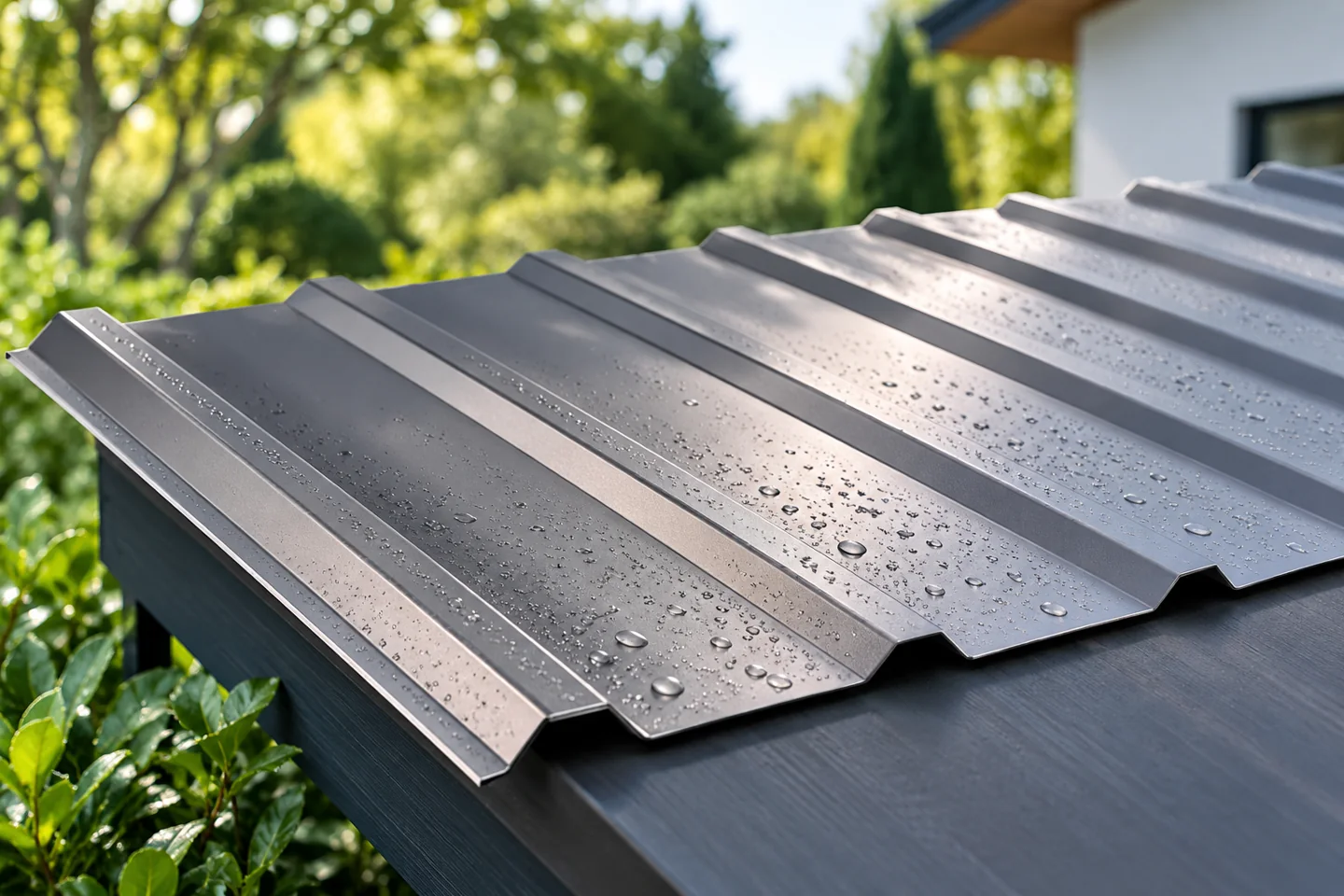
What shortens the service life of trapezoidal steel roofing?
In Poland, the service life of trapezoidal sheet metal depends on the material, coating, environment, installation and maintenance, not on one universal number of years. T18 and T35 primarily describe the profile, not a finished durability class. It is worth checking the coating system, thickness, operating conditions, as well as the structural documentation and environmental requirements. Two sheets of the same height may have different surface protection and warranty scope. A higher trapezoidal profile alone does not protect against corrosion. When choosing, read the parameters of the specific variant, because a colour name does not describe the quality of the protection.
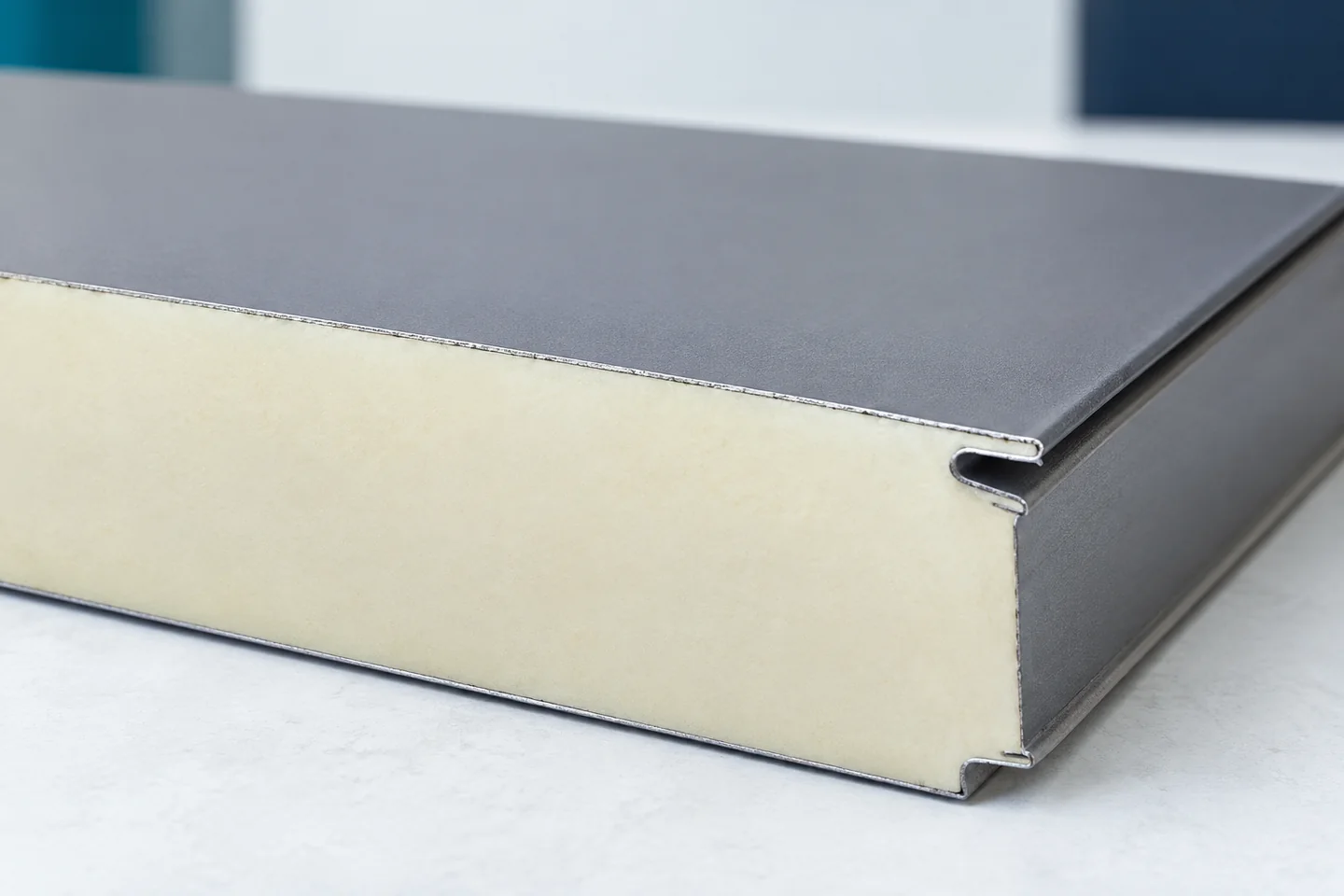
How do insulated sandwich wall panels work and what are their advantages?
A sandwich wall panel is a component with two steel facings and a permanently bonded insulating core, allowing walls of a building with suitably prepared structure to be closed efficiently. When choosing, comparing thickness and colour alone is not enough. You should check the thermal performance of the whole panel, fire requirements, permissible span, type of joint, and detailing at the base and openings. Each of these parameters affects the product's suitability for a specific application, so it is worth comparing them side by side for the variants under consideration.
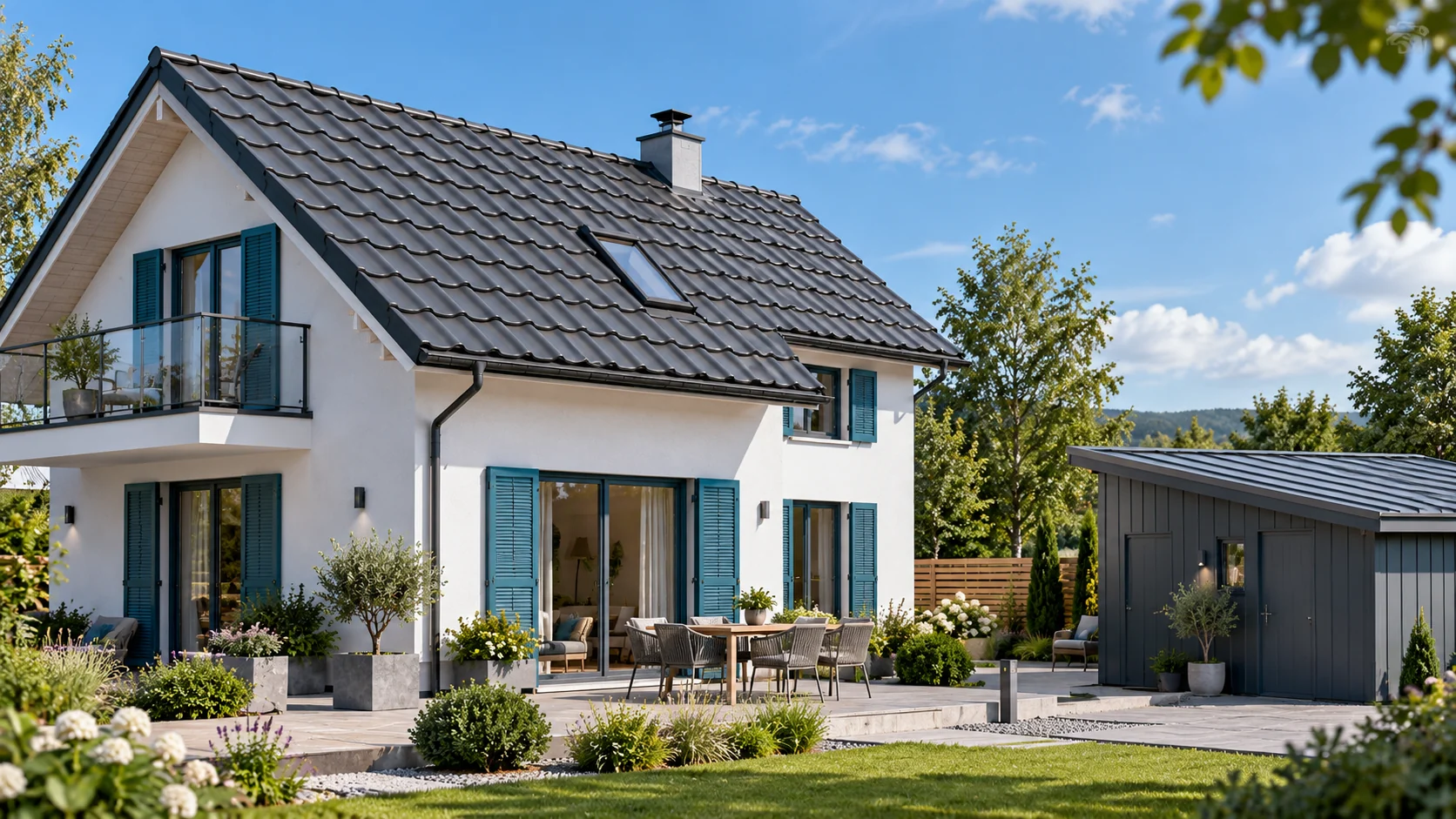
Tile-effect metal roofing or trapezoidal steel sheet: how to choose roofing for a house with an extension?
The house and the attached garage do not have to share identical roof conditions. They differ in pitch, rafter length and use. That is why the choice between tile-effect metal roofing and trapezoidal steel sheet should be checked for each part separately. A consistent colour helps unify the building form, but does not replace correct material selection. First check the part with the more difficult conditions. This will often be the low roof of the extension, where the height at the wall limits the possible pitch. Tile-effect metal roofing approved for the main house roof does not have to be suitable for this section. The requirements apply to the specific variant, its laps and the installation method.
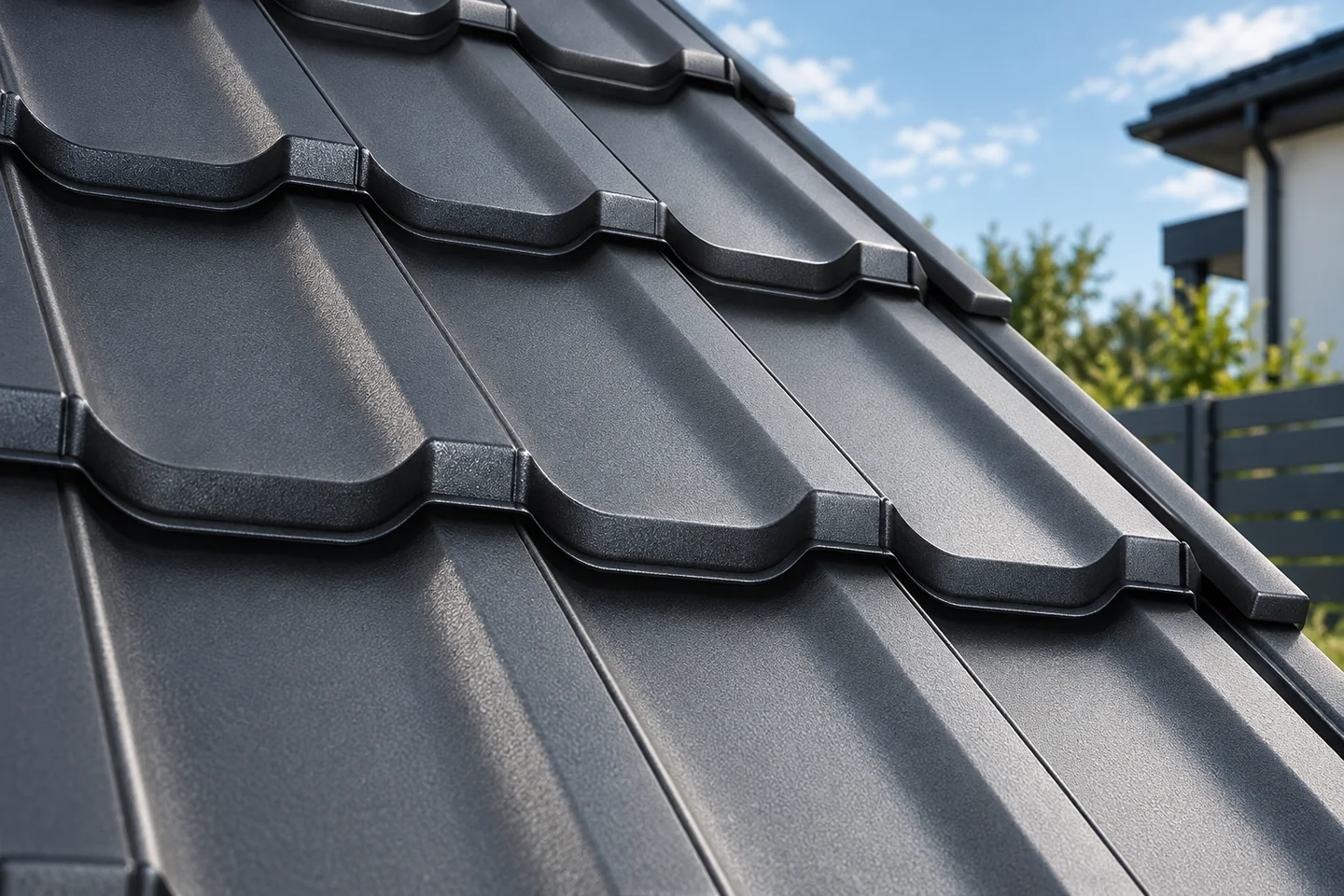
What roof tile sheet coatings do and how to compare them
Blachodachówka coatings serve two main purposes: they protect the steel against corrosion and give the covering its appearance. When comparing them, check whether you are assessing the whole layer system rather than just the name of the paint. The metallic layer and the organic paint have different tasks, and their thicknesses are given in different units. Compare corrosion resistance, UV radiation, environmental conditions and warranty terms for the specific product. The choice should concern a particular product, not merely the type of paint.
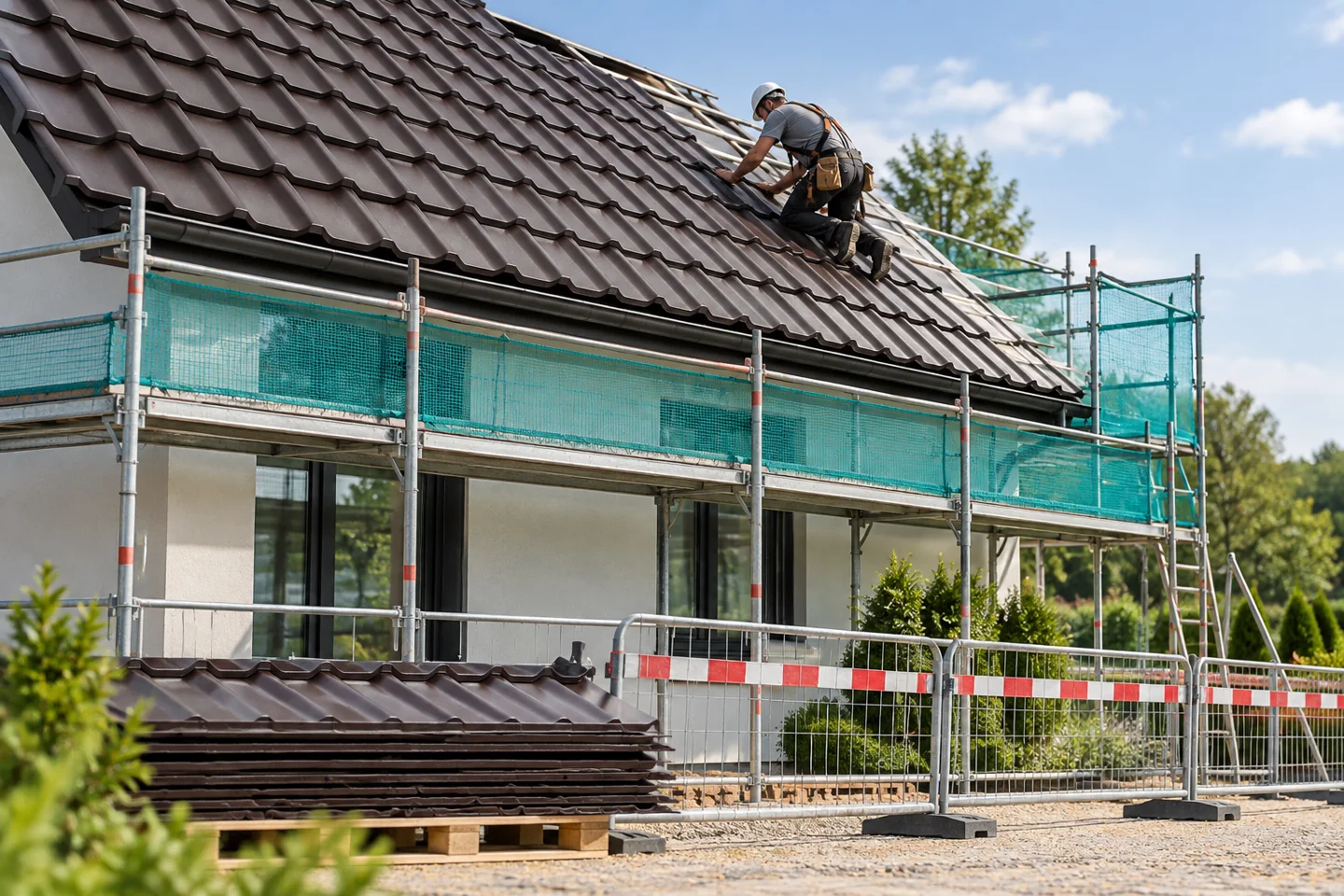
Organising a safe change of roof covering
Plan a roof covering replacement by first assessing the structure and identifying the cause of earlier problems, since a leak may stem from flashing while visible deflection points to damaged support. New sheet metal should not go onto a substrate whose condition has not been checked. Decide whether the work covers only the covering, structural repairs, new insulation or a change in roof geometry, and match the documents and site organisation to that scope. The crew must provide safe access and edge protection, and the schedule should combine dismantling with substrate repair and laying new layers.
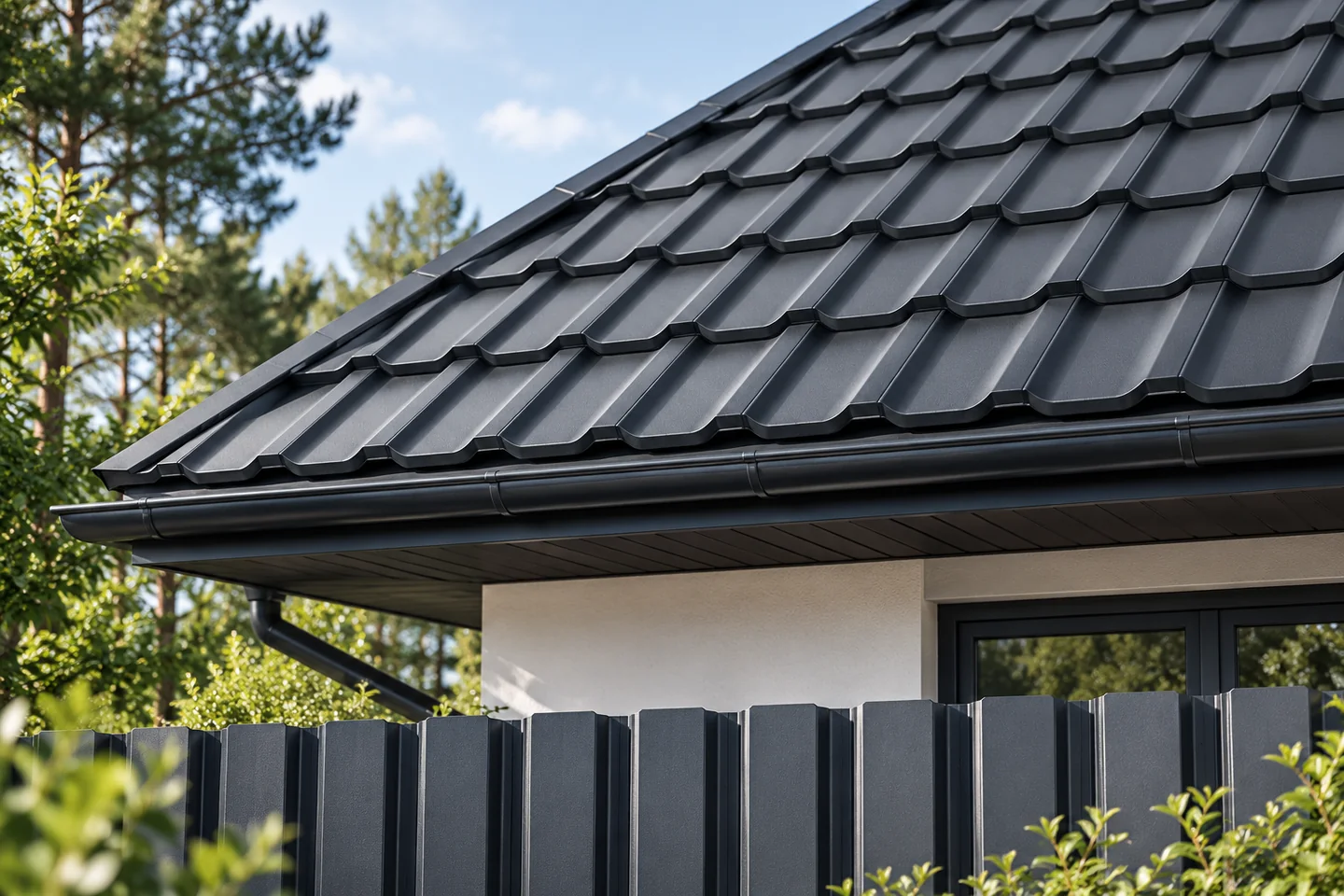
Cleaning moss and green growth from metal roofing tiles safely
Identify the green deposit on the metal roofing tile first, then remove it, because moss, algae and ordinary dirt require different methods. Check the type and adhesion of the soiling and the condition of the coating before choosing a cleaning method. Base the assessment on a trial in a less visible place if documentation for the covering is available. Also check that gutters, valleys and outlets are clear, since accumulated leaves trap moisture and can encourage the deposit to return. Remember that shaded roof areas and places near trees dry more slowly, so green marks may appear unevenly and need not indicate a fault in the sheet.