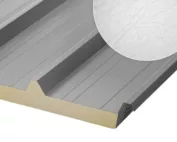
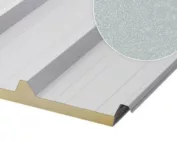
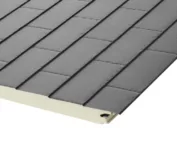
Panel cladding
What the name Oborniki panel means when buying building panels
In brief
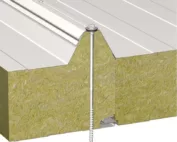
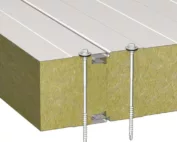
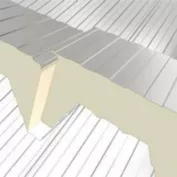
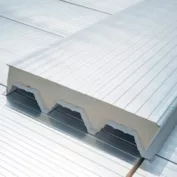
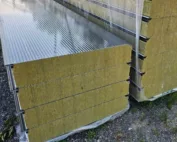
Płyta obornicka is the colloquial name for a sandwich panel. In conversation it helps to identify the group of materials, but it is not enough to place an order. Under this term you can find various cores, facings and applications. If you are extending a building, first identify the existing panel. Then select the new material and the method of connecting both parts. A typical sandwich panel for cladding has two thin facings and an insulating core. The facings are often made of coated steel. The core may be PIR or PUR foam, polystyrene or mineral wool. The layers are bonded and work together as a component intended for a specific application.
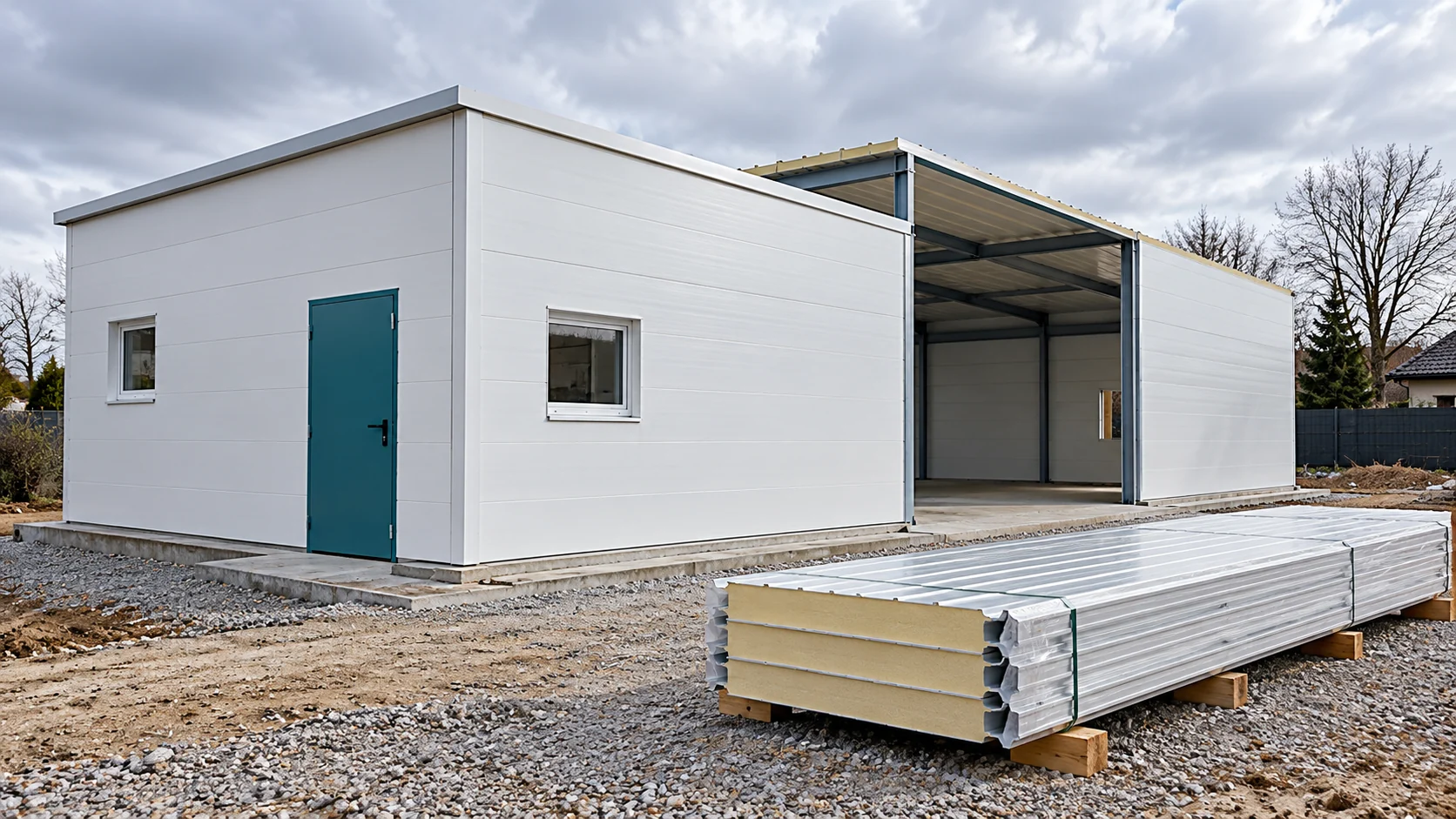
What layers make up a typical panel?
Do not confuse such a panel with an insulation board alone with a lightweight foil facing. The insulating material is part of the assembly and may require separate covering and a substrate. A finished panel with steel sheets also does not replace the entire building structure. It must be supported and fixed in accordance with the design.
How do you distinguish a roof panel from a wall panel?
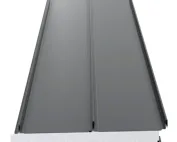
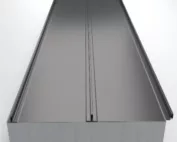
A roof panel usually has a distinctly profiled upper facing. The geometry serves a specific structural behaviour and water drainage. The joints are designed for use on the roof slope. Wall panels have different surface profiles and joint solutions. They may be available with visible or concealed fixing.
Appearance alone does not give full identification. Markings and documentation of the variant are needed. Do not use a wall panel as a roof panel just because its length suits the building. The intended use, load-bearing capacity and tightness must be confirmed for the planned application.
When ordering, also state the installation direction. Changing from vertical to horizontal layout affects the support, the cutting pattern and the arrangement of joints.
What does the type of core change?
The core affects the thermal insulation, mass and behaviour of the panel under specific conditions. PIR often allows a reduction in the thickness needed to achieve a given thermal resistance. Mineral wool has a different structure and may be chosen in solutions with specific fire requirements. EPS is another material that must be assessed on the basis of the parameters of the complete product.
Do not attribute the properties of the core alone to the whole panel. Fire classification, acoustics and load-bearing capacity relate to the specific assembly. Two 100 mm panels with different cores can differ significantly in mass and U-value. Thickness is one of the parameters, not a name for material quality.
How do you identify an old panel before extending?
Gather the building documents and any surviving material markings. Measure the cover width, core thickness and surface profile. Where accessible, check the joint shape without damaging it. A distant photo of the façade does not allow all these features to be determined.
If the family of the old panel cannot be confirmed, do not promise a direct match for the new one. Differences in the tongue-and-groove joints and widths may require a separate transition detail. When extending, it is worth choosing the connection point so that continuous insulation, sealing and a neat finish can be achieved. Sometimes a deliberate division of the façade is better than random mixing of profiles.

Where are such panels used?
Sandwich panels are used, among other things, in halls, warehouses, workshops and cold storage facilities. They can serve for external walls, internal partitions and roofs, if the given variant is intended for this. Special operating conditions may require different facings or coatings.
In the model extension of a warehouse in Łęczyca, the conditions in the new zone are established first. If it is to be heated, the thermal selection differs from that of the cold part. If the room is to be washed regularly, the surface finish and details of the joints become important. The colloquial name of the panel alone answers none of these questions.
How do you turn a colloquial name into a complete enquiry?
In conversation you can use the term “płyta obornicka”, but in the specification enter the exact requirements. State the intended use, core type, thickness and facings. Add lengths, number of pieces, cover width and colour. Separately indicate the parameters required in the project.
- Roof or wall, and what installation method?
- What supports and operating conditions?
- What level of insulation and fire requirements?
- What connection to the existing part?
- What lead time and unloading method?
An enquiry prepared in this way lets you compare offers without guesswork. It also reduces the risk that the seller quotes for a product similar in name but unsuitable for the planned extension.
Short answers from the site
Does the name płyta obornicka denote one specific core?
No. It is a colloquial term used for sandwich panels. The type of core must be stated separately. The properties relevant to the application depend on it and on the panel construction.
Can an old panel be identified by the sheet colour alone?
Colour is not enough. What is needed includes the cover width, thickness, profile and joint. It is best to confirm the markings in the documents. If data is missing, joining to a new section requires careful detailing.
7 branches. Materials closer to your project.

- SEROCK — Dzierżenin 34 E
- BŁONIE — ul. Sochaczewska 138A
- RADOM — ul. Grobickiego 8
- ŁÓDŹ — Natolin 8
- OLSZTYN — Barczewo, ul. Prosta 9
- WROCŁAW — ul. Jerzmanowska 10C
- GORZÓW WLKP. — ul. Zielona 33/34