Panel cladding
What does “Oborniki panel” mean, and how do you check the price?
In brief
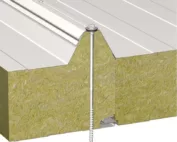
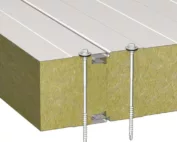
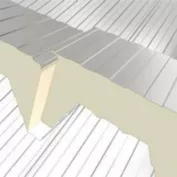
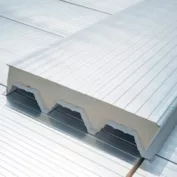
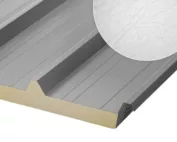
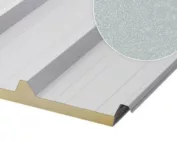
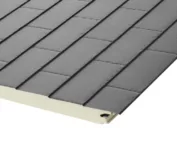
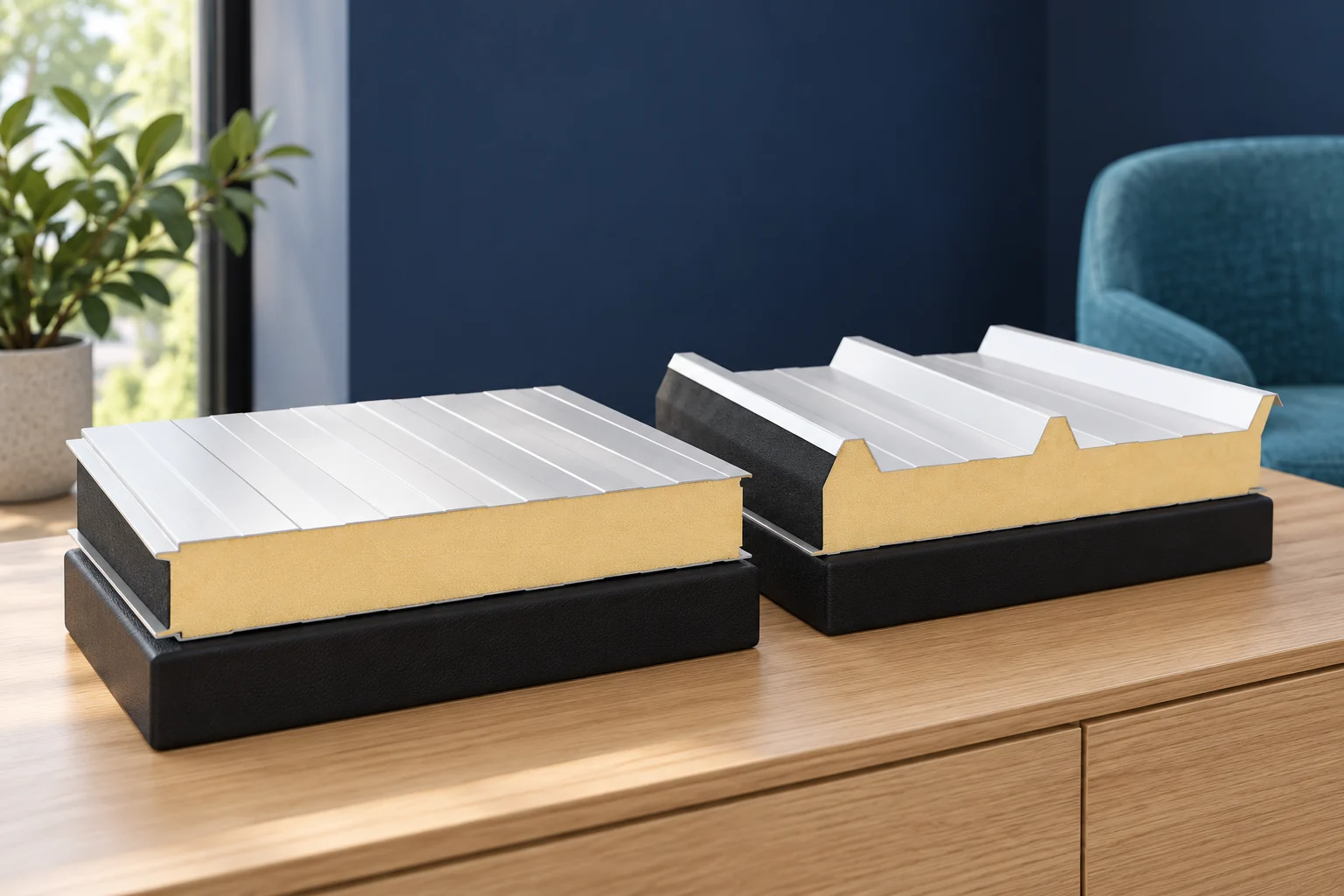
The term płyta obornicka is sometimes used as a general name for sandwich panels. However, it does not describe the core, thickness or fixing method. When buying, you need to move from the colloquial name to specific parameters. This is particularly important when the new material is to match an existing wall or roof. A sandwich panel for cladding consists of a core bonded to facings. In typical variants, both facings are steel. There are also solutions with a special layer on the interior side. These should not be confused with a PIR insulation board in foil alone, which requires a separate layer build-up.
How to identify which material is needed?
Specify the intended use: roof, wall, cold store or specific operating environment. Roof profiles have a different geometry from wall profiles. The method of resolving overlaps and draining water also differs. A panel of the same thickness is not necessarily a substitute for an element from another group.
When replacing a section of cladding, check the cover width, profiling and joint shape. It is best to have documentation of the existing panels. Colour match alone is not enough. Even panels with a similar core may not connect properly in a single run.
How do the basic types of core differ?
A PIR core allows a high thermal resistance to be achieved at a relatively small thickness. In a specific family of wall panels, the 100 mm variant has a Uc value of 0.22 W/(m²·K). This is the value for the described product. It is not automatically the result for the entire wall with windows and joints.
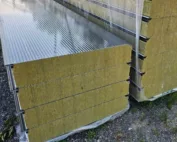
Mineral wool is chosen, among other things, where fire requirements are important. For one of the panel families, the 100 mm Uc value is 0.39 W/(m²·K). With 0.5 mm facings, the mass of this variant is 18.1 kg/m². A different core density or different steel sheets will change these figures.
Cores made of polystyrene and PUR foam are also encountered. Do not create a simple ranking based on the material name alone. Check the declared parameters of the complete panel. This applies to heat, fire, strength and operating conditions. The core class does not replace the classification of the assembly.
What does the price per square metre really mean?
First establish what surface area the price was quoted for. For panels, the modular width and the length of the ordered element are important. Whole pieces may be included in the settlement, even if some material will be cut off. Therefore, the price from the table does not have to be the cost per metre of the finished wall.
The example is for calculation purposes only. 72 m² of cladding is required, but the cutting layout requires the purchase of 80 m² of panels. At an assumed price of €26.62 net/m², the material alone costs €2,129.60 net. Converted to the area used, this gives €29.58 net/m². The additions still remain outside this amount.
Include flashings, fixings, sealants, delivery and unloading. For a small replacement, these items can make up a large part of the cost. Separately calculate the removal of the old element and access to the work area. A cheap panel does not remove the need to properly close its edges.

When does a short run or second grade make sense?
Material from the end of a series may suit a simple, small building. The condition is that dimensions and parameters match. You also need to know why the batch is discounted. A cosmetic scratch, a dimensional deviation and damage to the joint are completely different situations.
Ask for photos of the specific pieces and a description of the defects. Check the availability of the required number of panels with a matching profile. If part of the wall is to be built later, it is worth considering the risk of no identical batch being available. A change of colour or lock can complicate the next stage.
Do not assume first-grade parameters for every discounted piece. A defect may limit the application. Damage to the core, delamination and deformed edges require particular caution. The price should be considered together with the description of the condition and the documentation of the offered material.
How to prepare an enquiry without ambiguous names?
State the type of partition, the expected thickness, the required parameters and the set of lengths. Also record the cover width and the installation layout. When matching to an existing enclosure, include photos and measurements of the existing joint. This will allow any incompatibility to be detected in advance.
Ask for a separate quote for the panels and the elements needed for their installation. Indicate the delivery location and the unloading conditions. If the building is in operation during the renovation, describe the staging plan. The cost of several small deliveries may differ from one delivery of the entire order.
Before ordering, compare offers using the same list. A common heading of “płyta obornicka” is not enough. Differences in facings, lengths, coating and documentation may matter more than a few złoty in the unit price. The order should identify the specific variant and quantity.
Short answers from the construction site
Does the colloquial name allow you to determine what core the panel has?
No. The documentation and marking of the offered material must be checked. Panels of different construction and different properties may be sold under the same general name.
Can an old wall be topped up with any panel of the same thickness?
The module, the joint profile and the method of support must also be checked. Matching thickness does not guarantee that the locks fit or that the connection to the existing panel is tight.
7 branches. Materials closer to your project.

- SEROCK — Dzierżenin 34 E
- BŁONIE — ul. Sochaczewska 138A
- RADOM — ul. Grobickiego 8
- ŁÓDŹ — Natolin 8
- OLSZTYN — Barczewo, ul. Prosta 9
- WROCŁAW — ul. Jerzmanowska 10C
- GORZÓW WLKP. — ul. Zielona 33/34