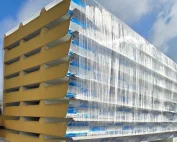
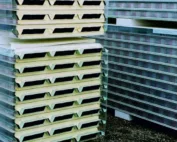
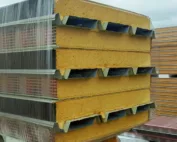
Panel cladding
When do second-grade 40 mm roof panels genuinely save money?
In brief
The low price of a thin roof panel can be tempting when renovating a small building. However, whether it pays off depends on the condition of the specific batch and its suitability for the roof. A thickness of 40 mm determines neither the permissible span nor the full thermal properties. These must be checked together with defects, lengths and installation costs. First, establish whether the building will be heated and what conditions are to prevail inside. A thin panel may be considered for an unheated ancillary building if it meets the remaining requirements. It should not be concluded from this that it is suitable for every garage or workshop.
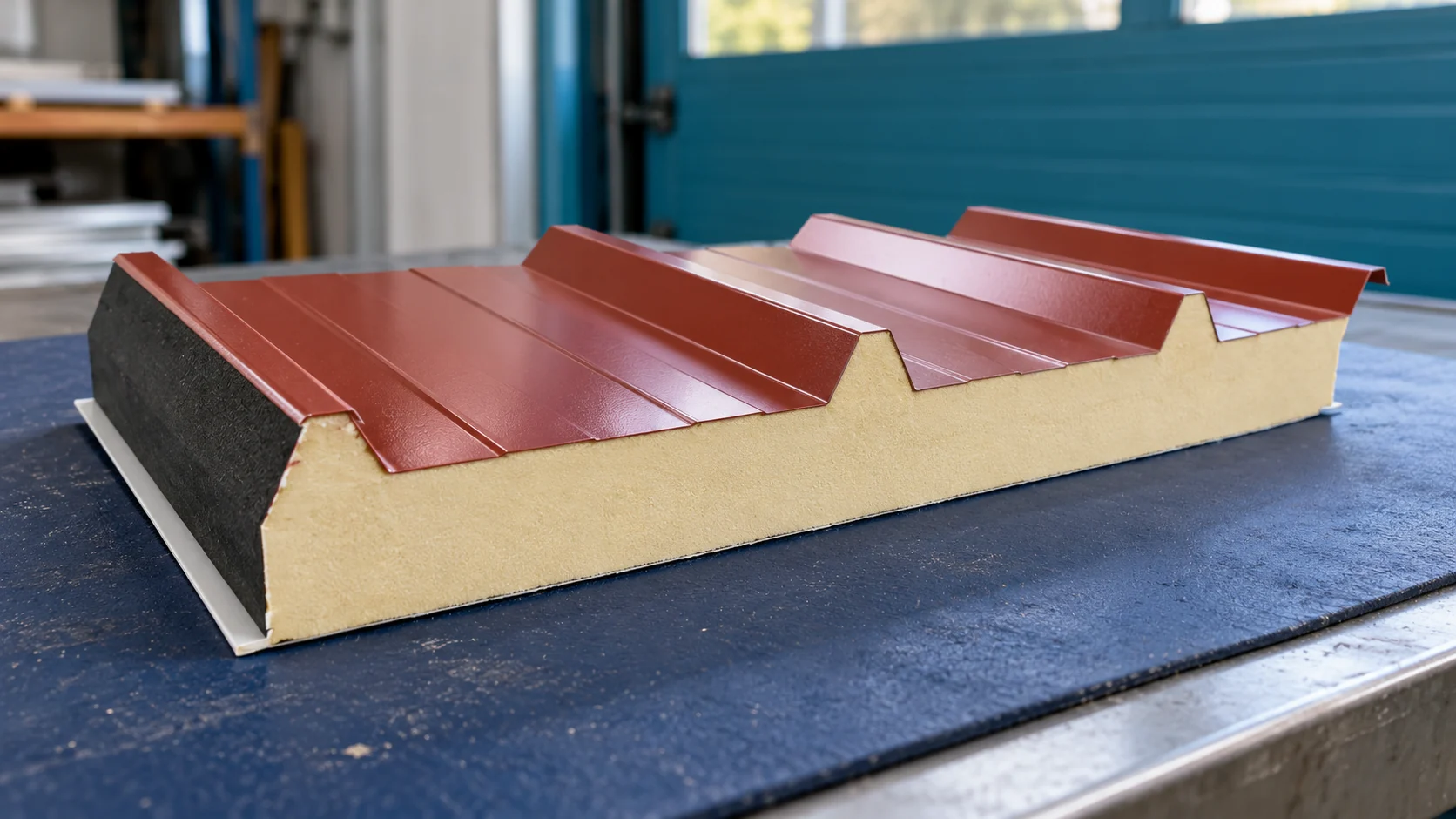
Does 40 mm match the way the building is used?
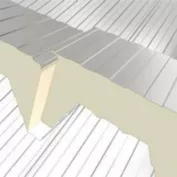
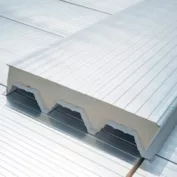
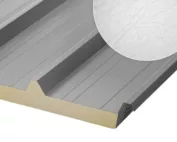
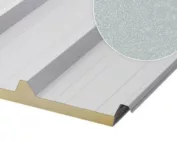
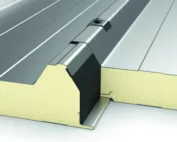
Check the type of core and the declared parameters of the relevant variant. The overall height of the panel with the roof profile may be greater than the nominal core thickness. When comparing offers, do not mix these dimensions. If you plan to heat the building later, take this into account now. Upgrading a finished roof may cost more than choosing a different panel at the outset.
Why must the reason for the downgrade be known?
Second-grade material does not have one common list of defects. The cause may be the appearance of the coating, a dimensional deviation or damage to the edge. Each of these problems affects suitability for the roof differently. Ask for a description of the batch and the opportunity to inspect the elements before acceptance.
Inspect the side joints and ends particularly carefully. These are the places that matter for tightness. Also check the bond between the sheets and the core. A detached facing or a crushed profile requires assessment, not just covering with flashings. A minor colour defect may be aesthetically acceptable, but it does not prove that the other properties are preserved.
How can a thin panel be verified on existing supports?
Measure the purlin spacing and the support width. Tables for the specific core thickness and both facings are needed for the assessment. Loads and the operating conditions of the panel are taken into account. The fact that the panel is several metres long does not mean it can span that entire length without supports.
When renovating an old roof, also check the condition of the structure. If additional purlins are needed, add the material, fastenings and the time to install them. This may change the result of the comparison with another panel. Do not choose the screw pattern based on the appearance of the old covering. The new panel may require a different solution.
Do stock lengths fit without additional joints?
The simplest approach is to consider an element covering the entire length of the run-off. If the available panel is shorter, a transverse lap may be needed. Such a detail requires proper support and seals and compliance with the instructions. It is not created by randomly laying one panel over another.
If a component is too long, account for waste and cutting cost. Prepare a layout for the entire roof slope before purchase. A narrow or short offcut is not always suitable for reuse. Also check the orientation of prepared ends if the batch has cut-outs for a roof junction. This may restrict how it can be laid out.

How do you estimate the cost of usable area?
Let us take, solely for the calculation, 30 m² of sheets at an agreed €15.04/m². The purchase costs €451.20. If, after rejecting defective areas and offcuts, you use 24 m², the material comes to €18.80 per useful square metre. These amounts are calculation assumptions, not a current price list.
Add the cost of flashings, fasteners, seals and delivery. If you need additional supports, include them in the same calculation. Then compare the total with a full-value solution of suitable dimensions. The difference between the purchase price and the cost of a finished roof can be large, especially for a small area.
How do you organise the work so you don’t buy material twice?
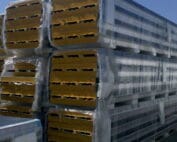
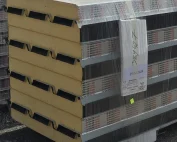
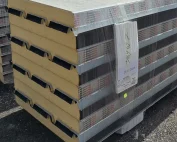
Inspect the batch before removing the old covering. Confirm that you have enough components suitable for the planned layout. Otherwise, once the roof is opened, there may not be enough panels to close it. With occasional material, quickly buying an identical variant is not guaranteed.
- Establish the roof requirements and check the structure.
- Assess the condition of the entire offered batch.
- Draw out the components and offcuts.
- Order the necessary accessories and equipment.
- Only then begin replacing the covering.
Record known defects and the agreed scope of delivery at handover. A low price only makes sense when the material allows a correct roof to be installed without unplanned repairs and downtime.
Short answers from the site
Is 40 mm always sufficient for an unheated garage?
This cannot be confirmed by thickness alone. The structure, loads, moisture and requirements of the entire building must be checked. The condition of the second-grade panel also requires a separate assessment.
Can a flashing conceal a defect at the joint without affecting the roof?
It may hide the location visually, but it does not restore a correct joint. Before installation, it must be established whether the defect limits tightness or fixing. The repair method should be confirmed for the specific panel.
7 branches. Materials closer to your project.

- SEROCK — Dzierżenin 34 E
- BŁONIE — ul. Sochaczewska 138A
- RADOM — ul. Grobickiego 8
- ŁÓDŹ — Natolin 8
- OLSZTYN — Barczewo, ul. Prosta 9
- WROCŁAW — ul. Jerzmanowska 10C
- GORZÓW WLKP. — ul. Zielona 33/34