When do single-module tile-effect roof sheets make sense?

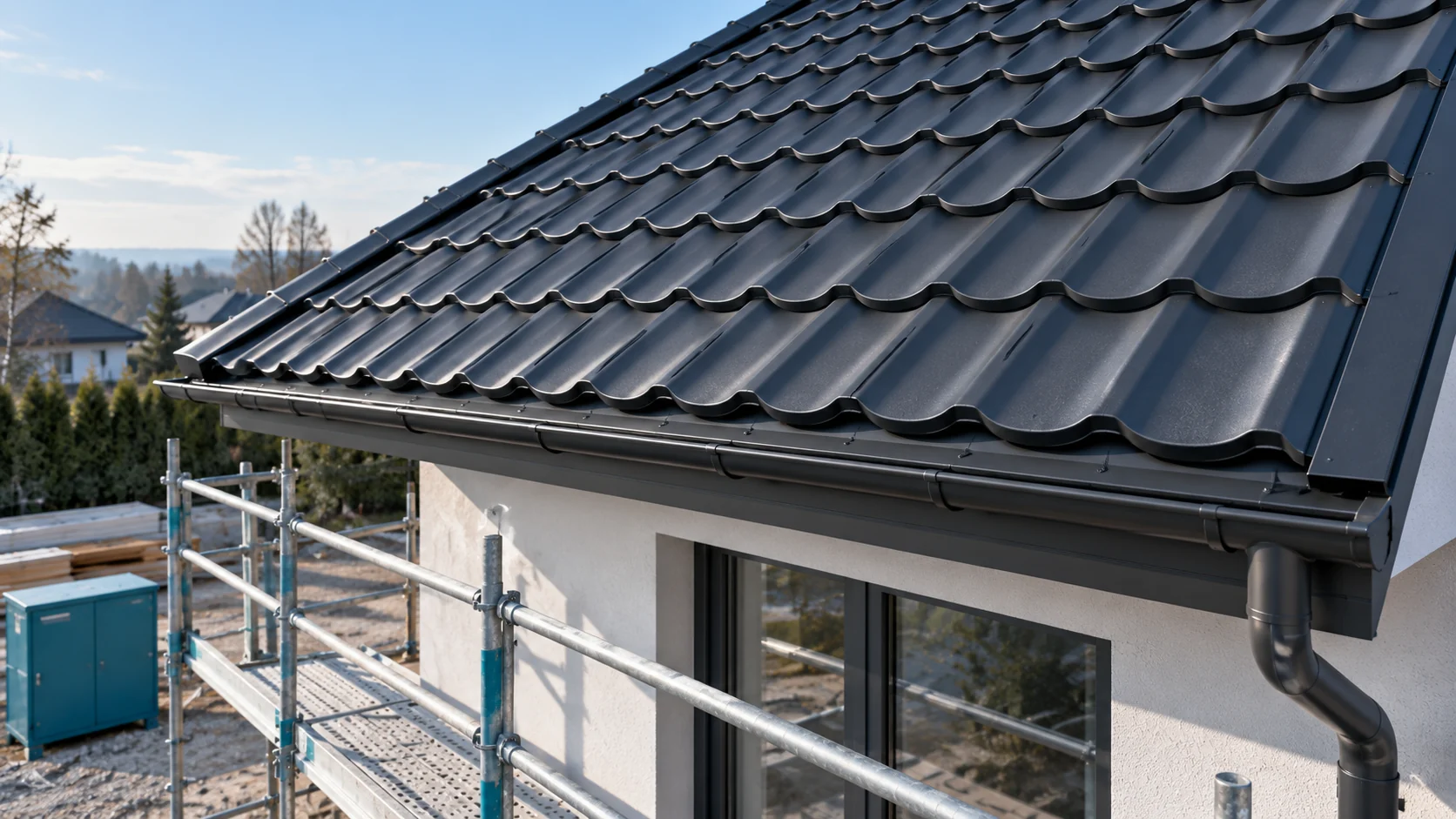
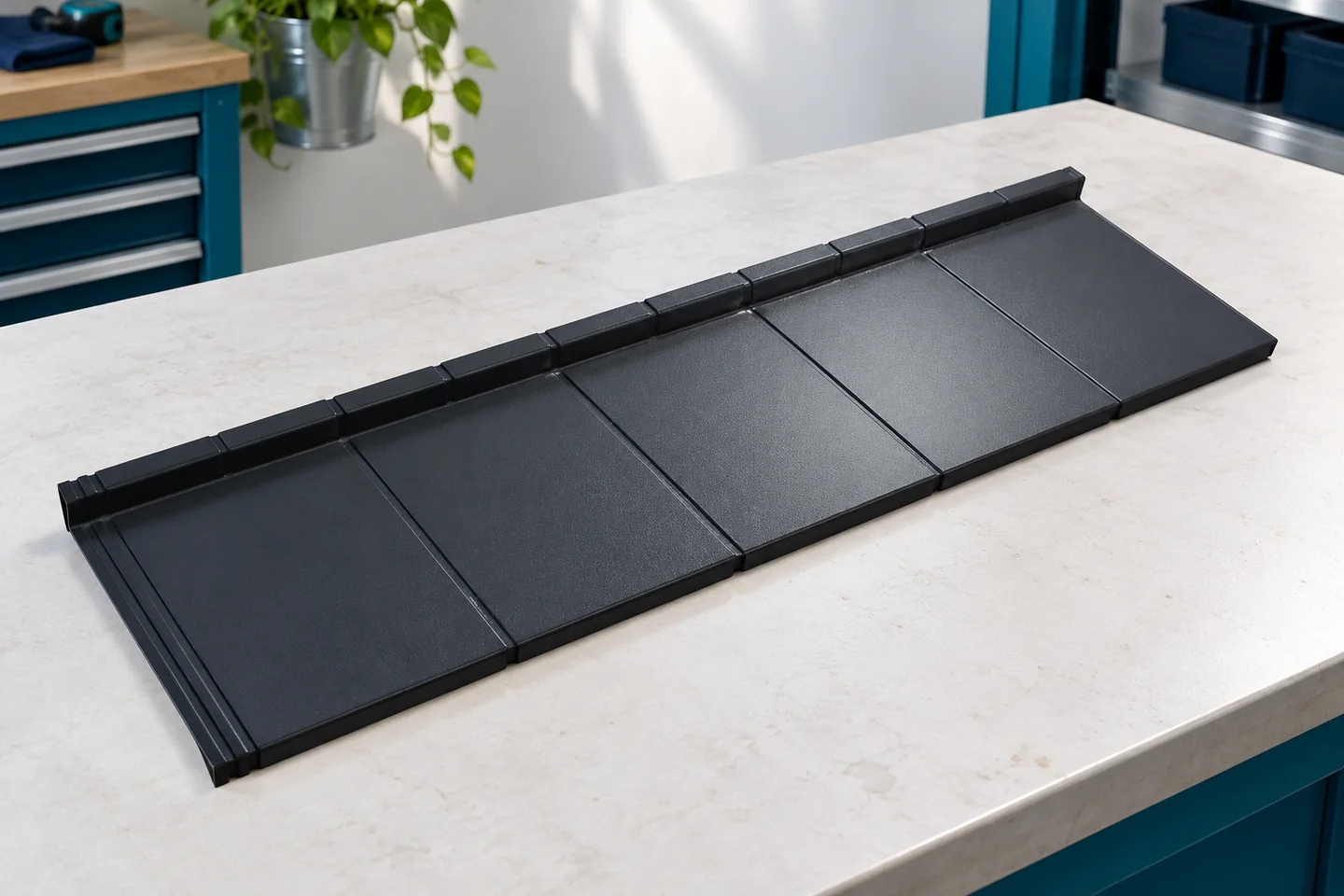
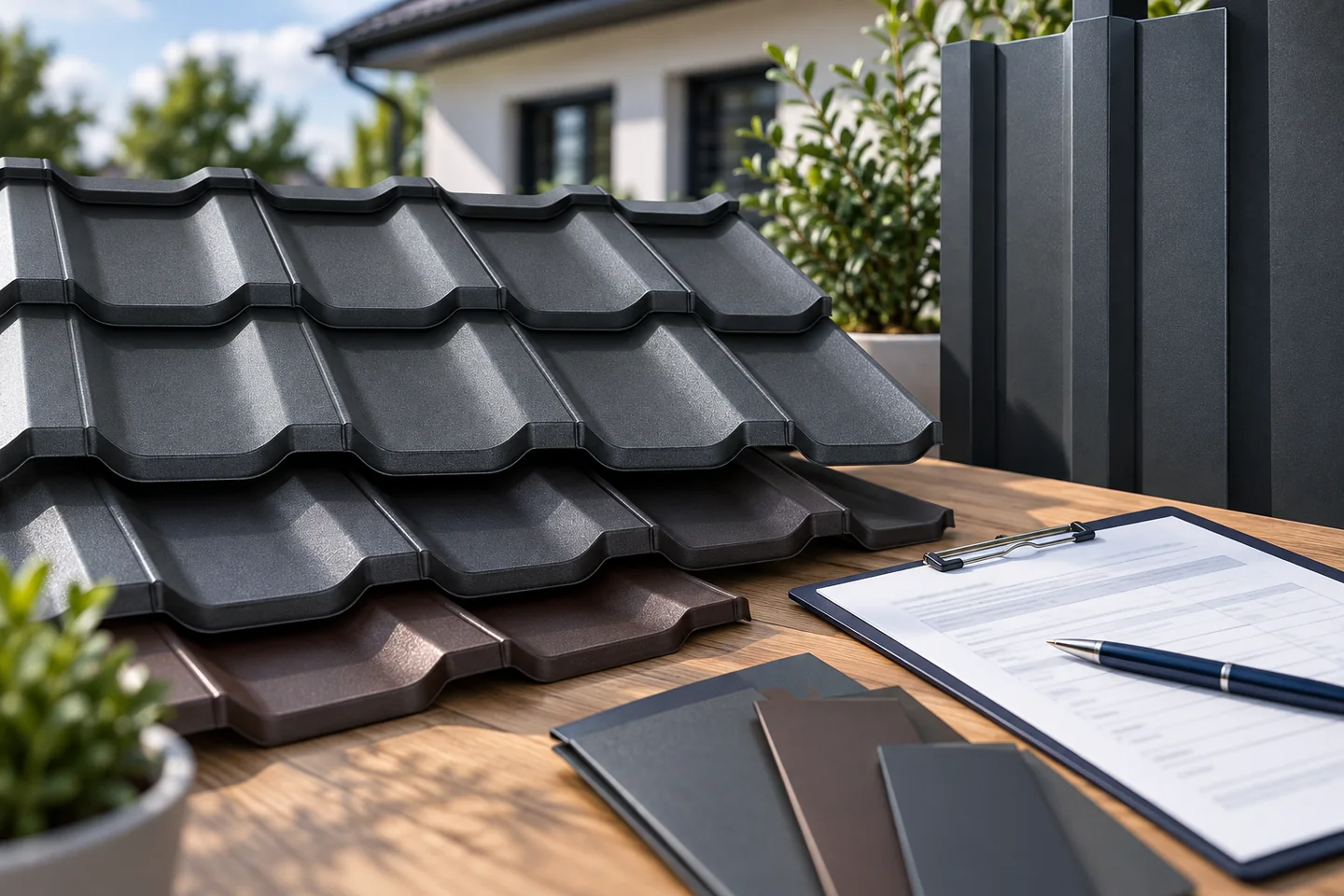
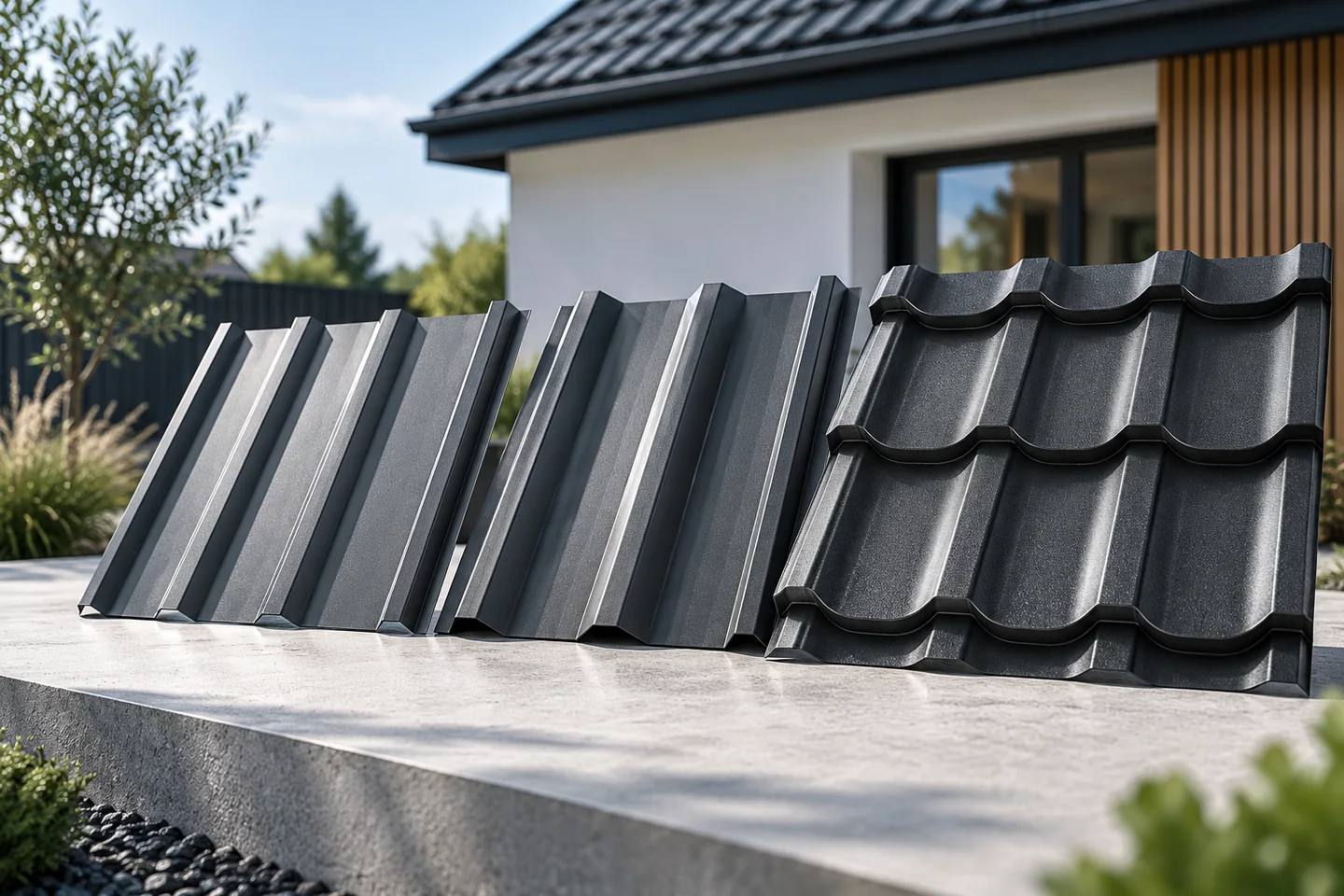
In Poland, a single-module metal roof tile is worth considering when the roof has numerous bends, valleys or dormers and access for delivering and lifting materials is difficult. Rather than following a generic recommendation, check above all the roof geometry, the actual dimensions and coverage area of the panels, and the conditions for delivery and storage. Also compare the panel layout and number of offcuts with a larger-sheet option, because a small format does not automatically guarantee the least waste or the lowest cost.
2026-11-14T17:31:32+01:00

Ordering metal roof tiles: what to look for in the specification

Find out how the supplier calculated the sheet quantities: from drawings, a site survey or an estimate of the roof area. A roof rarely follows every dimension on paper exactly. For sheets cut to length, agree who will measure the finished slopes and check their geometry before the order goes into production. Ask which unit the price refers to and which components are included in the delivery. Those details will help you compare quotations and check the order when the sheets arrive.

2026-11-15T04:42:39+01:00

Roof coverings to compare before you start building

The right roof covering depends above all on the roof pitch, the structure and how the building is used. Metal tile sheeting suits many houses, T18 and T35 trapezoidal profiles work well on simple slopes, and a roof sandwich panel can combine the outer skin with insulation. Tiles, shingles and flat-roof waterproofing form separate systems. Compare the complete roof, including the substrate, details and labour. Start from the design or measure the existing roof: pitches, slope lengths, valleys, corners, service penetrations and the permissible structural load will narrow the choice far better than a colour catalogue.

2026-11-14T21:01:36+01:00

Tile-effect metal roofing or clay tiles: which is easier to incorporate into a roof renovation?

Choosing a covering during a renovation starts with assessing the roof structure. Only then is it worth comparing appearance, price and speed of work. Tile-effect metal roofing is lightweight, but its cost does not end with the sheets. Clay tiles require accounting for greater weight. Both solutions need a correct layer build-up and carefully executed details. This cannot be determined from the roof's appearance from the street. An assessment of cross-sections, connections, support and condition of the timber is needed. Defects, dampness or previous alterations change the situation. It is not enough to state that the old covering was heavy, so any new one will be suitable.

2026-11-14T11:09:38+01:00

What to consider when building a fully hipped roof

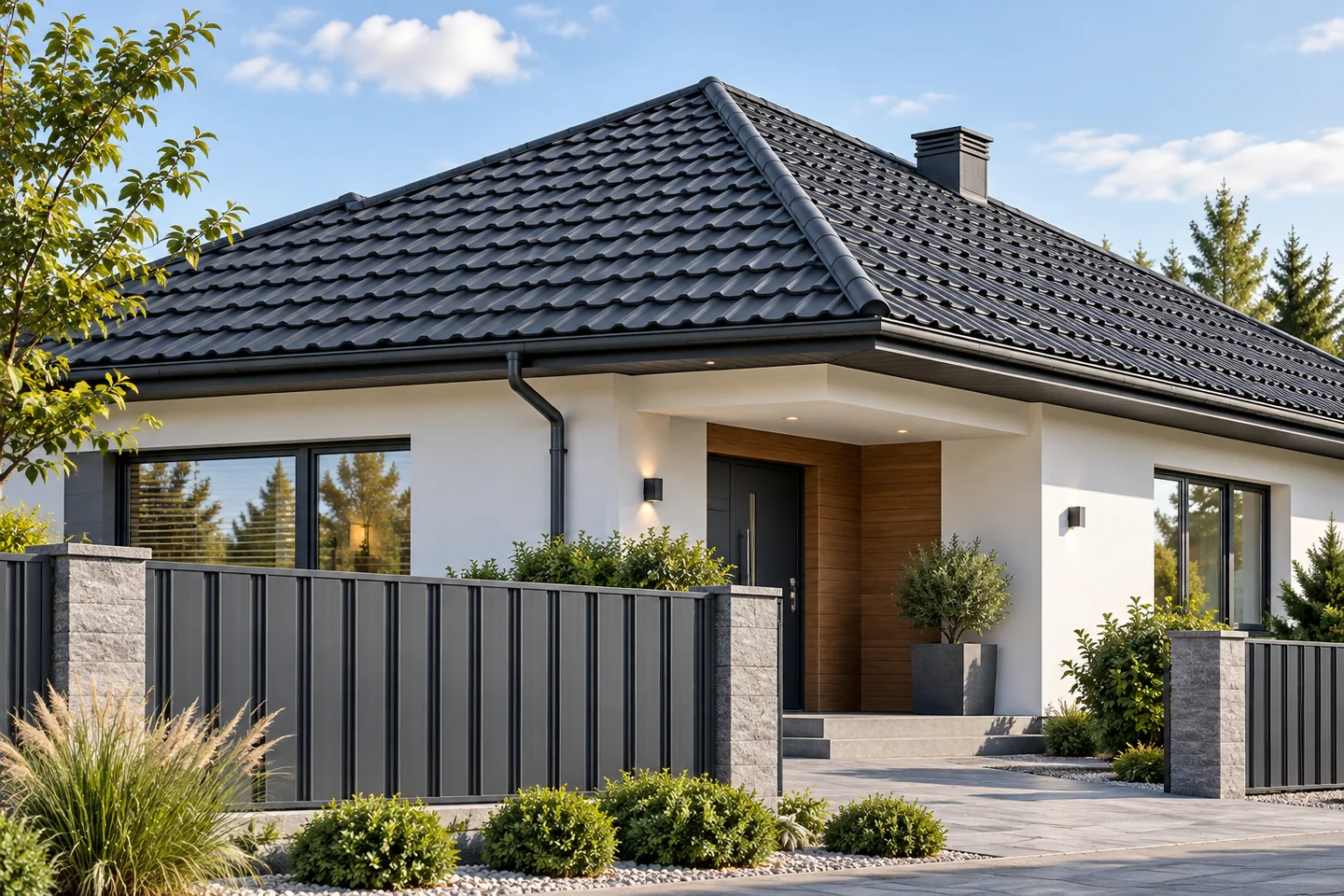
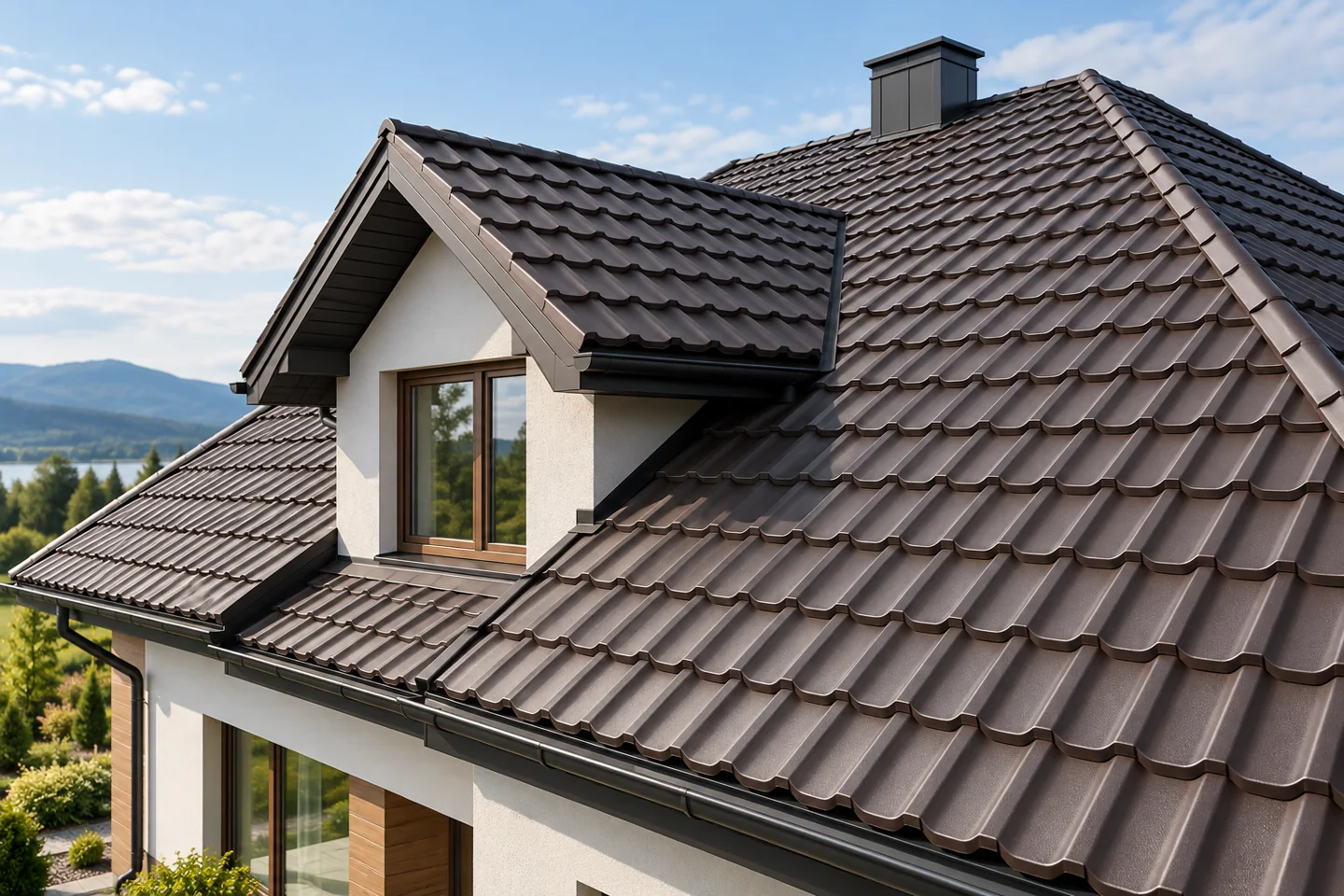
A hipped roof has four slopes and diagonal corners that tidy the building's form but alter the loft space and the number of cuts and details. Before choosing a design, check the actual roof plan with sections and building dimensions, not just the name of the form. Assess the proportions between slope height, elevation and eaves overhang, as well as the heights above planned passages and furniture. For trapezoidal sheet or metal tile covering, ask for a layout plan of sheets or modules, because diagonal corners require cuts limited by laps and profile geometry.

2026-11-15T00:57:10+01:00

What is tile-effect metal roofing made of and how does it fit into the whole roof?

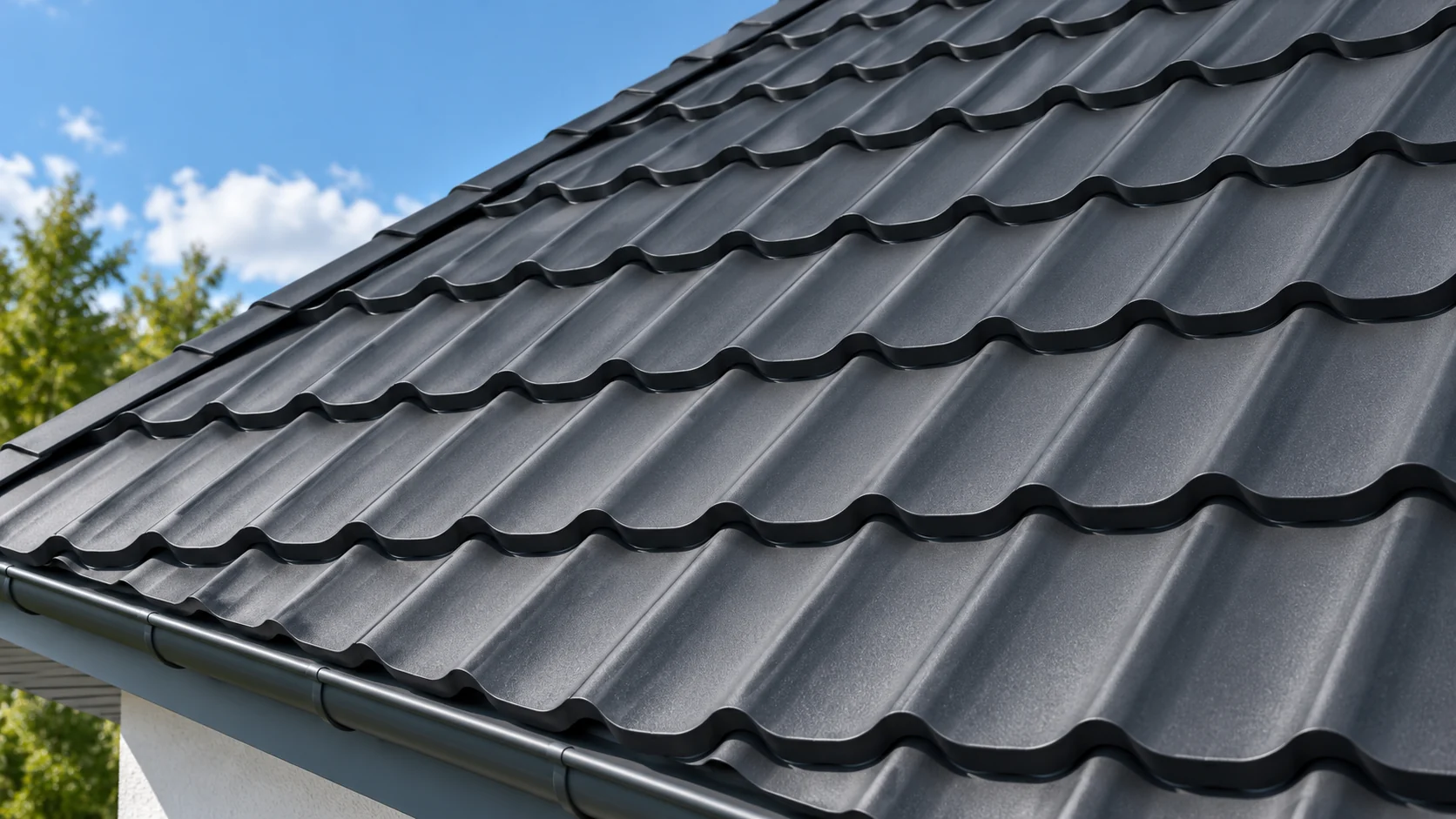
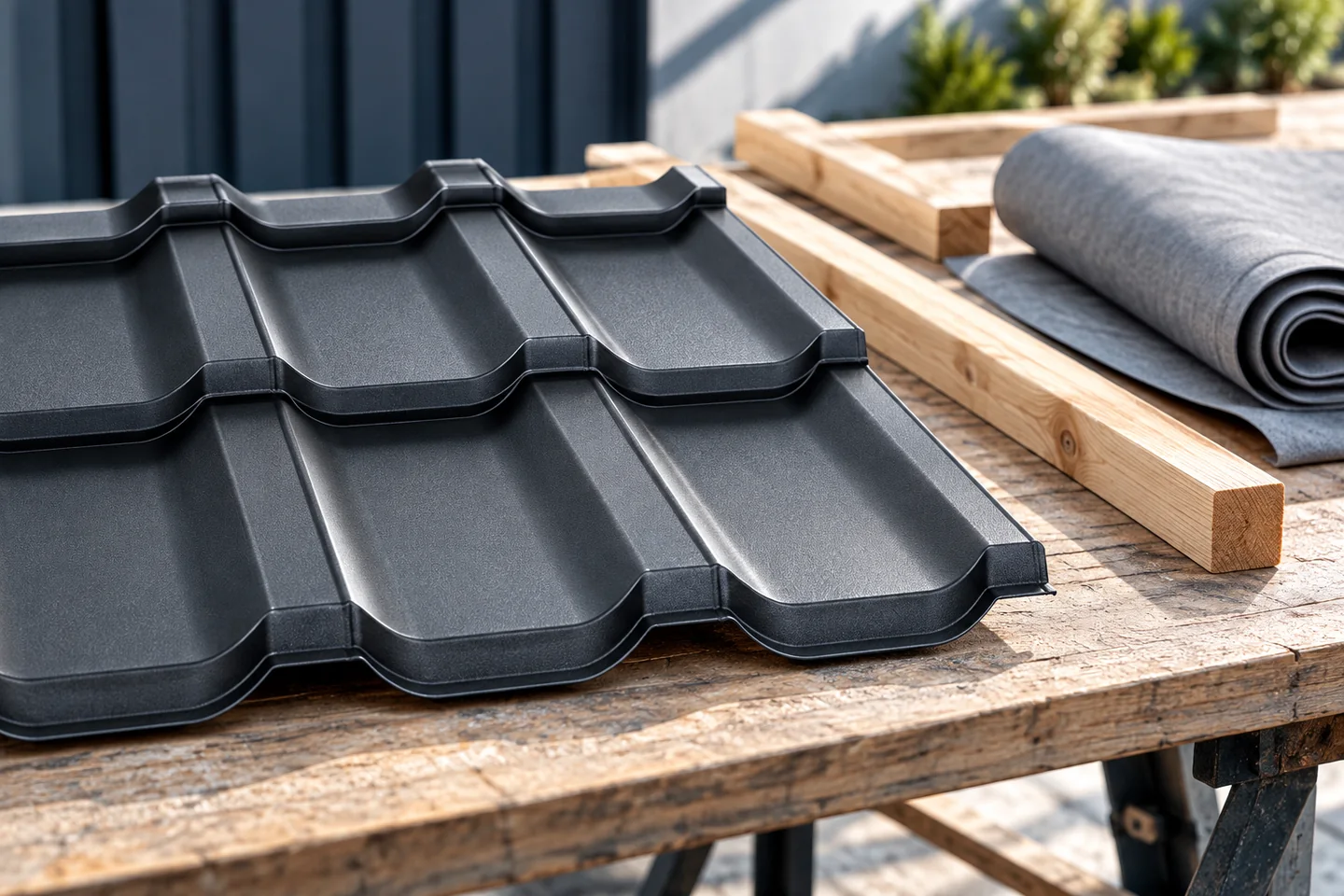
Tile-effect metal roofing is a profiled metal sheet with protective layers. The pressings give it its shape and rigidity. The sheet itself is only the covering. Insulation, airtightness from the inside and ventilation belong to the whole roof assembly. It is worth understanding this division before ordering material and dividing work between teams. In common steel solutions, the base is a thin steel core. It is protected by a metallic layer and an appropriate coating system. The external organic coating gives the colour and influences the surface resistance. The underside also has protection. The exact construction depends on the product and should be described in its documents.

2026-11-14T11:10:57+01:00

Which roof covering works for a holiday cabin?

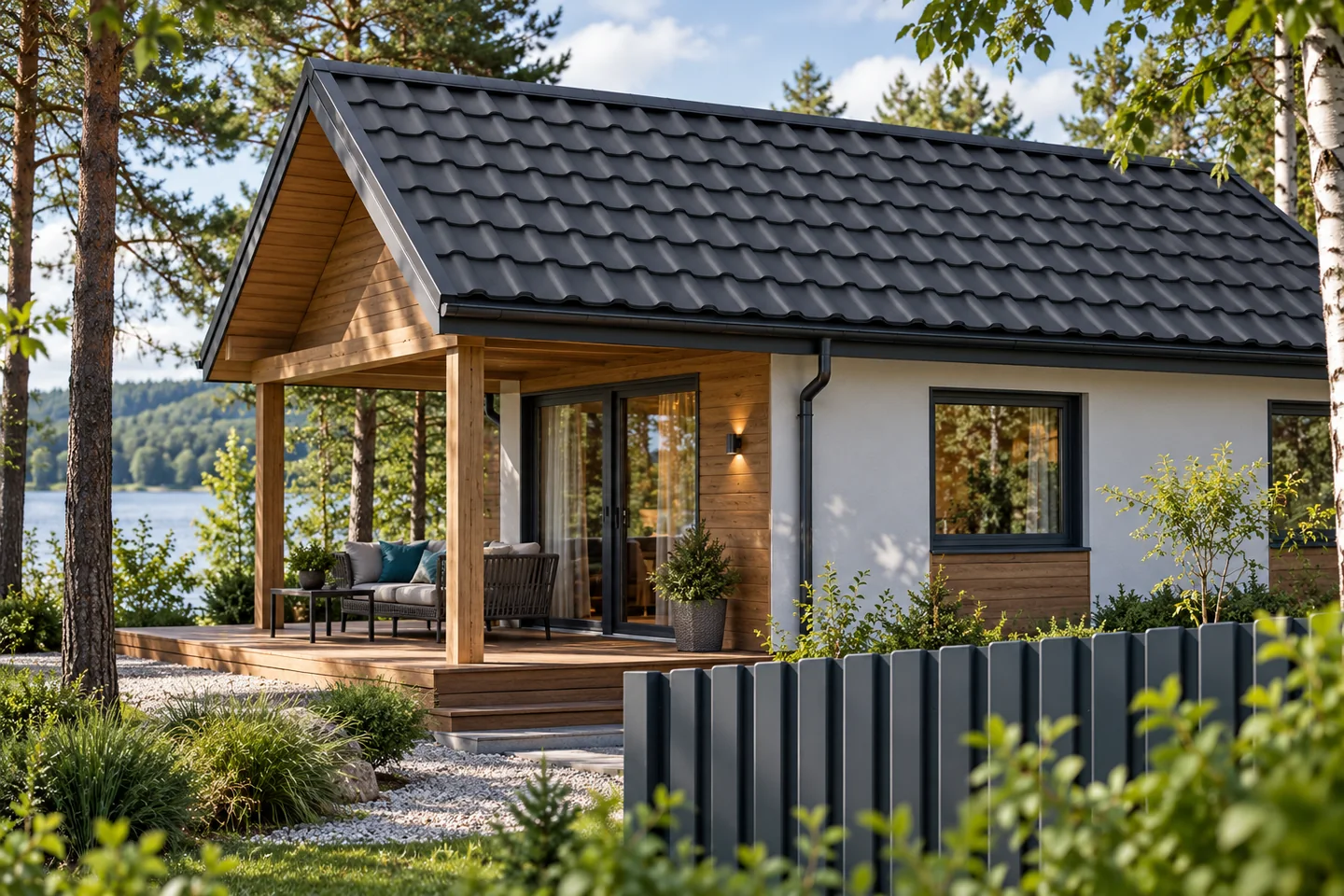
The choice of roofing for a holiday cottage depends above all on how the building will be used. Before buying sheet metal, establish whether the cottage will be heated only occasionally or also in winter. With weekend heating, a rapid temperature rise increases the amount of moisture reaching cold surfaces, so check the layer build-up, insulation and ventilation. Metal roof tiles or T18 and T35 trapezoidal profiles may suit a simple form, but match the pitch, batten spacing and eaves detail to the specific model. Unloading, transport and access for cleaning also influence the choice.

2026-11-14T21:02:27+01:00

How the protective layers on a steel roofing sheet work together

The properties of steel sheet depend on the whole layer system, not on colour alone. Before measuring, ordering or accepting delivery, check whether the steel core and metallic coating are described separately from the organic layer, because each performs a different function. Pay attention to the environmental intended use, protection on both sides of the sheet, and the compatibility of fixings and processing. The appearance of a sample alone is not enough to assess durability, while the manufacturer's declarations allow products to be compared on a common basis.

2026-11-15T04:42:52+01:00

Modular tile-effect sheets: suitable roofs and installation planning

Modular metal roofing can work on a simple house as well as on a roof with numerous bends, provided the measurement and substrate preparation are accurate. Above all, the investor should check the actual cut layout of the slope and whether the chosen pattern matches the system, since dimensions and the number of ribs vary between manufacturers. It is also worth agreeing the batten spacing resulting from the specific module with the roofer and planning roof penetrations in advance. The decision to choose modules should rest on roof geometry, transport logistics and the expected appearance, leaving technical details to the designer.

2026-11-14T21:00:54+01:00

Choosing an underlay for the planned roof covering

Beneath the metal covering, an assembly must provide support, clear incidental water and allow moisture control. Depending on the roof, it includes a membrane, sheathing, battens or other components. No single substrate works for every metal sheet. The word “substrate” can mean different things: rigid sheathing, a membrane or battens. Their roles differ – the sheathing gives support, while the underlay mainly helps protect against water that gets under the covering.

2026-11-15T00:58:03+01:00
Back to top