Choice of covering
How the protective layers on a steel roofing sheet work together
In brief
The properties of steel sheet depend on the whole layer system, not on colour alone. Before measuring, ordering or accepting delivery, check whether the steel core and metallic coating are described separately from the organic layer, because each performs a different function. Pay attention to the environmental intended use, protection on both sides of the sheet, and the compatibility of fixings and processing. The appearance of a sample alone is not enough to assess durability, while the manufacturer’s declarations allow products to be compared on a common basis.
What is beneath the colour of the steel sheet?
The coloured surface is the outer part of a more complex material. Beneath it is a prepared substrate with appropriate protective layers and a steel core. The details depend on the product. Not every steel sheet has an identical arrangement, composition and thickness of protection. Therefore, the appearance of a sample is not sufficient to assess all properties.
The steel core together with the profile shape is responsible for the mechanical behaviour of the sheet. The coatings are primarily intended to protect its surface. Good protection does not replace adequate thickness and load-bearing capacity of the cross-section, and thick steel does not remove the need for corrosion protection. These parameters must be assessed separately and then combined when selecting the finished product.
How does the metallic protection work?
The metallic coating separates the steel from the environment and participates in protection against corrosion. In the case of zinc, the mechanism of electrochemical protection of the steel also operates. However, this does not mean unlimited resistance of every edge or scratch. The scope of action depends on the conditions, the geometry of the damage and the available protective layer.
Various metallic coatings are used, including those with an alloy composition. Their properties should be compared on the basis of the specification and intended use of the specific steel sheet. The name of a single component alone does not give a complete picture. The amount of coating and the suitability of the application for the environment are also important. It is not worth replacing these data with the general term protected steel sheet.
What role does the organic layer play?
The organic coating forms an additional barrier between the substrate and the environment. It gives colour, gloss or matt and influences the appearance of the surface during use. Systems differ in composition and parameters. Resistance to UV radiation, corrosion and mechanical damage should not be assessed solely by the thickness of the visible layer.
The entire system is important, including substrate preparation and intermediate layers. Two products of similar colour may behave differently in a given environment. Declarations and conditions of use must be checked. Not every coating is suitable for a location with high salinity, aggressive vapours or requirements regarding contact with specific substances.

Are both sides of the steel sheet protected in the same way?
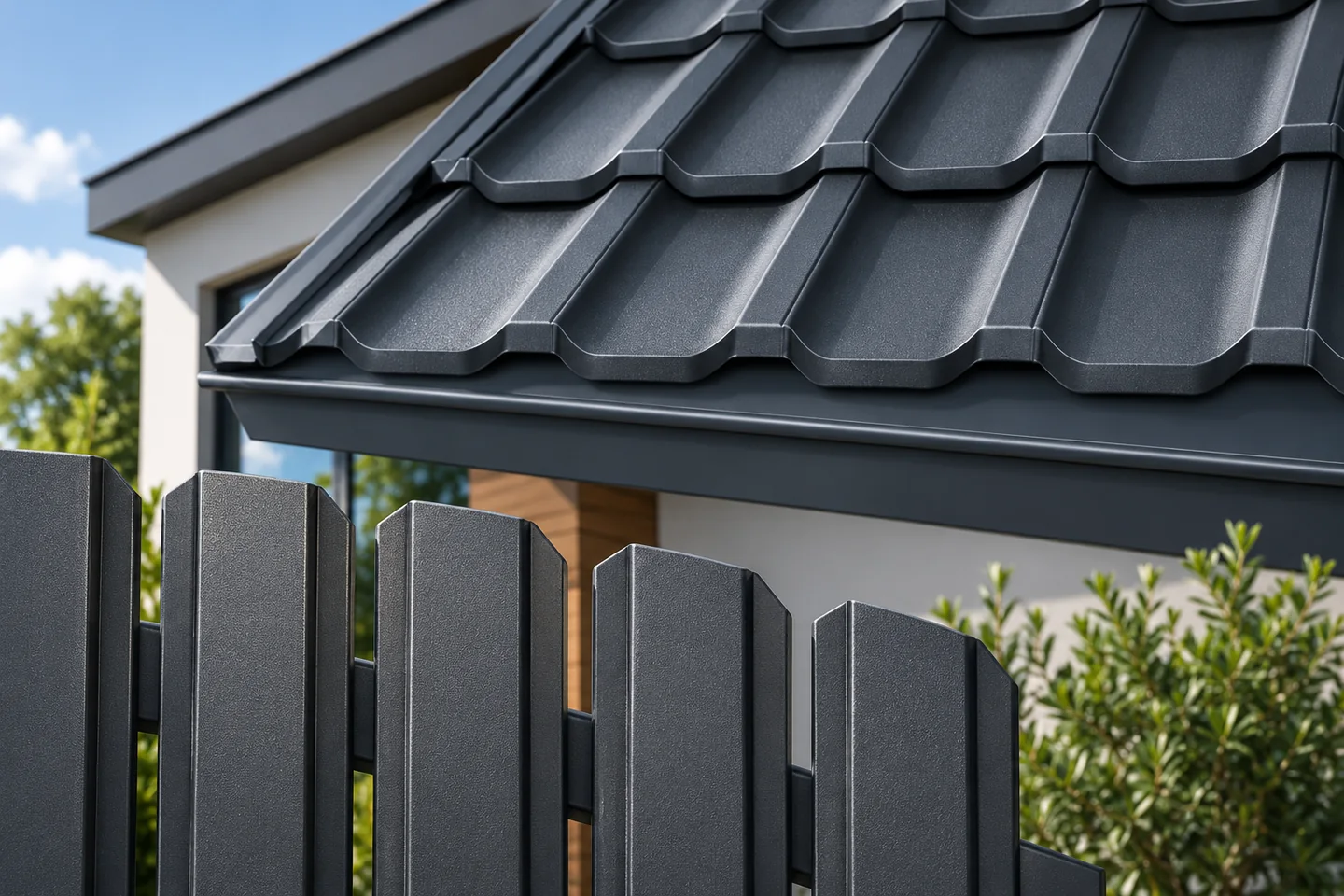
Not always. In roof cladding, the outer and underside may have different finishes. Metal fence slats are available in variants with a different extent of decorative coating on the two sides. This matters for the appearance of the fence from the street and from the property. The product description should be checked instead of assuming full symmetry of protection.
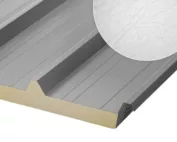
In a sandwich panel, the internal facing may be exposed to different conditions than the external one. Humidity, cleaning and the aggressiveness of the environment influence the choice of coating. The PIR core does not solve the problem of inadequate steel protection. Panel parameters must be assessed as a whole: both facings, the insulation, the interlock and the method of making the joints.
Why do cutting and material contact matter?
Overheating during cutting can damage the edge protection. Hot swarf can impair the coating even beyond the cut line. Therefore, tools specified in the instructions are used, and metal residues are removed promptly. Leftover swarf can over time create a rust mark that does not necessarily indicate an original defect of the entire coating.
Contact with other metals and substances is also important. An improperly selected processing method, fastener or chemical can create unfavourable local conditions. Water running off adjacent components must also be taken into account. Material compatibility applies to the entire roof or fence, not only to the main sheets.
What follows from this when buying and using?
When purchasing, ask for a description of the steel, the metallic protection and the organic system. Check the intended environmental use and the scope of the technical and aesthetic warranty. This allows T18, T35, tile-effect metal roofing or fence slats to be compared on the same basis. The greatest paint thickness or the longest number of years in the brochure are not sufficient for a full assessment.
After installation, inspections, removal of dirt and repairs in accordance with the material recommendations are required. The coating performs best when it is not constantly exposed to accidental damage and standing moisture. Understanding the role of the individual layers helps to properly assess an offer and subsequent marks on the surface. It also makes it easier to distinguish a material problem from the effects of installation or use.
7 branches. Materials closer to your project.

- SEROCK — Dzierżenin 34 E
- BŁONIE — ul. Sochaczewska 138A
- RADOM — ul. Grobickiego 8
- ŁÓDŹ — Natolin 8
- OLSZTYN — Barczewo, ul. Prosta 9
- WROCŁAW — ul. Jerzmanowska 10C
- GORZÓW WLKP. — ul. Zielona 33/34