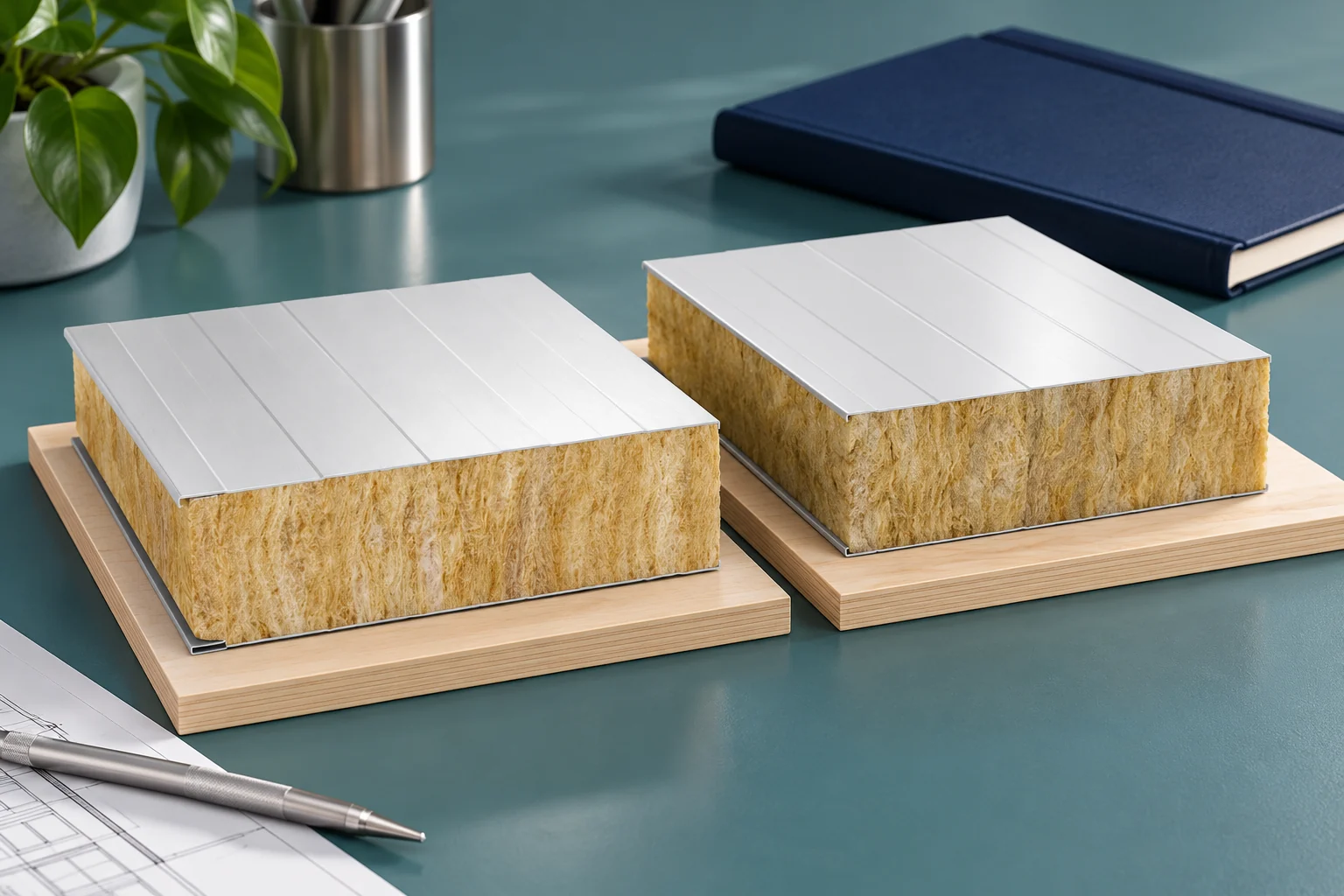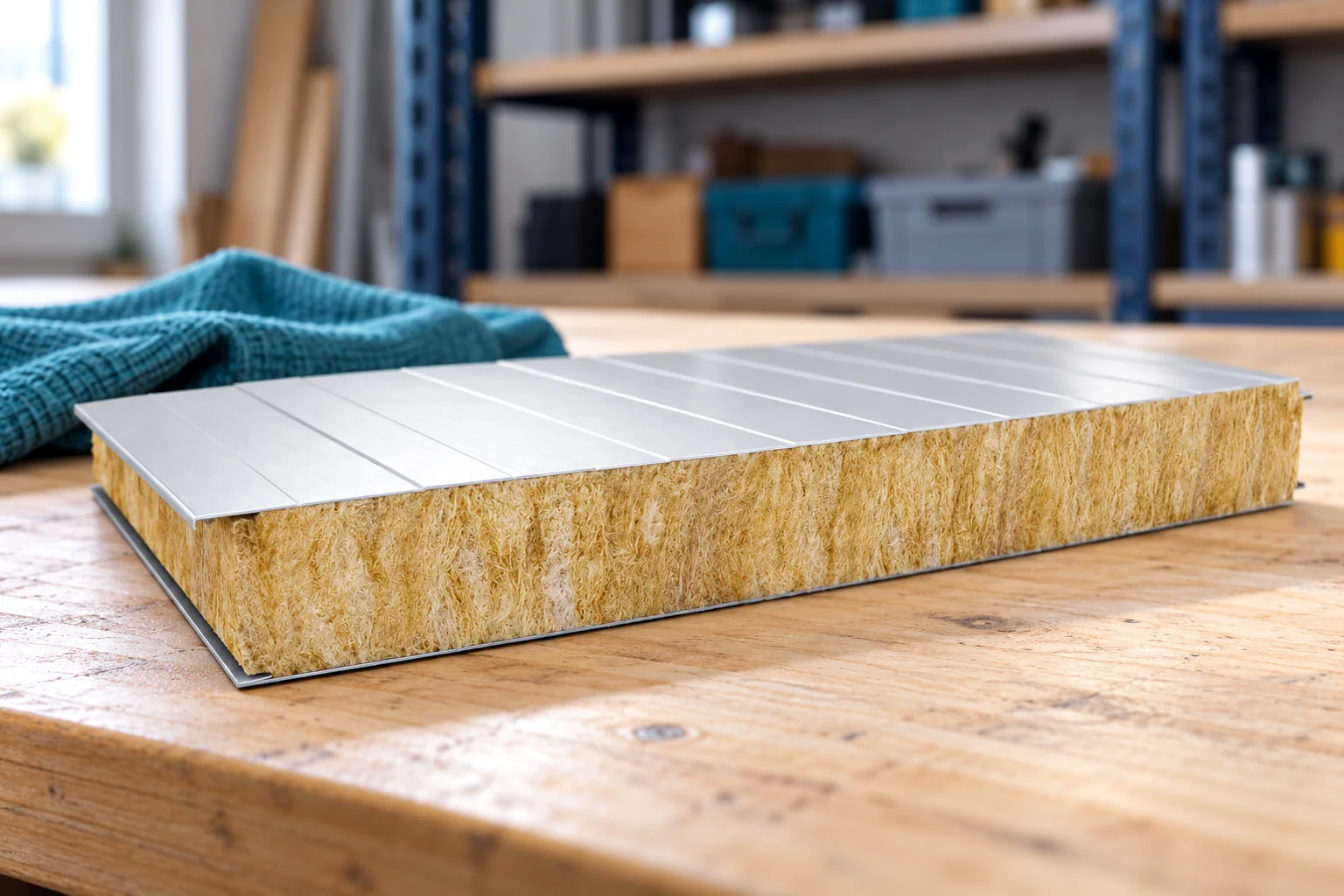
What is a 60 mm mineral wool wall panel sufficient for, and are there thinner variants?

The 60 mm mineral wool panel appears in some wall panel ranges. It may suit certain partitions and conditions of use, but it does not automatically deliver the parameters required in a heated building. The 40 mm variant must be checked within a specific product family. The thickness range known from PIR panels must not be attributed to mineral wool. In an example family of mineral core wall panels, the 60 mm thickness has a Uc of approximately 0.66 W/(m²K) and a weight of 14.1 kg/m² with 0.5/0.5 mm facings. These are the data for a specific product. Other solutions may have different properties or may not be available in that thickness at all.
By |2026-11-14T11:11:46+01:002024-07-24|Blog|Comments Off on What is a 60 mm mineral wool wall panel sufficient for, and are there thinner variants?

Where do insulated wall panels with a mineral wool core help meet building requirements?

Insulated wall panels with a mineral wool core are used where cladding with specific thermal, fire or acoustic properties is required. They may appear in industrial halls and public buildings. However, the suitability is not determined by the name of the core alone. The entire wall assembly, including openings and connections, is important. One of the reasons is the requirements relating to the behaviour of the wall during a fire. Panels with a mineral core can have appropriate reaction-to-fire classes and fire resistance classifications. However, the specific product and the method of installation must be checked. Not every thickness and span gives the same result.

By |2026-11-14T11:11:14+01:002024-06-21|Blog|Comments Off on Where do insulated wall panels with a mineral wool core help meet building requirements?

How to choose an insulated wall panel with a mineral wool core for the next stages of your project?

A suitable panel with mineral wool must match the wall's function, the structure and the interior conditions. Thickness is only one of the criteria. Thermal insulation, fire requirements and load-bearing capacity are checked separately. It is worth confirming these data before installing the framework. Changing the panel later may entail further changes. Start with how the building will be used. Determine the temperature, humidity and type of activity. Then define the wall's role: external cladding, internal partition or part of a solution with a required fire resistance. Each of these functions leads to a different set of criteria.

By |2026-11-14T11:11:13+01:002023-09-25|Blog|Comments Off on How to choose an insulated wall panel with a mineral wool core for the next stages of your project?

What does the fire class of an insulated wall panel with a mineral wool core mean?

Mineral wool is associated with fire protection, but its description does not replace the classification of the finished panel. A distinction must be made between reaction to fire and the fire resistance of the wall. Connections and fixings also matter. When ordering, it is worth checking this data separately so as not to attribute properties to the product that have not been declared. A sandwich panel contains more than just mineral wool. It has steel facings, bonding layers and coatings. Reaction to fire is assessed for the product under specified conditions. The class of the mineral material alone therefore cannot be attributed to the entire panel. This is one of the more common mistakes in short offer descriptions.

By |2026-11-14T11:11:59+01:002023-06-04|Blog|Comments Off on What does the fire class of an insulated wall panel with a mineral wool core mean?

How to buy insulated wall panels with a mineral wool core from outlet stock for a planned extension?

Outlet stock can help reduce the cost of the building envelope if the available batch suits the project. First, cosmetic defects must be separated from damage that affects how the panel performs. Then lengths and joints should be compared. In staged extensions, it is particularly important to be able to assemble a complete wall from matching components. Outlet is a commercial term that does not describe one fixed list of defects. A price reduction may be due to a scratch, a different shade, an unusual length or a leftover from an order. It may also be due to more serious damage. It is therefore necessary to obtain a description of the specific pieces, not just an assurance that the panels are ‘almost new’.

By |2026-11-14T11:11:09+01:002023-04-13|Blog|Comments Off on How to buy insulated wall panels with a mineral wool core from outlet stock for a planned extension?

What should you check before ordering a 100 mm mineral wool wall panel?

A thickness of 100 mm is a good point of comparison across different mineral wool panel families. However, it does not mean a single set of properties. Uc, mass, fixing and classifications may differ. Before purchase, product data must be combined with the wall design. This is particularly important when substituting material in an already planned project. An example wall variant with a mineral core and 0.5/0.5 mm facings has a Uc of approximately 0.39 W/(m²K) and a mass of 18.1 kg/m². A lighter variant of the same thickness may have a Uc of 0.38 W/(m²K) and a mass of 16.6 kg/m². These are two specific solutions, not a range guaranteed for every 100 mm panel.

By |2026-11-14T11:11:48+01:002023-03-16|Blog|Comments Off on What should you check before ordering a 100 mm mineral wool wall panel?

How do you calculate the weight of mineral wool panels for delivery and installation?

The weight of a mineral wool panel depends on the core thickness, its type and the steel facings. For delivery planning, the total weight of the batch is needed. For installation, the weight and length of the individual element also matter. These two aspects should not be confused. Even a relatively light pack may contain panels that are difficult to handle. It is best to use data for the precisely selected variant. Panels of the same thickness may have a different core and facings. An example wall panel 100 mm with mineral wool of nominal density 100 kg/m³ and 0.5/0.5 mm steel sheets weighs approximately 18.1 kg/m². A lighter variant of this thickness may weigh 16.6 kg/m².

By |2026-11-14T11:11:41+01:002022-09-12|Blog|Comments Off on How do you calculate the weight of mineral wool panels for delivery and installation?

Lighter or denser mineral wool core: how do you compare two panel families?

Two mineral wool panel families can have the same thickness but different mass and performance. A higher core density does not automatically mean the best choice for every wall. The whole product must be compared. Load-bearing capacity, thermal insulation and the scope of classification are particularly important. Only then can the value of a lighter variant be assessed. The core works together with the facings in a composite panel. Its density and mechanical properties matter, but they do not on their own describe the load-bearing capacity of the entire panel. Fibre orientation, composite action and the steel sheets also count. The product should therefore not be selected solely by the number of kilograms per cubic metre.

By |2026-11-14T11:12:00+01:002022-07-01|Blog|Comments Off on Lighter or denser mineral wool core: how do you compare two panel families?

PIR boards compared with EPS, XPS and mineral wool

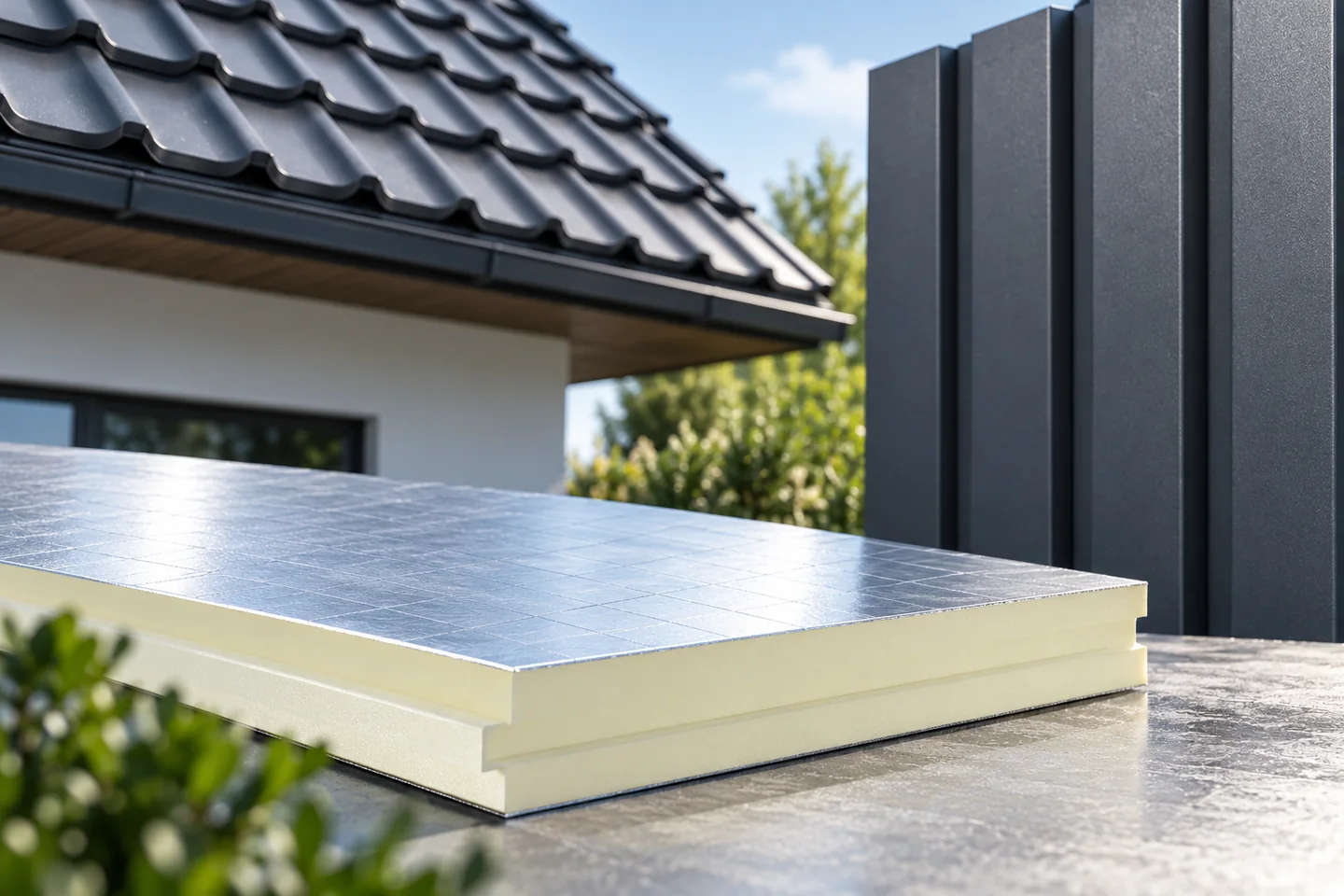
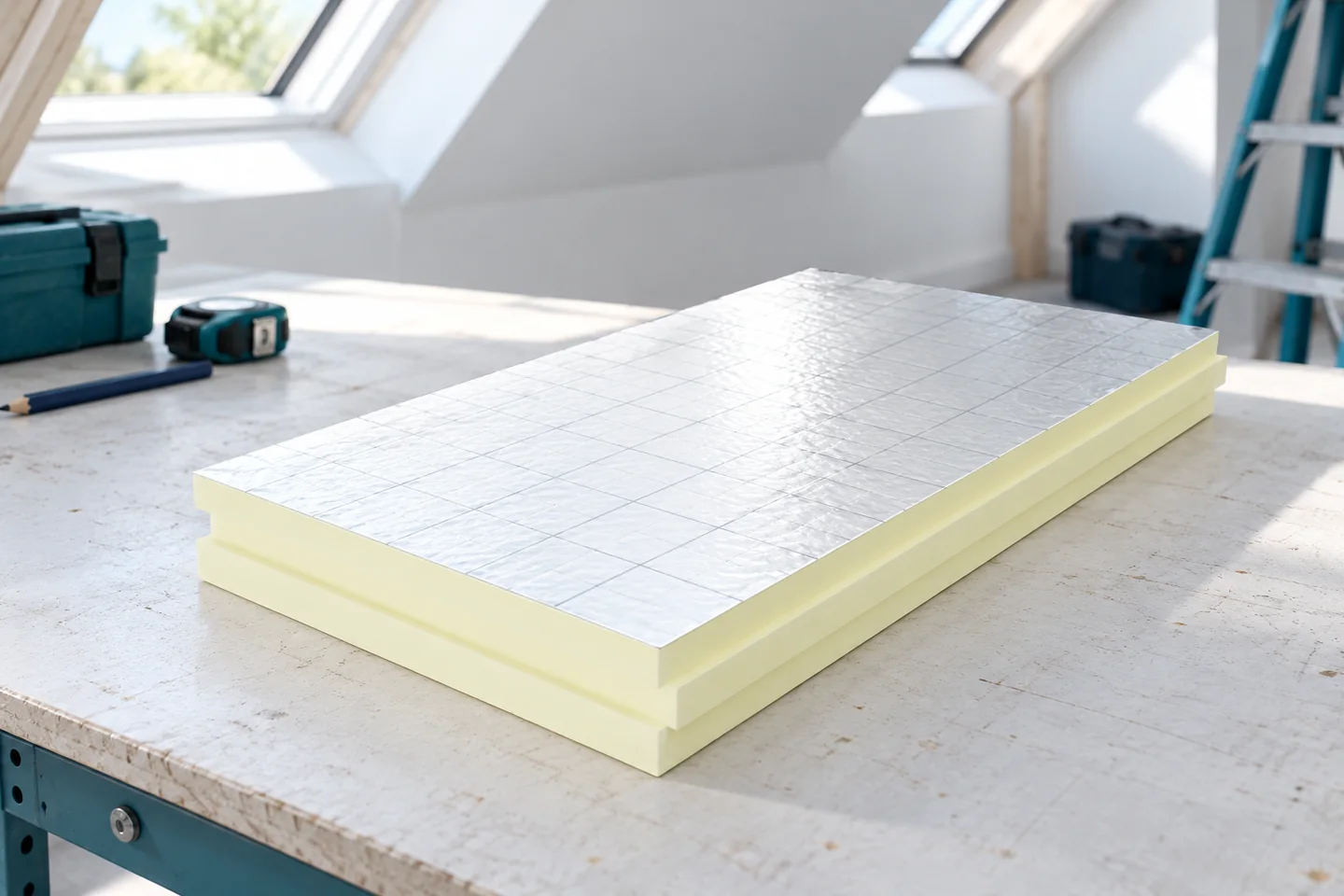
PIR boards stand out for achieving high thermal resistance at a relatively small thickness, which matters in attics, at thresholds and in renovated roofs. This does not mean they are superior in every application, so the comparison should begin with the declared thermal conductivity, lambda. Check whether the value applies to the specific board variant rather than the whole material group. Where space is limited, calculate the full scope of works, not just the insulation cost, and compare materials with similar thermal resistance that are suitable for the same location.

By |2026-11-15T00:57:26+01:002022-01-09|Blog|Comments Off on PIR boards compared with EPS, XPS and mineral wool

Insulating a loft to retain heat and control moisture

Begin by identifying the roof's layers and assessing their condition. Check the covering, the layer beneath it, any gaps and the timber, as well as signs of leaks and moisture. Insulation must be continuous and airtight on the inside, while moisture needs a path to escape. Choose PIR boards where thickness is limited; mineral wool offers fire and acoustic benefits. Do not cover wet structure until the cause of dampness has been removed.

By |2026-11-14T21:03:07+01:002022-01-07|Blog|Comments Off on Insulating a loft to retain heat and control moisture
Back to top