Installation and details
Storing tile-effect roof sheets between delivery and installation
In brief
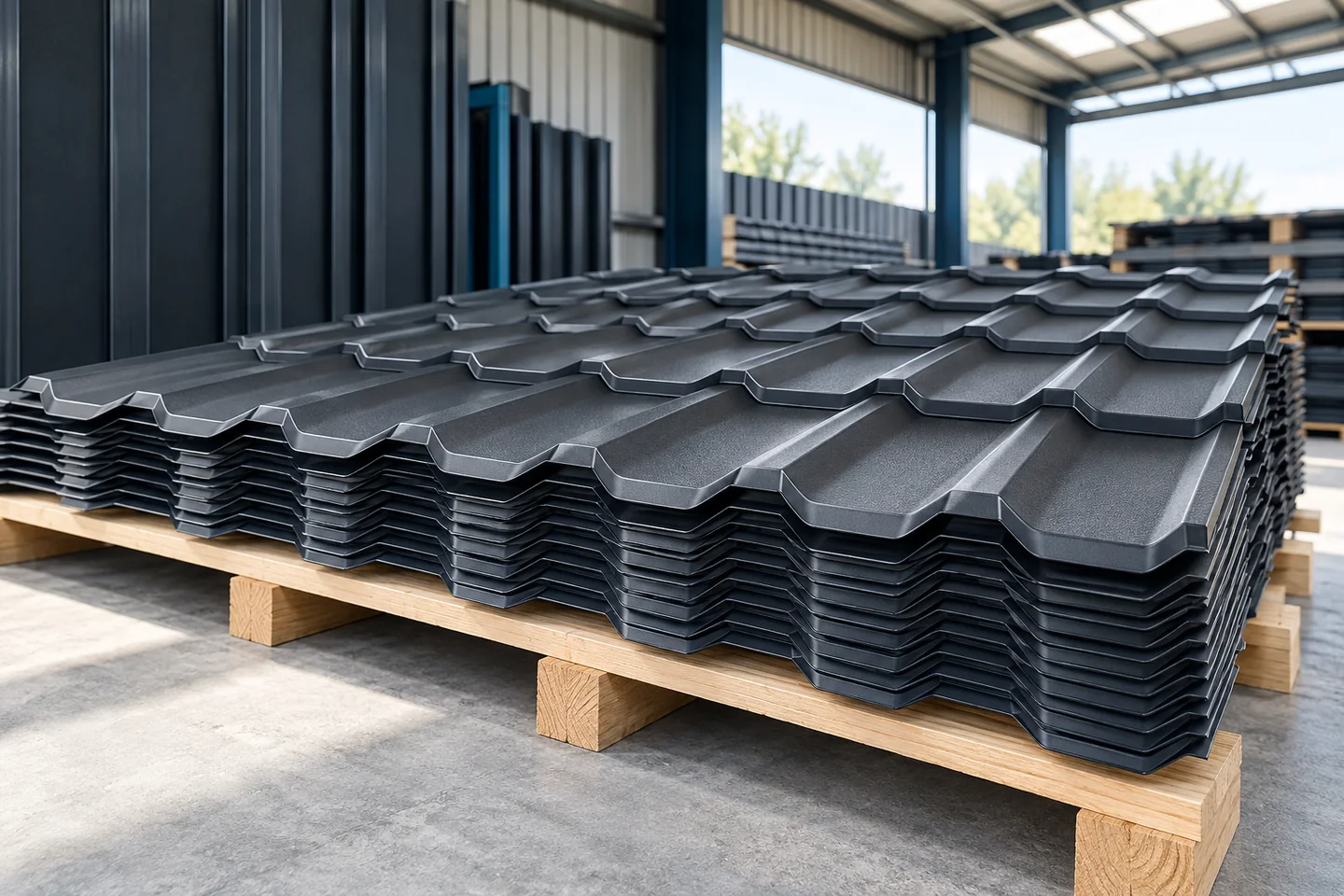
The key is to prepare a dry, stable and ventilated storage area before the metal roofing sheets arrive. Decide in advance whether the ground is level, how the sheets will be supported and where water can drain away. On delivery, check that the markings, number of elements, lengths and colour match the order, and inspect the packaging and visible edges. Remember that transport film and straps serve the delivery stage, not long-term storage. The permissible storage time and method are set by the manufacturer of the specific product, so do not assume one number of days applies to every coating.
Why can the sheet metal suffer even in the pack?
Between tightly stacked sheets, moisture dries more slowly than on an exposed surface. Water can enter from precipitation or form through condensation. Prolonged dampness encourages damage and discolouration. The transport film and straps serve a specific stage of delivery but do not ensure safe storage in all conditions.
Dust, sand and swarf are also a risk. Sliding sheets over one another can scratch the coating, and foreign particles trapped between them act as an abrasive. The receiving area should therefore be prepared before the vehicle arrives. It is not worth organising it only once the driver is waiting to unload.
How to prepare the storage place?
The substrate should be level, stable and dry. The pack must be isolated from the ground using suitable supports. Their number and arrangement depend on the sheet lengths and the supplier’s recommendations. Too few points of support can cause permanent bending, particularly with long tile-effect metal roofing cut to size.
The location must allow water to drain away and air to circulate in accordance with the instructions. Tightly wrapping a wet pack in a tarpaulin can trap moisture. It is best to plan covered storage without contact with rain and aggressive substances. Avoid areas where steel is cut, welding is carried out or work generating a lot of dust takes place.
What to check during delivery?
Compare the markings, number of items, lengths and colour with the order. Inspect the condition of the packaging and the visible edges. Damage or traces of water must be documented immediately. During unloading, use a method suited to the weight and length of the pack, without gripping delicate parts of the profile.
Long sheets should not be lifted in a way that causes them to sag and buckle. Smaller modules are easier to carry, but they too can be damaged by dragging. Responsibility for unloading should be agreed in the order. Suitable equipment and a sufficient number of people should be available on site at the agreed time.

How long can the material be left before installation?
The permissible storage time and method are specified by the manufacturer of the particular product. A single number of days should not be assumed for all coatings and packaging. If the construction schedule slips, return to the instructions and change the storage method. The original pack intended for short transport may require the sheets to be separated.
The protective film on the surface also matters. It should be removed within the recommended time. Long exposure to the sun can make it difficult to peel off. It is not worth leaving it on the laid roof in the belief that it will provide additional protection until all construction work is finished. The film is not a service layer of the covering.
What should you do if the pack gets wet?
First, it must be assessed whether water has penetrated between the sheets. Drying the outer film alone does not provide such certainty. Follow the supplier’s instructions, usually involving unpacking and allowing the surface to dry. Moisture should not be sealed in with another tight protective layer. If there are signs of corrosion or discolouration, documentation of the condition is required.
The sheets should be separated and handled carefully, without rubbing against the coating. Random solvents or abrasive brushes should not be used for cleaning. If it is not known how to remove the deposit, it is better to agree on the method before starting. An unsuitable agent may enlarge the damage and make it difficult to assess its original cause.
How should delivery fit into the construction schedule?
It is safest to order the material for a date coordinated with the readiness of the structure and the crew. However, time must be left to check the conformity of the delivery. It is worth separating the planned storage location from the cutting area and equipment movement zone. On a small plot, the choice of modules or shorter sheets may facilitate logistics.
After installation, keep the batch documents, the instructions and information about the coating. Unused elements also require dry storage. Do not leave them directly on the ground behind the garage. Proper storage is part of the roof’s quality, because even a good material will not regain its original condition after permanent deformation or damage to the coating in a wet pack.
7 branches. Materials closer to your project.

- SEROCK — Dzierżenin 34 E
- BŁONIE — ul. Sochaczewska 138A
- RADOM — ul. Grobickiego 8
- ŁÓDŹ — Natolin 8
- OLSZTYN — Barczewo, ul. Prosta 9
- WROCŁAW — ul. Jerzmanowska 10C
- GORZÓW WLKP. — ul. Zielona 33/34