Gutters and drainage
Square or half-round gutters: what affects the choice?
In brief
The choice between square and round gutters depends primarily on the performance of the whole system, not on the profile shape alone. Check the dimensions, outlet positions, material and installation method, and compare the complete set of components, because corners, bends and downpipes can be very visible. Shape affects the façade’s appearance but does not determine durability. Before making an aesthetic decision, establish the catchment size and the locations for water discharge.
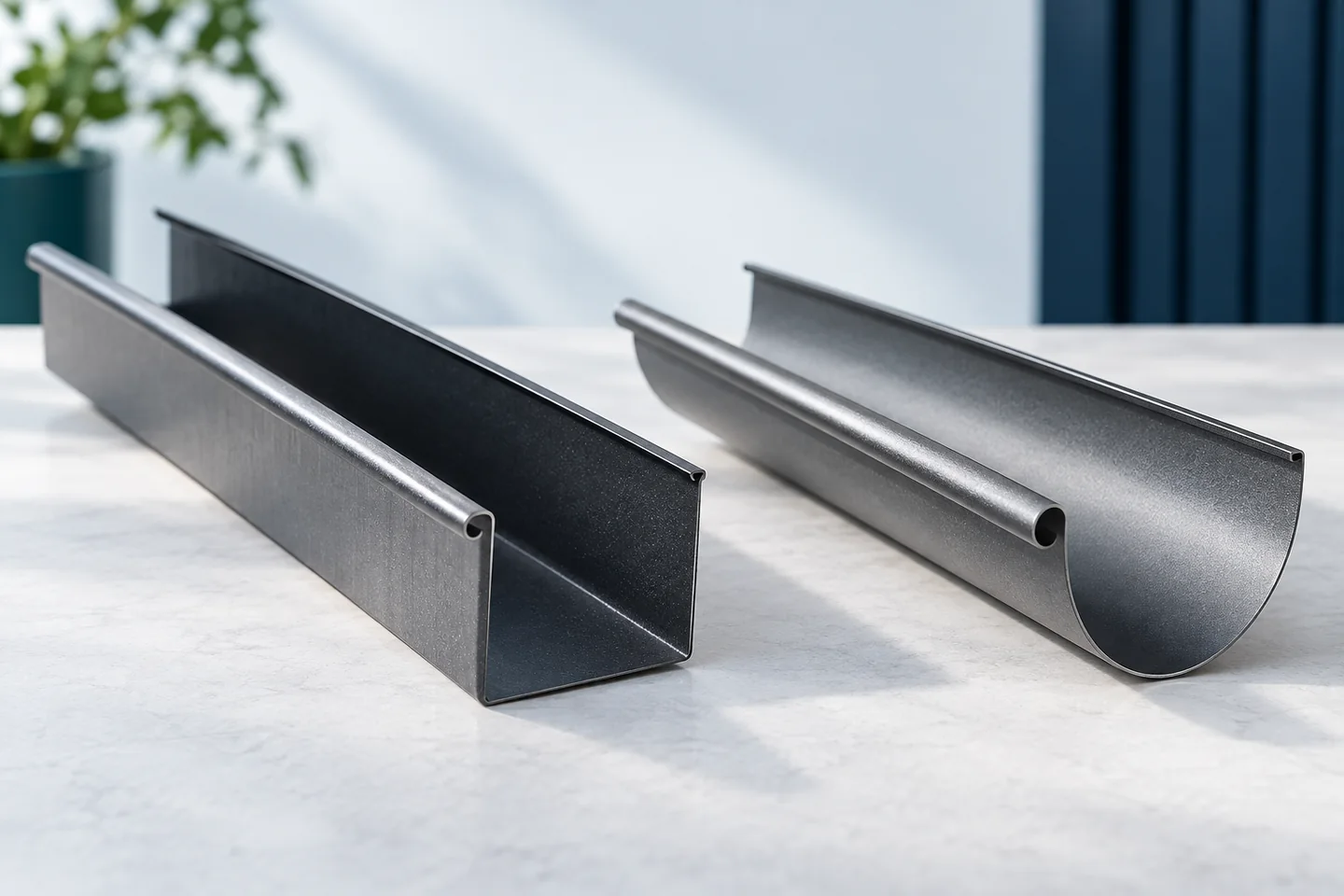
How does the gutter shape change the appearance of the house?
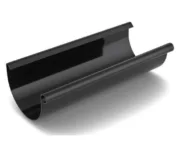
A profile with clearly defined edges creates a tidy, geometric line. It works well with a simple building form, large glazed areas and a calm division of the façade. A half-round gutter has a softer outline and imposes itself less as a detail. It can be used both on a traditional house and on a modern metal roof.
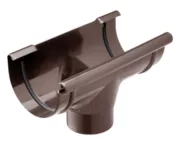
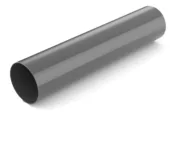
It is worth looking at the whole system, not just a short section of gutter. The outlet, corner, bends and brackets can be very visible. With a small eaves overhang, the downpipe becomes an important element of the façade. The choice of colour and the arrangement of outlets often have a greater effect on the result than the difference between a rounded and a rectangular base.
Which gutter drains more water?
It is impossible to answer on the basis of the shape name alone. Performance depends on the actual dimensions, the outlet construction and the layout of the entire installation. A wide gutter from one system may handle a different area than a narrower one from another. The data must be compared for the same downpipe position and roof conditions.
Water concentrated by roof valleys or a higher roof slope also matters. In such places, a simple area calculation may need to be supplemented. An outlet that is too small will limit the effectiveness even of a capacious gutter. Therefore, before making an aesthetic choice, it is worth determining the catchment area, the length of the sections and the locations for safe discharge of rainwater.
Is installation the same for both systems?
The basic tasks are shared: stable hooks, correct positioning relative to the covering and a fall towards the outlet. However, the shapes of the fixings, the method of joining and the required clearances differ. The instructions for the specific system must be followed. A similar nominal dimension does not guarantee that a connector or hook from another manufacturer will fit.
On roofs with a simple, visible eaves overhang, the system can usually be easily inspected after installation. Solutions concealed in the façade or in built-in construction require particular care and service access. A square gutter does not automatically mean a concealed eaves system. These are separate issues that must be distinguished when preparing the design. With a built-in solution, it is worth documenting the connections before closing the façade and carrying out the specified leak test. Later access to a fault will be more difficult.

What affects durability and cleaning?
The material and its protection are more important than the cross-section drawing itself. Coated steel requires protection against scratching and cutting in accordance with the instructions. Plastic has different rules for thermal movement and installation at low temperatures. The choice should take into account the conditions around the house, including branches, contamination and the possibility of damage.
Leaves and sediment can accumulate in any gutter. The bottom and corners should be accessible for cleaning. It cannot be assumed that one shape eliminates the need for inspections. Leaf guards reduce some contamination, but they too require checking. System performance drops when the outlet is blocked, regardless of the gutter’s aesthetics.
How can you compare prices fairly?
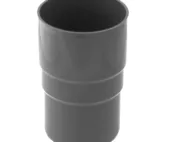
The price of a gutter section is only part of the cost. Add brackets, connectors, corners, outlets, pipes, bends and clips to the comparison. Determine the number of end caps and the cost of fixing to the given structure. In a house with many corners, additional components can account for a large share of the budget. Without counting them, the comparison will be misleading.
Also check whether parts can be purchased later. An unusual colour or profile may require a longer wait. It is worth keeping the system name and colour code in the building documentation. Replacing a single damaged bend is easier when it is known exactly which component was used.
How do you make the final decision?
First choose a system with adequate performance and a suitable installation method. Then compare its appearance across the entire façade. View a colour sample next to the roof and the windows and doors in daylight. The same colour code may look different on matt roof sheeting and on a smooth gutter.
A square cross-section is worth choosing when it matches the geometry of the house and the eaves details are well resolved. A semicircular one is a universal option in many projects. However, a good choice is demonstrated above all by a clear outlet and easy maintenance. The gutter should still work after years, even when we stop paying attention to its appearance.
7 branches. Materials closer to your project.

- SEROCK — Dzierżenin 34 E
- BŁONIE — ul. Sochaczewska 138A
- RADOM — ul. Grobickiego 8
- ŁÓDŹ — Natolin 8
- OLSZTYN — Barczewo, ul. Prosta 9
- WROCŁAW — ul. Jerzmanowska 10C
- GORZÓW WLKP. — ul. Zielona 33/34