Steel buildings and structures
Scheduling steel building deliveries so materials do not have to be moved twice
In brief
The element needed first is at the bottom of the stack. Panels take up the crane’s space, and the vehicle with the next delivery has nowhere to stand. Such problems can be limited by linking transport to the works programme. Building a steel hall requires space not only for the structure itself. Access routes, laydown areas and the order in which material is made available to the crew are important. The division of deliveries is agreed together with the erection plan. Elements should arrive on site in the planned sequence, with a buffer resulting from the organisation of the works. The steel structure does not always have to arrive on a single date. However, the delivery should not be split in a way that makes it difficult to achieve a complete, stable stage.
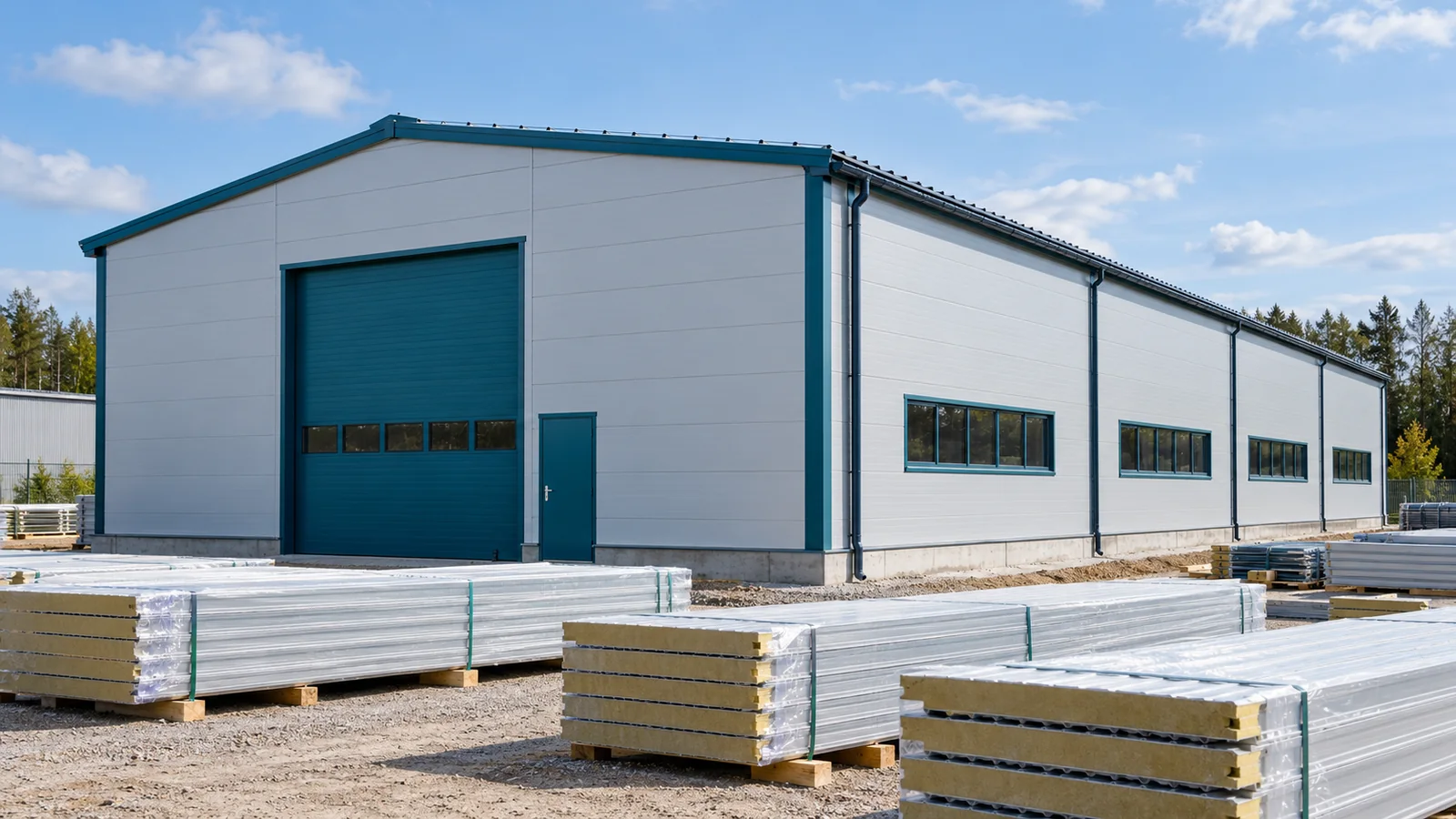
The delivery should match the stage
A steel hall requires coordination of steel, cladding and equipment. Delivering panels too early can increase their storage time and the risk of damage. Too late blocks further work. The schedule should account for the actual readiness of the foundations and the site. A planned arrival date alone does not yet mean that installation can begin.
Prepare access and the unloading area
Check the route for vehicles with long elements, including beyond the site gate. Bends, obstacle heights and surface condition matter. On site, space is needed to position the transport and handling equipment. In a steel hall with simple geometry, logistics can be difficult if the plot is narrow or partly in use.
The method of unloading is selected according to the material, its weight and its handling instructions. It should not be decided only after the driver arrives. Steel structures and long panels have different requirements for lifting and support. A competent team must have suitable equipment. A random choice of slings can damage elements or create a hazard.
Markings help find the right part
The delivery is compared with the list of elements and the drawings. Check completeness and visible damage before the material is spread across the site. In a steel hall, many parts look similar. Labelling should allow a specific profile to be linked to its installation location without guessing based on length.
Describe defects by giving the element or package number. Photos and an unambiguous location of the damage are useful. A steel structure with a non-conformity requires a decision on how to proceed. It should not be corrected independently just to meet the installation deadline. First, the cause and the permitted way of resolving the problem must be established.

Store steel in line with the plan
Elements should have stable support, protection against displacement and conditions that limit damage to coatings. The arrangement must allow the required part to be retrieved safely. A steel hall construction does not gain time if every side rail to be installed requires several others to be moved first. A good storage layout results from the sequence of works.
Do not block access routes, lifting zones and manoeuvring areas with material. This also applies to the area needed by other contractors. Steel structures stored next to an existing building should not accidentally lean against its walls. The load-bearing capacity of the ground and the conditions for placing packages must be assessed before deliveries begin, especially after rainfall.
Panels require protection until installation
Panels are stored in accordance with the instructions of the selected system. Support, protection from water and the ability to drain moisture are important. Factory packaging does not mean unlimited outdoor storage time. A steel hall should not be closed with material whose condition has deteriorated through improper storage on site.
Provide access to the packs without dragging panels over one another. Before installation, the condition of the edges and facings is checked. Damage to the visible surface is not the only problem. Deformation of the joint can hinder the correct connection of the panels. In the cladding of a steel hall, the geometry of the element and the completeness of the details are as important as colour matching.
Update the plan after a change of works
Rain, a delay in the foundations or a design correction can change the delivery sequence. A person is needed to collect this information and pass it on to those concerned. Merely shifting the installation without changing the transport can fill the site with material. It is also worth designating a place for elements requiring clarification so that they do not accidentally return to the current works.
Efficient logistics for a steel hall reduce unnecessary movement and help preserve the condition of the delivery. It does not consist in bringing everything as early as possible. The steel structure and the cladding should arrive at the prepared place at a time that corresponds to the installation. As a result, the crew deals with construction rather than daily searching for parts and reorganising a crowded site.
After every change in weather, check the condition of the storage areas and the access route. A pack positioned correctly earlier may end up in water or obstruct movement once the ground has softened. The plan should provide for a response to problems without accidental moving of materials.
7 branches. Materials closer to your project.

- SEROCK — Dzierżenin 34 E
- BŁONIE — ul. Sochaczewska 138A
- RADOM — ul. Grobickiego 8
- ŁÓDŹ — Natolin 8
- OLSZTYN — Barczewo, ul. Prosta 9
- WROCŁAW — ul. Jerzmanowska 10C
- GORZÓW WLKP. — ul. Zielona 33/34