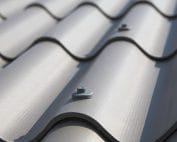
Fibre cement coverings
Moss on corrugated roofing: cleaning without surface damage
At a glance
Green growth on a roof does not always mean that the covering has stopped working. Fibre cement sheets can become overgrown with moss, algae or lichen over time. The location and scale of the phenomenon matter. Asbestos-free fibre cement should be cleaned using a method suited to the material, without damaging the surface and without walking on the sheets. Moss, lichen, deposits from the surroundings and mineral efflorescence have different causes. Colour alone is not enough to choose a preparation. It is worth checking whether the change forms a thicker layer or is merely a discolouration. In cases of doubt, an assessment by a contractor familiar with the material is helpful. A white bloom may be associated with the movement of calcium compounds during dampening and drying.
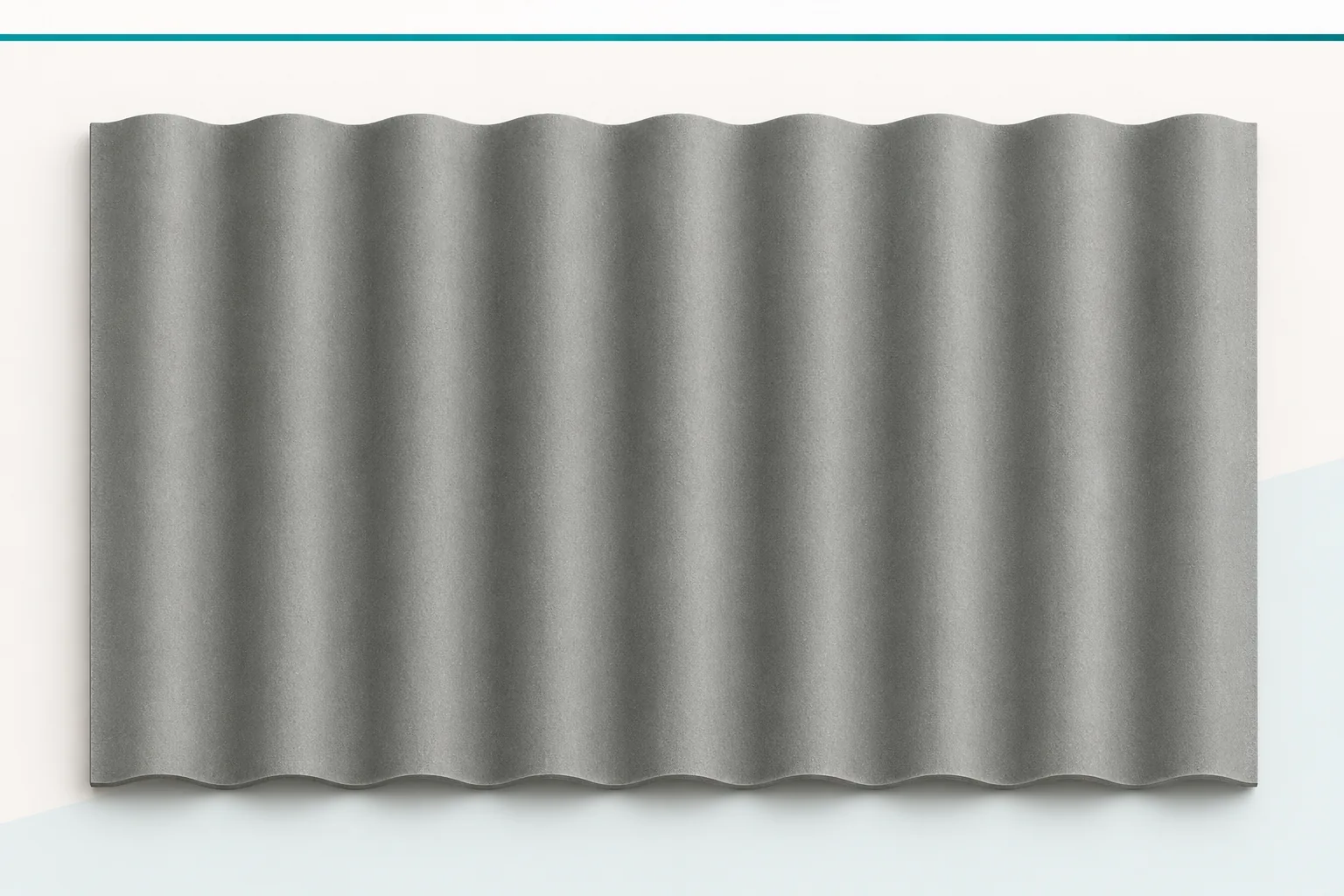
First, identify what can be seen on the roof slope
It should not automatically be treated as biological growth. Likewise, a dark trace under a tree does not have to mean damage to the sheet. Identification reduces the risk of using an unnecessarily aggressive method.
Check the effect of the deposit on how the roof performs
Fibre cement sheets can retain their function despite surface changes in appearance. The problem becomes more significant when the accumulation of contamination impedes water runoff. The overlaps, the valleys of the corrugations and the channels are particularly important. There, vegetation can retain moisture and alter the behaviour of the joint.
Not every stain requires immediate cleaning of the entire roof slope. It is worth establishing the purpose of the treatment. Removing a blockage in the drainage has a different justification than improving the colour. The scope of work should correspond to the actual need and to the possibilities of safe access.
Assess the surroundings that encourage recurrence
Branches, leaves and shading affect how long the surface takes to dry. If the gutter is constantly being filled up, a one-off wash will not solve the problem. It is worth analysing the possibility of reducing contamination and making inspection easier. Any change to the surroundings should take into account the conditions of the plot and the protection of the roof itself.
Asbestos-free fibre cement is not a material on which nothing will ever grow. Prolonged moisture and deposits can encourage surface changes. Fibre cement sheets therefore require observation just like other coverings. What matters is maintaining drainage, not the promise of a perfectly uniform appearance throughout the entire service life.
Match the method to the type of surface
Natural and factory-painted sheets may have different care recommendations. The preparation should be approved for the specific material. Sealants, flashings and metal fastenings must also be taken into account. Compatibility with cement does not automatically mean that it is inert to all parts of the roof.
Fibre cement sheets should not be cleaned with an arbitrary acid, solvent or abrasion. It is worth starting with the method recommended in the documentation and a test in a less visible place, if the instructions provide for one. The concentration should not be increased independently just to speed up the effect.
High pressure can make the situation worse
A strong jet of water can damage the surface or the coating. Directed under the lap, it can force water in where ordinary rainfall does not reach in that way. In the instructions for some systems, high-pressure washing is advised against. The method must be confirmed for the sheet purchased.
Asbestos-free fibre cement should not be treated like a concrete paving block on a driveway. A roof has joints, edges and fragile elements. The aim of cleaning is to restore the proper conditions, not to abrade the surface as much as possible. An overly aggressive treatment can leave a problem bigger than the initial film of dirt.
Take care of the water and dirt after washing
The removed deposit can end up in gutters and downpipes. Before the work, it must be established how it will be collected and drained away. This also applies to the preparation used. It should not be assumed that all water from cleaning can be directed into a tank used later on the farm.
After the work, fibre cement sheets require a check of the drainage. Leftover fragments of moss can restrict the outflow again. It is also worth inspecting the areas at penetrations and flashings, where deposits easily accumulate. Cleaning the visible middle of the roof slope does not mean the whole task is finished.
Safe access is a prerequisite for the treatment
You must not walk directly on the sheets or along the fixing line. This also applies to the roof of a low carport. The reinforcing strips do not replace a walkway, and the skylight is not a place to stand. Suitable platforms and safeguards selected for the specific building are needed.
It is worth considering whether the necessary work can be carried out from a platform or another safe place. A wet surface makes movement even more difficult. If the condition of the covering raises doubts, its suitability for further use should first be assessed. Cleaning should not mask cracks or leaking details.
After cleaning, look for the cause, not just the effect
After the treatment, it is worth taking photos and recording the method used. At the next inspection, it will then be clear how quickly the deposit returns and in which places. This helps to establish whether the problem stems from the surroundings, a blockage in the drainage outlet or difficult drying of part of the roof slope.
Asbestos-free fibre cement does not require the same treatment on every roof. In one case, keeping the gutter clear is enough; in another, more extensive work will be needed. A good decision is based on the function of the covering and the recommendations for the material. The mere pursuit of the appearance of a new sheet should not justify a destructive method.
Before you order roof cleaning, establish the type of deposit and its effect on drainage. Choose a method permitted for the specific surface and a safe means of access.
7 branches. Materials closer to your project.

- SEROCK — Dzierżenin 34 E
- BŁONIE — ul. Sochaczewska 138A
- RADOM — ul. Grobickiego 8
- ŁÓDŹ — Natolin 8
- OLSZTYN — Barczewo, ul. Prosta 9
- WROCŁAW — ul. Jerzmanowska 10C
- GORZÓW WLKP. — ul. Zielona 33/34