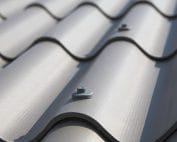
Fibre cement coverings
Why fibre cement sheets crack during fixing
At a glance
A crack at the screw usually means the whole connection needs to be checked. Fibre cement sheets are brittle and can react to localised stress. Asbestos-free fibre cement should not be repaired simply by tightening the fastener harder. First it must be established whether the problem comes from the hole, the contact pressure, the support or some other effect. The correct diameter allows the sheet’s intended movement relative to the fastener to be maintained. A hole that is too tight can restrict this. The way the hole is made is equally important. Punching through the sheet or chipping the edge of the hole leaves a spot prone to further damage. No single clearance dimension should be given for all profiles. The requirements depend on the product and the fastener.
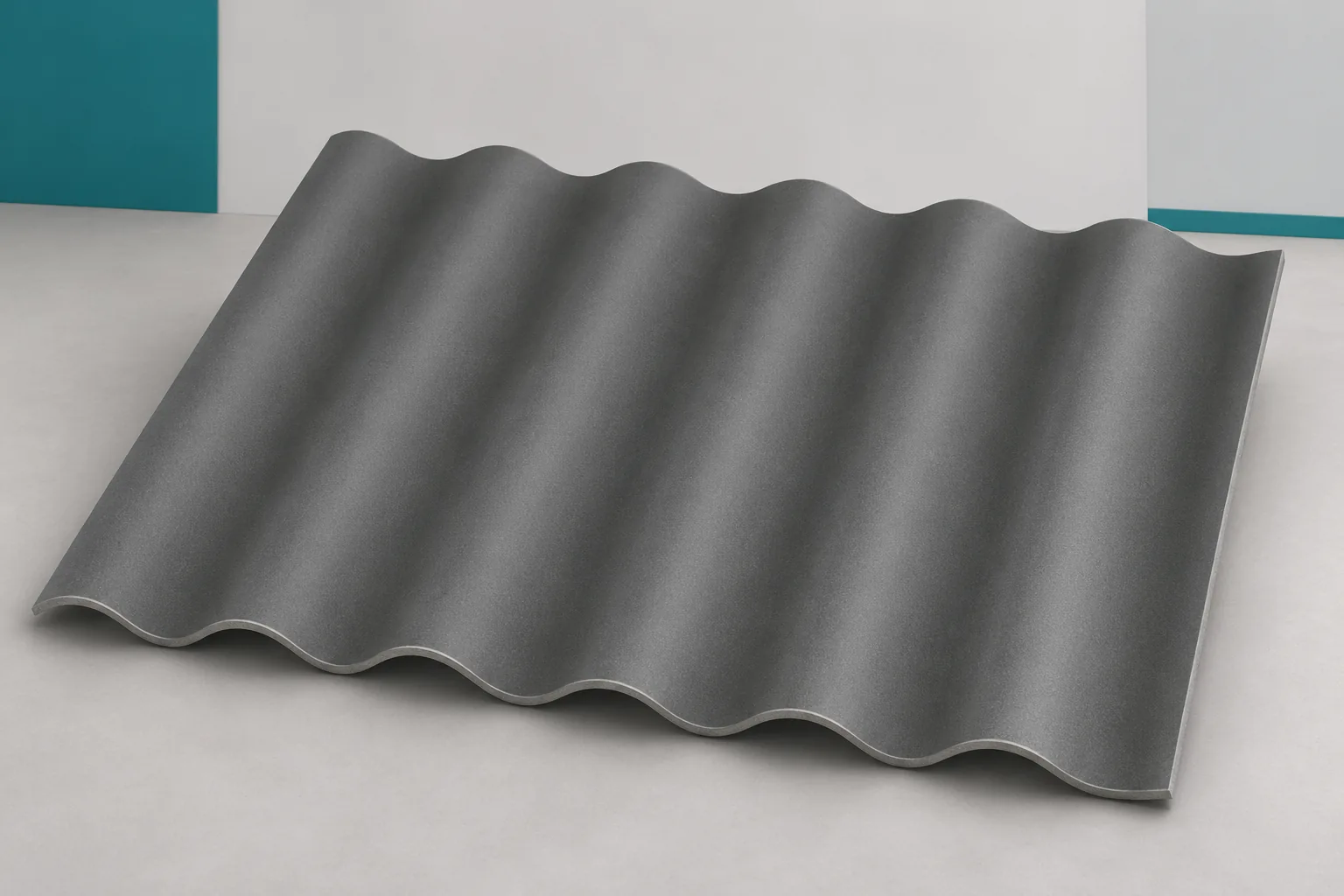
The hole may be too tight or damaged
Self-drilling solutions, too, are intended for a specific system. An ordinary screw does not become the equivalent of a reaming fastener merely because it has managed to pierce the material.
Excessive pressure can eliminate the necessary freedom
Fibre cement sheets require the seal to make proper contact, but not for the joint to be crushed. Tightening to the limit can introduce stress into the brittle material. A tilted washer additionally distributes the pressure unevenly. The problem may become apparent immediately or after a certain period of use.
It is worth checking how the tool works and whether the entire fastening set is compatible. The screw, seal and washer should come from a solution intended for the covering. There is no single universal tightening torque. A value taken at random from another project may be unsuitable for the current joint.
An uneven support forces the sheet to deform
If one batten is higher, the sheet may be pressed against the other supports by the fixings. Such an arrangement leaves stresses in place. Fibre cement sheets should not be used to straighten the structure. Before installation, the evenness of the plane and the spacing of the supporting elements must be checked.
Asbestos-free fibre cement can also crack where support is missing or is located somewhere other than planned. The length of the sheet does not by itself determine the permissible span. When assessing the defect, the actual structure must be compared with the instructions and the design, instead of looking only at the top of the sheet.
An installation error can increase local stresses
At the crossing of joints, the successive sheet thicknesses should be laid in accordance with the system. A lack of proper preparation of the corners can cause a build-up of material. If the installer tightens such a point with a screw, the stress will be transferred to the area around the fixing. The crack then does not necessarily have to result from the fastener itself.
Factory-prepared fibre cement sheets require the correct orientation. Turning an element can change the arrangement of the mitres and openings. It is also worth checking the width of the laps and any sealing. Every part of the joint should correspond to the same solution, without mixing random recommendations.
The damage may have occurred before installation
An impact from a corner, excessive deflection during handling or a poor grip can weaken the sheet. Sometimes the mark is only noticed on the roof. That is why photographs from delivery and installation are useful when diagnosing. They help establish whether the problem concerned a single sheet or recurs in many places.
Asbestos-free fibre cement should be lifted and set down without dragging across the stack. The mounting hole is not a point for carrying the sheet. If damage occurs regularly in a similar place, it is worth analysing the working method. Replacing successive sheets without changing the cause may not produce a lasting result.
Additional installations can change the loads
The frame of the panels, a cable or a device should not rest its weight on an arbitrary fragment of the covering. Loads must be transferred to the structure by a suitable solution. Fibre cement sheets serve as a covering, not as a universal base for equipment. Pressure next to the fastening can cause a crack.
For photovoltaics, the diameter of the penetrations, the sealing and the possibility of movement must also be checked. A solution intended for ordinary roof fastening is not always sufficient for an installation bracket. If the crack appeared after the devices were added, the scope of the diagnosis should include precisely these changes.
Carry out the inspection without stepping onto the sheet
Do not stand next to the damage in order to look at it closely. The covering may be weakened even beyond the visible crack. A safe assessment is organised by a prepared contractor from a suitable position. Skylights and other fragile elements require equally careful handling.
It is worth recording the date the crack was noticed, its location and the circumstances. Was there a gale, work on the roof or installation of equipment? Are there similar cracks in the neighbouring rows? Such information helps to distinguish local damage from a problem recurring throughout the system.
The repair should eliminate the cause
The procedure for dealing with a cracked sheet is determined after assessing its condition and the system recommendations. It should not be assumed that a coating or compound applied to the crack will restore the mechanical properties. Replacing the element may be necessary, but without improving the support or fixing, the problem may return.
Asbestos-free fibre cement can be maintained when the profile and the accessory set are known. During repair, it is worth checking that the new sheet matches the others. A similar corrugation is not enough. A well-executed intervention ends with a check of the cause and documentation of the repaired location.
Before you start the repair, gather photographs of the crack, the area around the fixing and the supports. Diagnosing the whole connection is more important than quickly covering the visible crack.
7 branches. Materials closer to your project.

- SEROCK — Dzierżenin 34 E
- BŁONIE — ul. Sochaczewska 138A
- RADOM — ul. Grobickiego 8
- ŁÓDŹ — Natolin 8
- OLSZTYN — Barczewo, ul. Prosta 9
- WROCŁAW — ul. Jerzmanowska 10C
- GORZÓW WLKP. — ul. Zielona 33/34