Renovation and maintenance
Getting a metal roof ready for repainting
In brief
Before painting, establish where the existing coating has actually failed. Dust beneath a tree, faded colour on a sunny slope and rust at a sheet edge call for different treatments. Compare several areas and check the records to identify the original finish. This helps you choose a cleaning method and a renovation system compatible with the surface. If the sheet is perforated or water is entering the building, address that defect first. The condition and adhesion of the old finish determine whether it provides a suitable base for a new coat.
Does the roof really need painting?
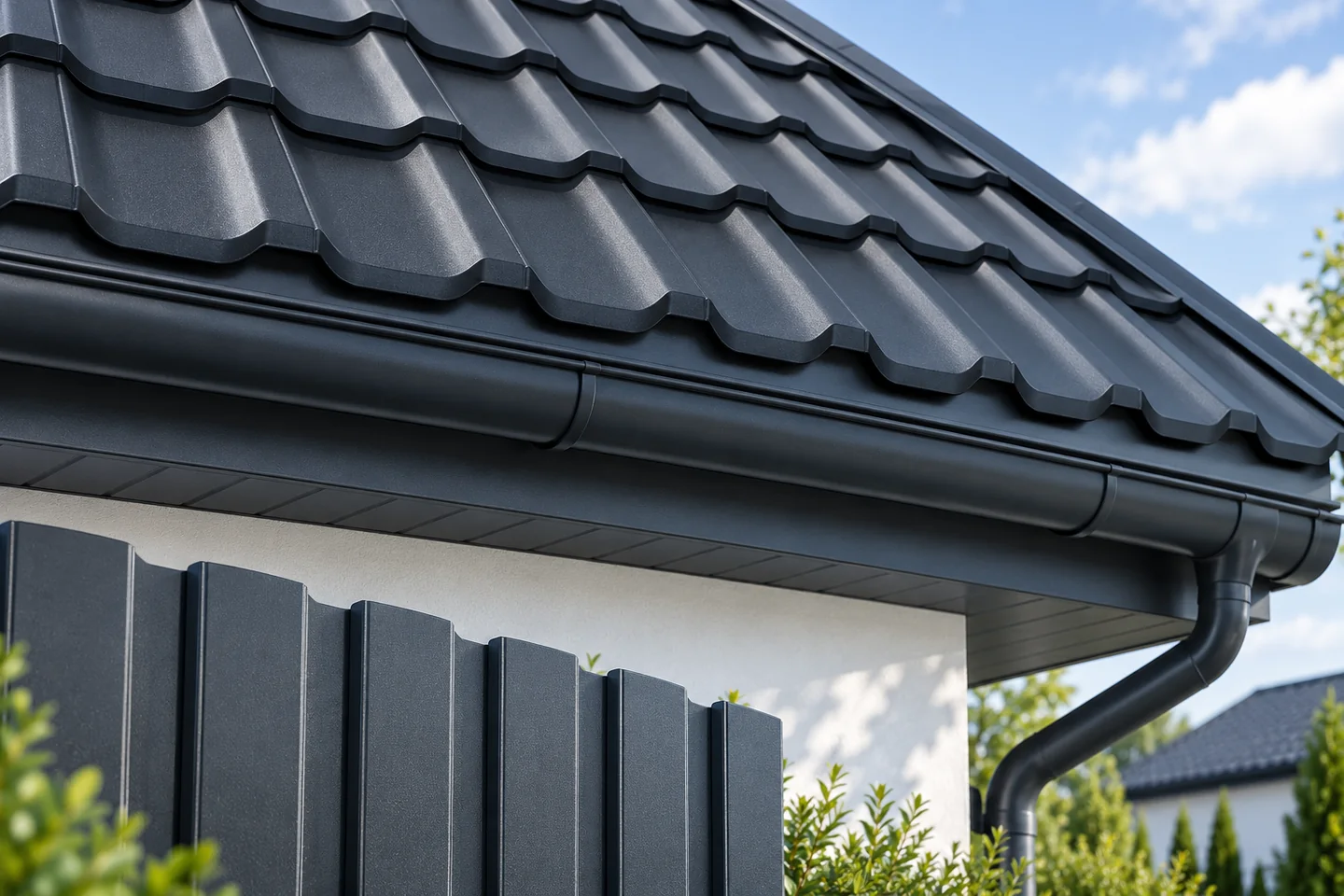
First establish what caused the change in appearance. Dust, deposits and green growth can disappear after proper washing. Natural colour ageing or loss of gloss require a different assessment than active corrosion. It is worth inspecting several places on different roof slopes. The southern part and the section under trees may have a completely different surface condition.
Check the roof’s tightness and the condition of the fixings and flashings. Loose elements, damaged seals and faulty laps are repaired before renovation. Painting should not cover up traces of a problem that is still occurring. In the case of extensive steel loss, compare the cost of renewal with replacing a section of the covering. The durability of the substrate determines whether the whole investment makes sense.
How to identify the substrate and old coating?
Purchase documents, batch markings and earlier records of repairs are helpful. The new paint must be compatible with the layer that will remain on the roof. A factory-coated surface is prepared differently from a previously painted one, and differently again from exposed metallic areas. Do not choose a system solely by the colour on the tin.
The contractor should assess the adhesion of the old layer and the extent to which it must be removed. Loose fragments cannot be treated as a reliable substrate. Where the composition is unknown, a trial on a small area may be necessary. It is worth recording its result and checking the appearance after drying. This is a better basis for a decision than an assurance that one paint is suitable for every metal.
How to clean the roof safely?
Remove leaves and loose deposits, then select the washing method according to the type of soiling and the coating. Do not use aggressive degreasers or concrete cleaners at random. The pressure and direction of the jet should limit the risk of damaging the paint and forcing water under the covering. After cleaning, residues of the agent must be removed in accordance with the product instructions.
The roof must reach the condition required before paint application. A surface that appears dry may still retain moisture in laps or depressions. Allow for drying time and the weather forecast. Do not start the next stage merely because the scaffolding hire is ending. Substrate preparation is part of the renovation system, not an addition to the painting itself.

How to repair damage before painting?
The extent of treating corrosion foci depends on their depth and the system recommendations. Layers that do not form a stable substrate must be removed. At the same time, healthy coating on adjacent panels should not be destroyed. In places overheated by earlier cutting, the problem may extend further than the visible bloom. Such areas require particular assessment.
Replace parts with perforation or loss of rigidity if repair will not provide the required durability. Check the fixings and seals, but do not tighten all screws without checking. Excessive pressure can damage the washer or deform the sheet. After repairs, remove dust and swarf. Leaving them under the new layer can quickly spoil the appearance of the surface.
How should application conditions be planned?
The coating system specifies the substrate temperature, humidity, time between coats and drying requirements. The temperature of the sheet can differ significantly from the air temperature. On a sunny day, a dark roof slope can become very hot. In the evening, it can then quickly approach conditions conducive to condensation.
Plan the work so that the fresh coating is not exposed to rain, dew or dust during the critical period. Maintain the coat thickness specified by the paint manufacturer. More material does not always mean better protection. A coat that is too thick may not dry properly. The choice of tool, thinning and number of passes should follow the documentation for the selected product.
What should the contract and handover include?
Define the scope of cleaning, repairs and protection of the surroundings. Enter the names of the system used and the number of coats in the execution documentation. Also agree on how to proceed if larger damage is revealed after washing. This way, the surcharge for necessary repair does not become an unclear element of the cost estimate after work has started.
At handover, assess the uniformity of the surface, the care taken with details and whether drainage is unobstructed. Keep photos and information about the execution conditions. Check whether the renovation affects the existing warranty on the covering. For the future, establish how the new coating should be cleaned. A properly prepared roof offers a chance of a durable result, but requires subsequent inspection just like a new covering.
7 branches. Materials closer to your project.

- SEROCK — Dzierżenin 34 E
- BŁONIE — ul. Sochaczewska 138A
- RADOM — ul. Grobickiego 8
- ŁÓDŹ — Natolin 8
- OLSZTYN — Barczewo, ul. Prosta 9
- WROCŁAW — ul. Jerzmanowska 10C
- GORZÓW WLKP. — ul. Zielona 33/34