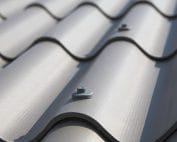
Fibre cement roofing
Drilling corrugated fibre cement sheets without chips or cracks
In brief
The hole in a roof sheet is part of the fixing, not an arbitrary place for a screw. Corrugated fibre cement sheets require the correct position, diameter and method of hole formation. Asbestos-free fibre cement can crack if it is pierced or over-tightened. Well-prepared drilling helps maintain weathertightness and the ability of the covering to perform. The position of the fixings is determined for the specific profile and supports. On a roof, penetrations through the crest of the corrugation are often specified, but the exact arrangement must be read from the instructions. Do not count corrugations from a random photograph. The direction in which installation begins is also important. Before drilling, it is worth checking that the marked point aligns with the appropriate support.
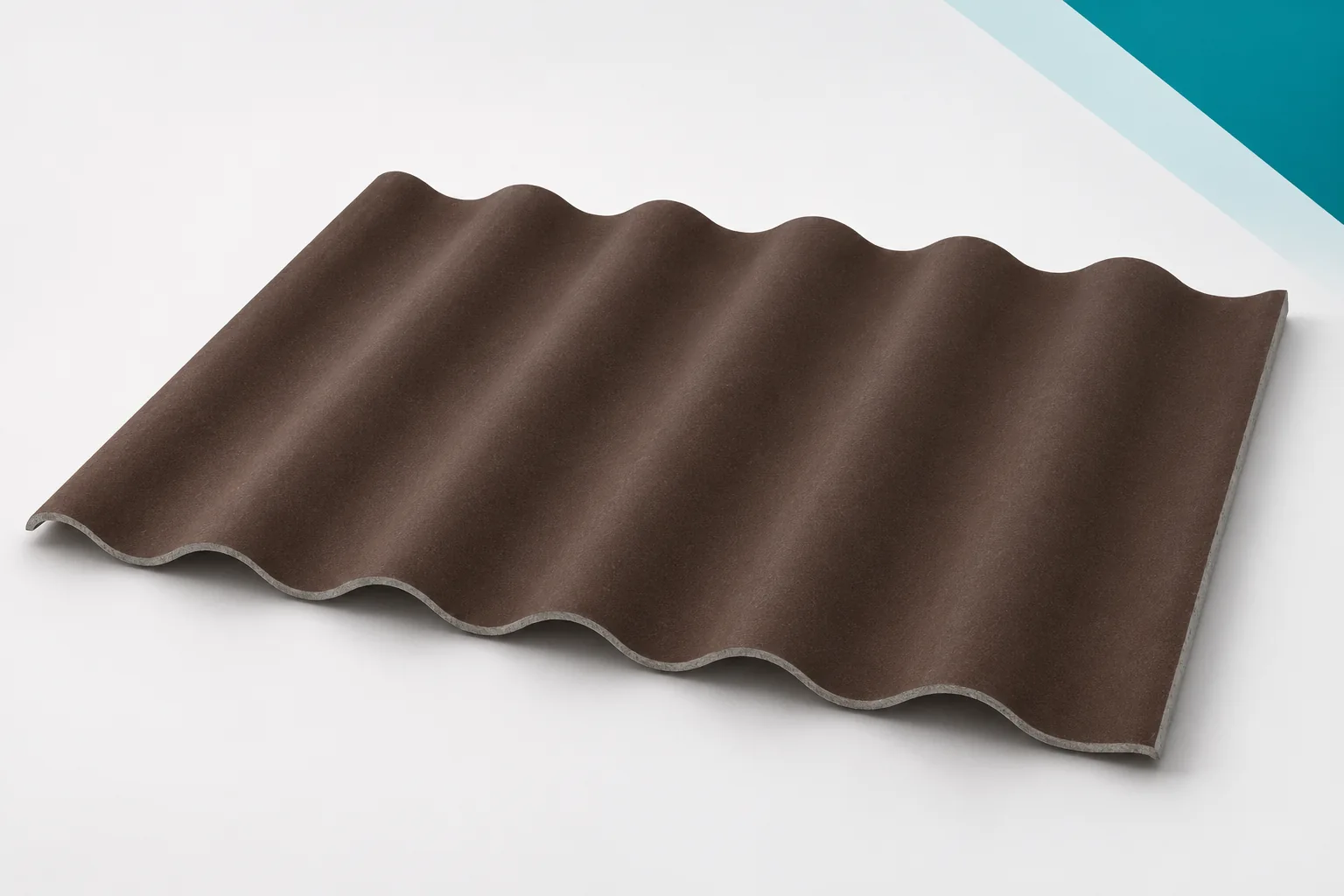
The hole should follow from the installation plan
A correct hole alone will not provide a fixing if the screw lands outside it. The sheet layout and the structural layout should be coordinated. At this stage it is easier to correct the spacing than after the entire row has been fixed.
The clearance has a specific purpose
Corrugated fibre cement sheets and the structure change dimensions under the influence of environmental conditions. The hole clearance provided in the system limits undesirable stress at the fastener. It is not a defect requiring rigid filling. The diameter is selected according to the fixing and the relevant instructions.
There is no single universal allowance for all sheets and all applications. The solution for an ordinary screw may differ from that for a photovoltaic mounting penetration. Asbestos-free fibre cement does not define such a dimension by its name alone. It is necessary to establish which system and which type of connection the data refer to.
Drilling should not turn into piercing
A brittle sheet requires a tool and accessories intended for the material. The hole should be made in accordance with the recommendations, without accidental impact and without breaking out a fragment. Puncturing with a nail or screw can leave damage that is not visible from above. A washer does not eliminate this risk.
Corrugated fibre cement sheets can also be used with special self-drilling and reaming fasteners. This is a separate system solution, not permission to use any screw without a hole. The intended use of the fastener, the substrate and the required tool operating method must be checked.
Support and alignment limit chipping
The sheet should be laid stably during working. It must not vibrate or deflect excessively under the pressure of the tool. Support at the working point and protection of the surface against scratching are important. The method of preparing the workstation is selected according to the format and the geometry of the corrugation.
The tool should not be tilted in order to enlarge the hole with a random movement. A shape created in this way may not work correctly with the seal. The hole should have the specified diameter and be in the correct position. If an error occurs, the component needs to be assessed rather than concealed with a larger washer.
Keep the clearances specified for the sheet
Corrugated fibre cement sheets require suitable positioning of the holes relative to the edges and overlaps. Too small a distance can increase susceptibility to chipping. The fixing should not be moved arbitrarily in order to hit a badly positioned batten. The discrepancy between the structure and the plan must first be resolved.
If the sheet has factory holes, their size and arrangement may serve different functions at the top and bottom ends. Turning the sheet over may change the behaviour of the connection. Before use, the markings, corner chamfers and installation direction must be checked. Factory preparation does not remove the need for inspection.
Remove dust without spreading it around the work area
Drilling produces mineral particles. Measures to limit dust and protection arising from the safety data sheet and the work assessment are required. Do not blow into the hole with your face close to it or scatter dust with compressed air. Eye protection is also important.
Asbestos-free fibre cement does not mean a dust-free material. Working residues must be removed from the surface so that they do not cause soiling. The cleaning method should be appropriate to the product. Before installation, the sheet should be dry in the places required for the seals used and free of loose particles.
Also check the underside of the hole
From above, the drilled point may look correct, while chipping has occurred underneath. The assessment is carried out before the sheet is lifted or fixed, when access is easy. Cracks running from the hole require clarification. They should not be ignored simply because a washer will cover them.
Corrugated fibre cement sheets with an incorrectly made hole should not go into installation without an assessment of suitability. The procedure depends on the location of the damage and the system documentation. An additional hole next to it is not always the solution. It may leave a weakened section and another place requiring a tight seal.
Drilling and tightening form a single process
Even a correct hole can be ruined by excessive tightening of the fixing. The seal is to fulfil its function without crushing the sheet and blocking the intended movement. The tool setting is selected according to the fastener. One random torque for all substrates and seals is not the right principle.
After fixing, it is worth checking the seating of the washer and that no new cracks have appeared. The hole, the fastener, the seal and the support must work together. Checking only one of these elements is not enough. A correctly made connection begins with a plan and ends with an assessment of the finished fixing point.
Before drilling, establish the profile, the type of fastener and the required clearance. Then check that the points align with the supports and the condition of both sides of each prepared hole.
7 branches. Materials closer to your project.

- SEROCK — Dzierżenin 34 E
- BŁONIE — ul. Sochaczewska 138A
- RADOM — ul. Grobickiego 8
- ŁÓDŹ — Natolin 8
- OLSZTYN — Barczewo, ul. Prosta 9
- WROCŁAW — ul. Jerzmanowska 10C
- GORZÓW WLKP. — ul. Zielona 33/34