Roof and energy
Checking ventilation beneath photovoltaic roof coverings
In brief
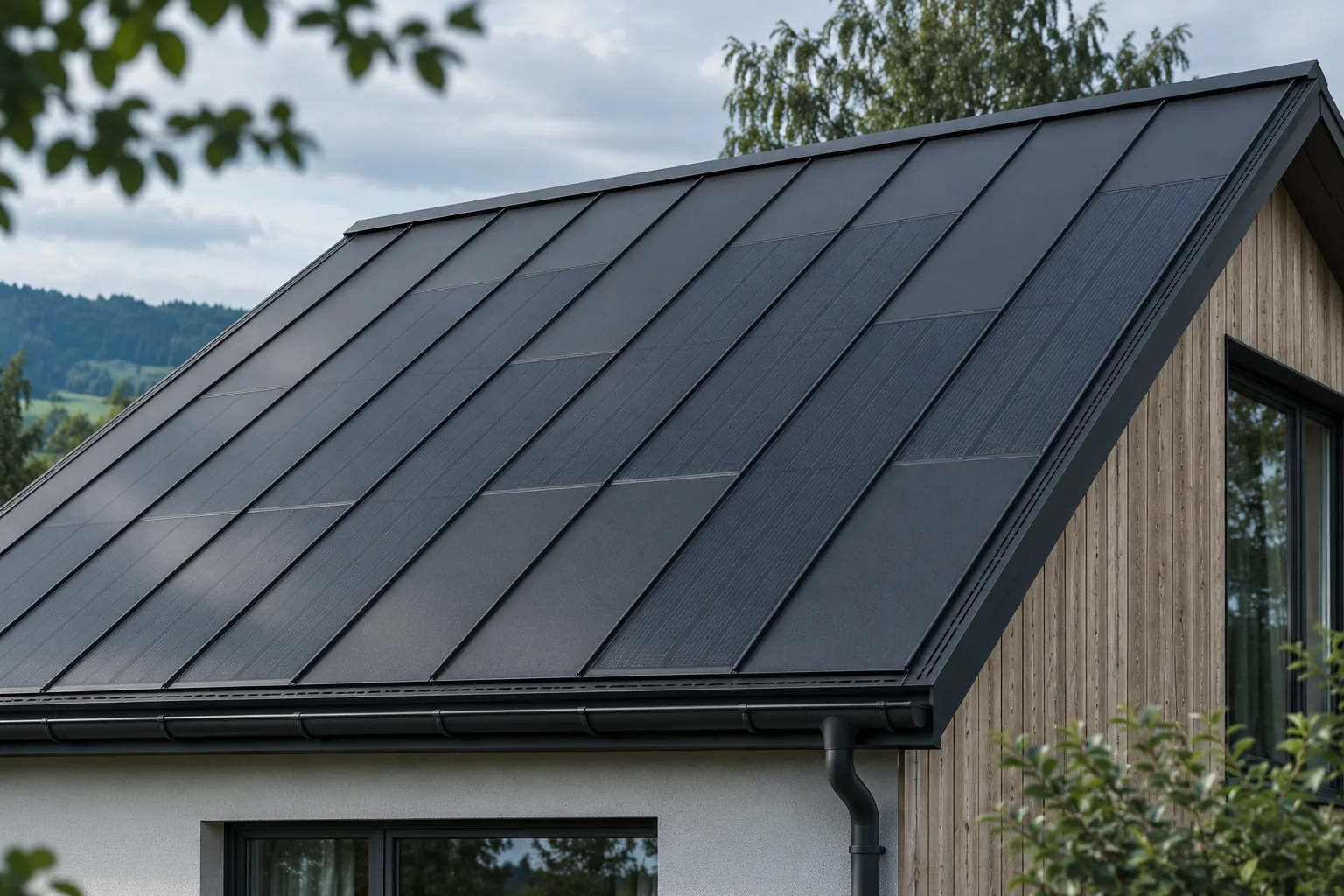
Ventilation under the covering should preserve the arrangement specified in the design throughout the entire service life. In practice, it may be altered by leaves, nests, later insulation or modification of the eaves. The inspection does not consist of raising active elements on one’s own. First the documentation and visible symptoms are checked, and then the type of inspection is selected. In an integrated roof, both the building layers and the cables must be protected. The reference point is the design and the system instructions. They should show the required air supply, the flow path and the air discharge. Without this information it is difficult to assess whether a visible gap serves its proper purpose. One should not compare one’s own roof with a random photo of another covering.
What should the current roof condition be compared with?
A similar-looking eaves detail does not mean identical construction.
Photographs taken before the layers were covered are helpful. They show where the cables run and how the areas at windows or the chimney were resolved. It is worth keeping them together with the roof plan. If documentation is missing, the inspection contractor should first establish the type of system and the scope of investigation required.
What symptoms can the owner notice?
From ground level or an accessible part of the building, leaves at the inlets, traces of nests or a change in the shape of the covers can sometimes be seen. Inside, signs of moisture or an unusual smell may be cause for concern. None of these symptoms points to one certain cause. They are, however, a reason to pass the information on to the person assessing the roof.
Not every difference in production should automatically be linked to ventilation. Weather, shade and equipment also affect the yield. If overheating is suspected, an analysis of the operating conditions is needed. A single temperature reading or a hot surface on a sunny day is not enough to establish a workmanship defect.
What often changes after acceptance?
The owner may commission new soffit cladding, additional insulation or bird protection. Each of these works can affect the flow beneath the covering. Cables or accessories are also sometimes added in a place intended as an air path. Information about all interventions is therefore important, even those not directly related to the photovoltaic system.
Before renovation work, it is worth showing the team the system documentation. No empty space should be filled in and no openings closed simply because they look unsightly. In an integrated roof, technical details are part of a shared solution. Changing them should be agreed as carefully as changing a visible covering element.
What should a professional inspection look like?
The scope depends on the symptoms and the accessibility of the locations. The contractor should assess whether the visible details match the design and indicate whether further access is needed. There is no need to dismantle the entire roof slope straight away. At the same time, it is not enough to state from a distance that the roof “has a bit of draught”. An answer relating to the specific assembly is needed.
If the inspection requires opening a section, the circuits and the building must be protected in accordance with the relevant procedure. After the work is completed, the layers and connections must be restored. The report should describe the cause of the problem, the actions taken and any recommendations. This gives the next inspection a clear point of reference.
Can the openings simply be enlarged?
Such an action without a design can create other problems. The opening must ensure proper flow, but also work with protection against water, animals and weather conditions. Randomly cutting the cover is not a universal way to improve ventilation. Similarly, an additional gap can compromise a detail that previously worked correctly.
The repair should restore a solution in line with the documentation or constitute an agreed design change. If the cause is contamination, a different scope of work is required than for an incorrectly executed eaves detail. It is worth establishing the cause first and only then choosing the method. This avoids costly rework carried out unnecessarily.
How can they be kept clear in the years to come?
Establish the scope of observation and inspection appropriate to the surroundings. A house under trees may require different attention than a building on an open plot. Records after renovations and weather events are also important. It is not about frequently going onto the roof, but about responding consciously to changes that may affect its performance.
Integrated steel roofing makes it easier to maintain a tidy appearance and plan details as a whole. This benefit is worth protecting during use. Clear ventilation is not an add-on that can be changed freely after acceptance. It is part of the design, just like the fixings, flashings and electrical installation routes.
Among the manufacturers and brands of photovoltaic roofs are LUMA Solar, Terrán, SunRoof, SolRoof, Electrotile, Wienerberger Wevolt, ML System, BIPVco, Ennogie and MDM NT (MyRoof).
7 branches. Materials closer to your project.

- SEROCK — Dzierżenin 34 E
- BŁONIE — ul. Sochaczewska 138A
- RADOM — ul. Grobickiego 8
- ŁÓDŹ — Natolin 8
- OLSZTYN — Barczewo, ul. Prosta 9
- WROCŁAW — ul. Jerzmanowska 10C
- GORZÓW WLKP. — ul. Zielona 33/34