Costs and purchases
Checking a roofer’s work before signing a contract
In brief
In Poland, a good roofer stands out already when preparing the order: they ask about the design, the type of covering and the condition of the substrate, and for a renovation they want to see the building and establish what can only be checked after removal. Rather than promising a single price without knowing the scope, they can explain what data are needed for a sensible estimate. Before signing the contract, it is worth checking whether the conversation covers difficult areas — chimneys, valleys, windows and unusual eaves — and who is responsible for flashings and coordination with other teams.
What does the first conversation tell you?
A reliable contractor asks about the design, type of covering and condition of the substrate. For a renovation, they want to see the building and establish what will only be possible to check after dismantling. They do not promise one price for every roof without knowing the scope. They can also explain what data is needed to prepare a sensible quote.
Pay attention to whether the conversation covers difficult areas. Chimneys, roof valleys, windows and unusual eaves require a plan. The contractor should indicate who is responsible for flashings and coordination with other teams. Avoiding these questions may mean that the problem will be postponed until the material is already on the roof and it is difficult to change the sequence of work.
How should previous projects be checked?
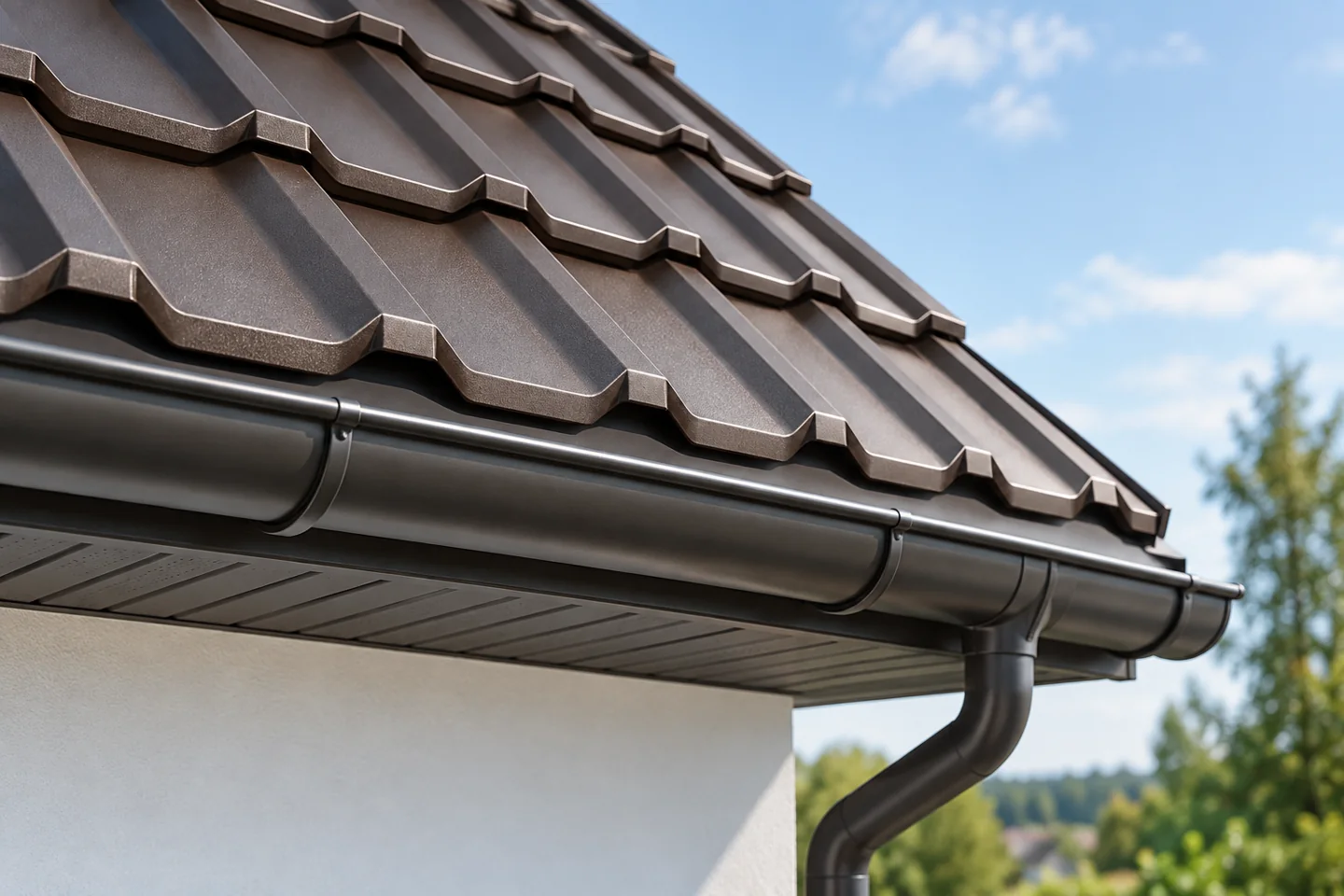
Ask for examples of roofs with similar geometry and covering. Experience with trapezoidal steel sheet on a hall is not the same as installing a complex modular tile-effect metal roofing. Look not only at the whole form but also at the details of the eaves, chimneys and edges. Straight lines and careful connections show more than a photo taken from a distance.
If possible, ask a previous client about punctuality, communication and response to defects. One minor correction does not disqualify a team. What matters is whether the problem was identified and resolved. Pay attention to how the work is documented, because some of the most important elements remain invisible after installation is complete.
Does the contractor work with documentation?
Ask where the batten spacing and fixing pattern come from. A correct answer should refer to the design and the instructions for the specific profile. Applying the same rules to every tile-effect metal roofing or sandwich panel is risky. Differences in geometry, substrate and loads may require a different solution.
A good roofer also knows when they need a designer’s decision. A change in the structural cross-section, a large opening or the addition of equipment are not solely a matter of skilful installation. The ability to stop work and clarify doubts demonstrates responsibility. One should not expect a specialist to confirm every cost-saving proposal from the client.

What does careful organisation look like?
The material should have a prepared storage area and a safe delivery route. Tools must be suitable for coated steel sheet, and filings should be removed as work proceeds. Safety measures for working at height are also important. Tidiness is not merely a matter of the site’s appearance. It reduces the risk of damaging sheets, accidents and losing small components.
During renovation, the crew should have a plan for protecting the building while the roof slope is exposed. Check how they respond to changes in weather and whether the daily scope of dismantling matches the protection capacity. Haste should not lead to leaving the interior unprotected. It is worth including such arrangements in the contract rather than assuming they are obvious.
What should the contract include?
Record the scope of works, materials, method of measurement, deadlines and payment terms. Separate known works from those that may emerge after dismantling. Establish how additional costs are approved. Also specify responsibility for transport, equipment and waste. A clear document helps both parties and reduces room for misunderstanding.
The way acceptance and defect rectification are handled is important. It is good to provide for inspection of covered layers and photographic documentation. Ask about the terms of liability for the work and contact after completion. A promise that nothing will ever go wrong is less useful than a clear procedure if a real problem arises.
How can the final quality of work be assessed?
Check that the covering matches the order, that the roof slopes are even, and that the flashings and drainage are correct. The surface should be cleaned of swarf and foil remnants within the required time. Acceptance is not limited to the appearance from the street. It is worth reviewing photos of earlier stages and confirming the complete set of accessories specified in the design.
Obtain the product documents, maintenance instructions and a record of agreements. A good roofer hands over not only an aesthetically pleasing roof but also knowledge of its use. They can point out areas requiring inspection and explain the solutions applied. It is precisely this transparency, combined with the quality of details, that provides the most reliable basis for assessing the contractor.
7 branches. Materials closer to your project.

- SEROCK — Dzierżenin 34 E
- BŁONIE — ul. Sochaczewska 138A
- RADOM — ul. Grobickiego 8
- ŁÓDŹ — Natolin 8
- OLSZTYN — Barczewo, ul. Prosta 9
- WROCŁAW — ul. Jerzmanowska 10C
- GORZÓW WLKP. — ul. Zielona 33/34