Choice of covering
What should an environmental assessment of a metal roof include?
In brief
A fair environmental assessment of a metal roof requires looking at the whole cycle: material use, durability, repairs and later recycling. Check the scope of the product’s environmental declaration, its declared unit and the stages covered, rather than comparing isolated figures. Separate the technical possibility of recovering steel from how removed sheets are actually handled. When designing, compare equivalent roof assemblies including insulation, substrate and fixings, not just the sheet. Ask for documents for the chosen product, calculate quantities carefully and plan maintenance. Leave design decisions to the designer.
Why is the recycling slogan not enough?
Steel is a material that can be recycled. This does not mean that every sheet removed from a roof will be fully recovered, nor that its production had no environmental impact. Raw materials, energy, transport and the manufacturing process also count. A claim of a completely emission-free roof should not be accepted without a detailed explanation of its basis.
It is worth distinguishing between the technical possibility and the actual way the waste is handled. Clean, sorted components are easier to pass on to a suitable recipient than a mixture of sheet metal, insulation and rubble. The way materials are separated can already be established during renovation. Coverings with additional layers require their build-up to be taken into account when managing the waste.
What can be read from an environmental declaration?
An environmental product declaration, abbreviated EPD, presents the results of an impact assessment within a defined scope. It may cover production, end of life and specific recovery scenarios. It is not a simple label saying that a product is the best. You need to check the date, the declared unit and which stages have been included.
An example declaration for profiled steel components relates the results to one square metre and indicates the stages covered by the analysis. The tables may contain different variants of thickness or product. Comparing two arbitrary figures without checking these assumptions is misleading. The benefits anticipated after end of life do not mean that they have already occurred.
How to compare two roof solutions?
Start with the same task: area, loads, thermal performance and the assumed period of use. Thinner sheet metal uses less steel per square metre, but it must meet structural requirements. It is not reasonable to reduce thickness only to improve a single indicator. Additional supports or earlier replacement may change the assessment of the entire solution.
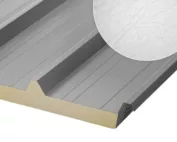
Also compare the layers needed for the roof to function. A trapezoidal steel sheet on its own and a finished sandwich panel have different functions. Assessing one square metre of these products does not yet show the result for equivalent roof assemblies. The comparison should include insulation, substrate, fixings and the other components required in the given variant.

How to reduce waste when ordering?
Accurate measurement and a cutting plan help to buy material that matches the geometry of the roof slopes. On a simple roof, sheets cut to length may be advantageous. With numerous valleys and dormers, it is also worth comparing modules. There is no single waste percentage that is right for all roofs. What counts is the actual arrangement of components and the possibility of using offcuts.
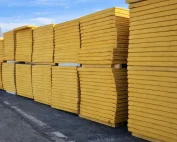
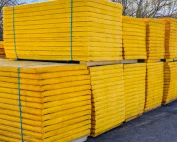
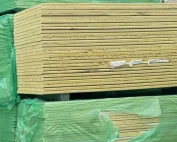
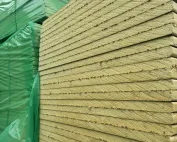
Delivery should be agreed together with the installation date and storage conditions. Damage to the coating during unloading or dampness in a tightly stacked pack can waste material before it is even used. Protecting the sheets and preparing the storage area therefore also has an environmental dimension. They help avoid unnecessary transport and replacement of new components.
What gives durability and the possibility of repair?
Selecting the coating for the environment, correct flashings and regular cleaning of outlets help keep the roof in good condition. However, a specific number of years should not be promised solely on the basis of the warranty length. Conditions of use and the scope of guaranteed protection vary. Durability is assessed in relation to the whole solution and its maintenance.
The possibility of replacing a locally damaged element can be a practical advantage. However, access to the fastenings and the availability of a matching profile must be checked. Keeping purchase documents and material markings makes later repair easier. An early response to a small leak can limit the replacement of wet insulation and the other roof layers.
How to account for the energy needed to use the house?
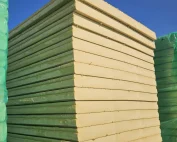
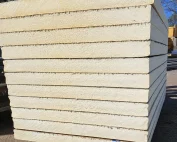
The covering and the insulation perform different roles. Heat loss is caused by the entire building envelope, together with thermal bridges and leaks. PIR insulation boards can help achieve the required thermal resistance at a smaller thickness than some other insulations. However, this does not provide a basis for declaring them always the most environmentally friendly material. A comparison of the entire system is needed.
When making a decision, ask for the documents for the selected product, calculate quantities carefully and plan servicing. If you want a numerical environmental comparison, commission it for equivalent solutions. An honest assessment allows for different results for different buildings. The greatest benefit comes from a consistent design that meets the requirements and does not force premature corrections.
7 branches. Materials closer to your project.

- SEROCK — Dzierżenin 34 E
- BŁONIE — ul. Sochaczewska 138A
- RADOM — ul. Grobickiego 8
- ŁÓDŹ — Natolin 8
- OLSZTYN — Barczewo, ul. Prosta 9
- WROCŁAW — ul. Jerzmanowska 10C
- GORZÓW WLKP. — ul. Zielona 33/34