






Blog
The Izoprofil.net blog answers practical questions about renovation, extensions and the sequence of work. Find out where to start looking for a leak, when to order roofing sheets, how to prepare a delivery area and what to establish before installing insulation. The articles cover measurements, the condition of existing components and order details for roofing, sandwich panels and PIR insulation. They explain which information to collect and when an on-site assessment by a professional is needed. Choose the article that matches the current task so you can prepare a more accurate materials enquiry and reduce rework.

Handing over a photovoltaic roof to a new homeowner
Handing over a house with a photovoltaic roof should involve more than the gate remote and the last electricity bill. The new owner needs the roofing documentation, information about the installation and access to monitoring. They must know what works automatically, what must not be changed independently and who to report a problem to. An orderly handover preserves continuity of service and makes it easier to assess the condition of the building. Prepare the as-built design, a map of active components, the electrical schematic and the test certificates. Attach the instructions, warranty terms and documents concerning repairs carried out. A list of devices with their markings is also important. A promotional folder alone does not describe what was actually installed on a specific building.
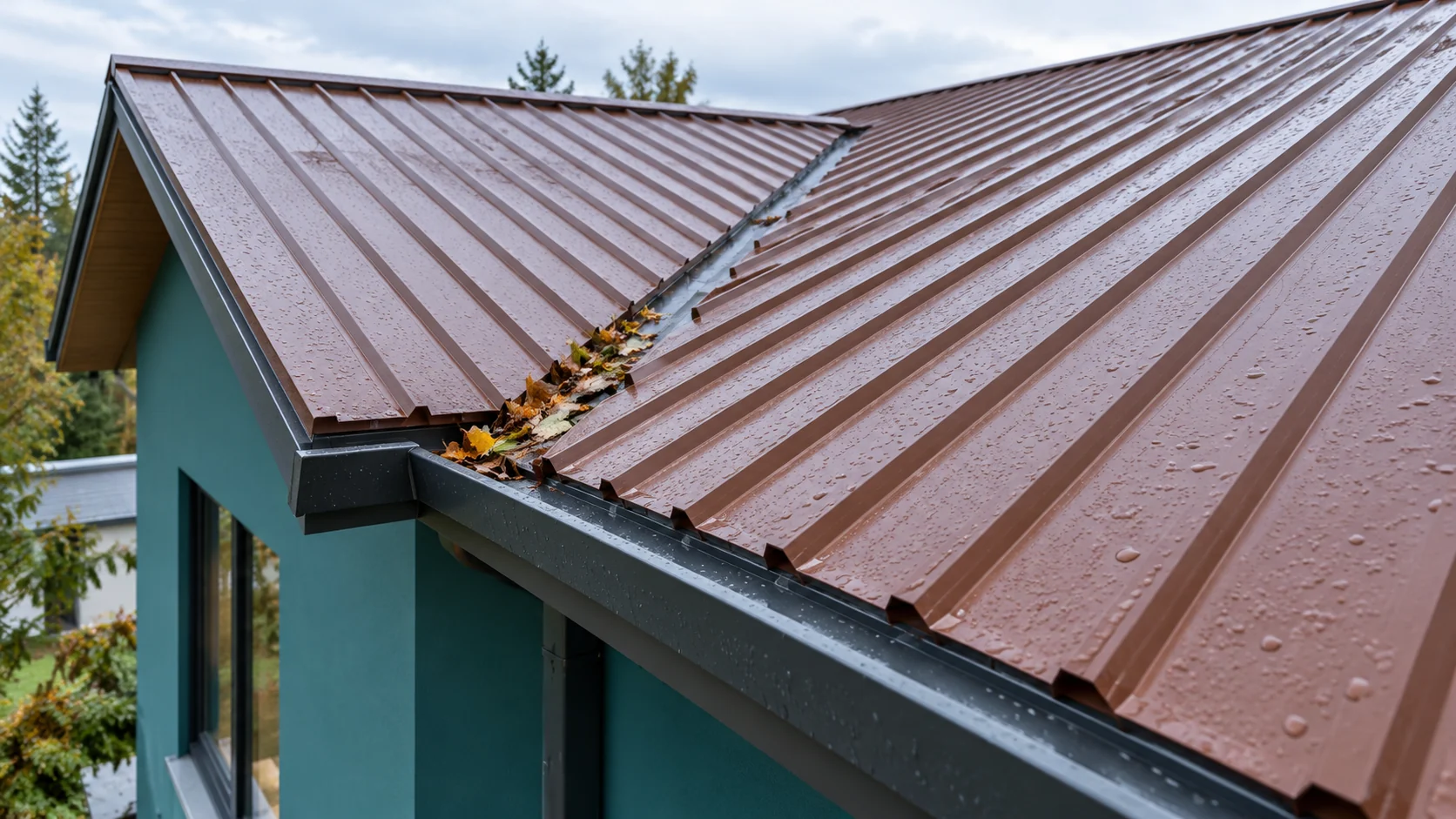
Where should you start looking for a leak in a metal roof?
A wet patch under the roof does not pinpoint the exact location of the damage. Water can run down the sheet, the membrane or a structural element. It is therefore worth starting the repair by observing the weather and inspecting from inside. Only then should you check the screws, laps and flashings. This order limits unnecessary stripping of the roof. Note whether the problem occurs during rain, after snow melt or on a cold morning without precipitation. This is the first clue. A leak in strong wind may be associated with water being forced under a joint. Droplets spread over a larger area of the underside of the sheet more often suggest condensation. However, both phenomena can occur simultaneously.

How to plan chimney flashing before laying trapezoidal steel sheet?
Chimney flashings should not be left until the last day of installation. Their shape affects the division of sheets, the support and the method of water drainage. The side facing the ridge requires the most attention. That is where run-off from the roof slope collects. A well-agreed detail allows the mason's and roofer's work to be combined without later dismantling the covering. First, the condition of the chimney, its dimensions and planned finish are checked. A flashing fixed to fragile render will not be a secure connection. If the masonry is still to be rendered or clad, the sequence of work must be established. The finished roof should not be accidentally soiled with mortar or damaged during masonry work.

How to insulate a wall at the plot boundary when there is no room on the façade?
Close to the plot boundary it is sometimes difficult to add insulation from the outside. Internal insulation can then be one of the options under consideration. It does, however, require checking the wall and the entire layer build-up. Saving space should result from the properties of the material and good detailing, not from omitting the necessary build-up. Check the geometry of the building, the condition of the façade and the possible scope of works. Proximity to the boundary alone does not determine the permissible solution. Arrangements concerning the property and the required documentation should precede purchase. It should not be assumed that a change solely from the inside always exempts you from other approvals.
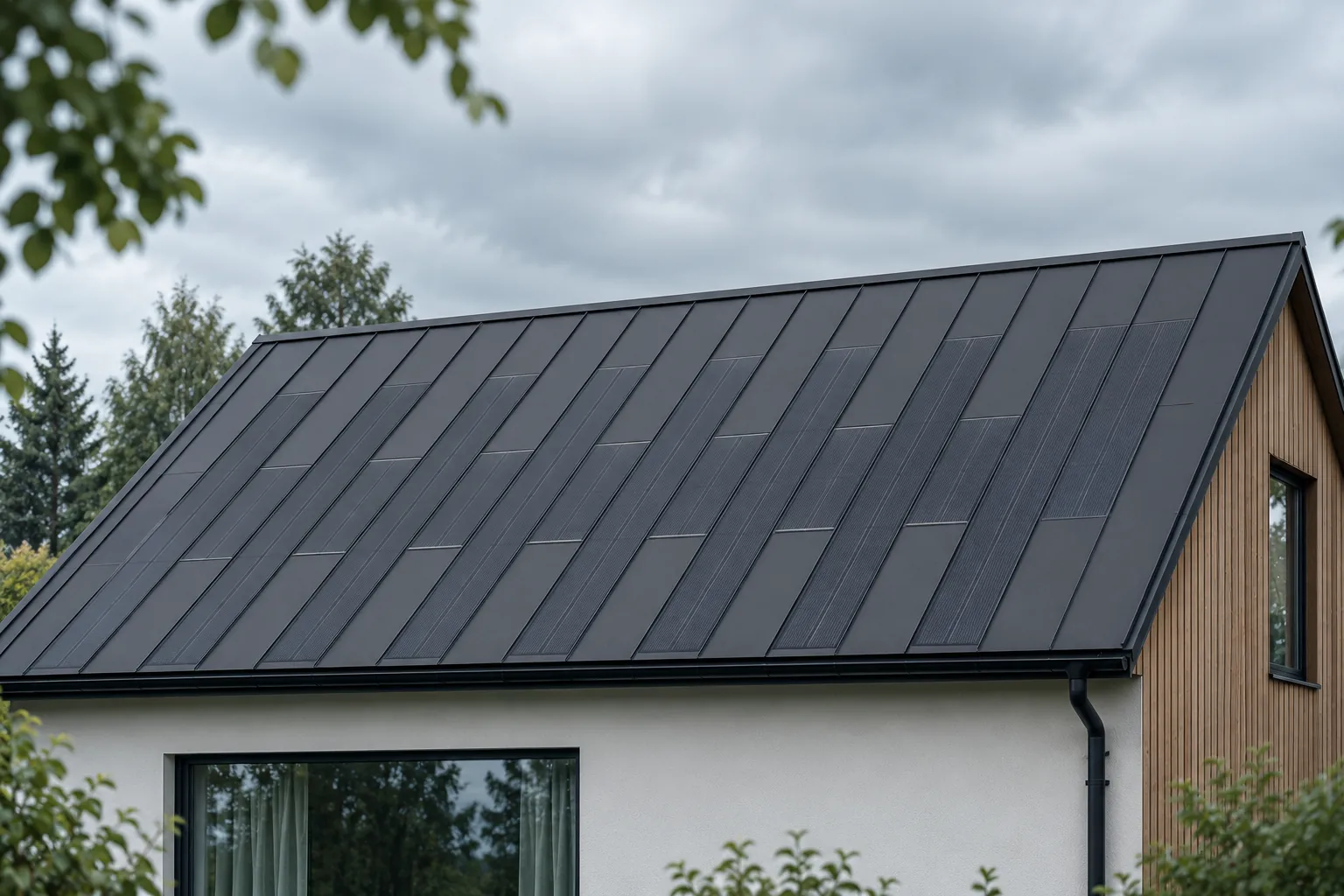
Protecting cables and connections beneath a photovoltaic roof
Cables under integrated roofing are barely visible, but their routing is crucial to how the system works. They need protection from damage, suitable environmental conditions and correct connections. Routes must be coordinated with water drainage, ventilation and service access. Roof aesthetics must not depend on hiding randomly routed cables. The most can be done at the design and installation stage. In a finished roof slope, access to the cables may require dismantling roofing elements. It is therefore worth establishing their route, connection points and building penetrations in advance. The design should account for the geometry of the active fields and the equipment requirements. Randomly shortening the route on site can conflict with roof detailing or hinder later servicing.
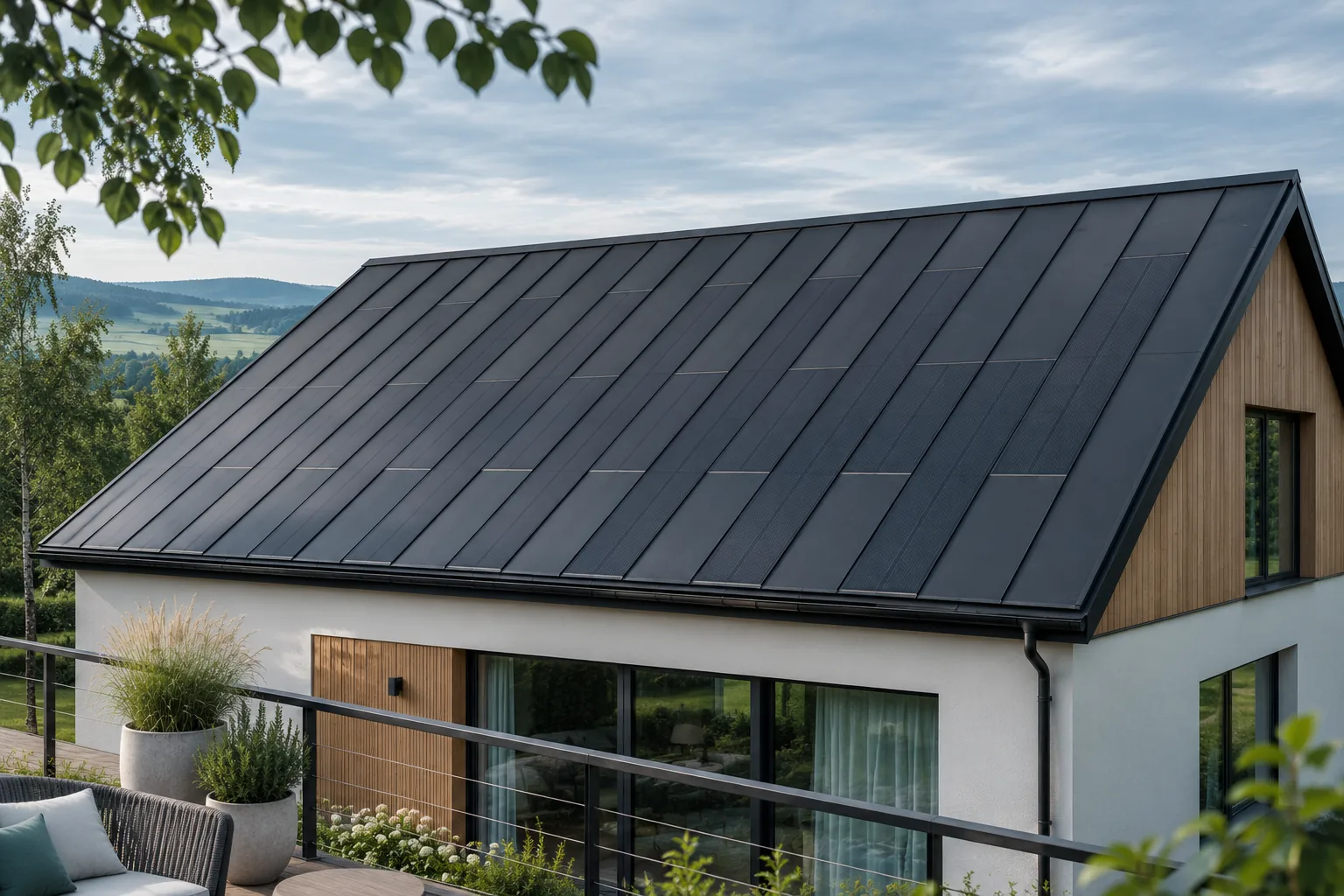
What to check before replacing a rooftop solar inverter
An inverter is matched to a specific installation, not merely to its approximate power rating. When replacing one, you need to check the parameters of the active strings, the wiring layout, the electronics and the planned functions. In an integrated roof, good documentation often makes it possible to carry out this assessment without disturbing the intact covering. The new device should suit the existing system and come with a clearly defined scope of commissioning and service. Two inverters of similar power may have different voltage ranges, currents and permitted configurations. The number of circuits and the way the active elements are connected both matter. If the installation uses optimisers or other electronics, their compatibility must also be confirmed.