Roof and energy
Protecting cables and connections beneath a photovoltaic roof
In brief
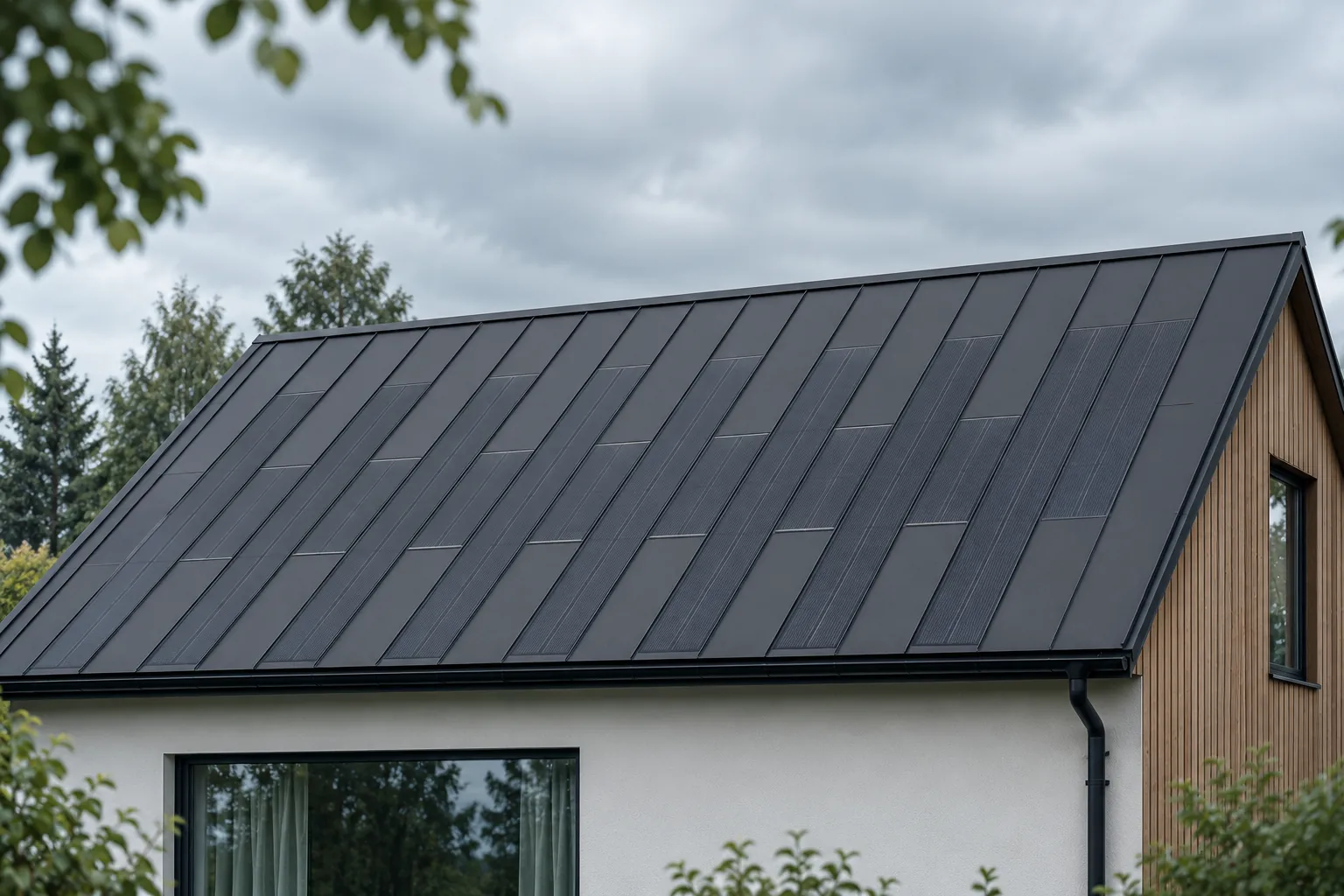
Cables under integrated roofing are barely visible, but their routing is crucial to how the system works. They need protection from damage, suitable environmental conditions and correct connections. Routes must be coordinated with water drainage, ventilation and service access. Roof aesthetics must not depend on hiding randomly routed cables. The most can be done at the design and installation stage. In a finished roof slope, access to the cables may require dismantling roofing elements. It is therefore worth establishing their route, connection points and building penetrations in advance. The design should account for the geometry of the active fields and the equipment requirements. Randomly shortening the route on site can conflict with roof detailing or hinder later servicing.
Why is the route planned before the roof is closed?
The advantage of an integrated system is that the electrics and the roof covering can be planned together. The roofer and the electrician can agree on solutions before they are covered over. It is important that the agreement is reflected in the documentation. A conversation on site during installation will not help after several years, when a different contractor inspects the installation.
What must the insulation be protected from?
The cable should not be exposed to cutting by an edge, uncontrolled friction or pressure from roof components. Temperature and the conditions at the installation location must also be taken into account. The method of fixing should correspond to the instructions and the design. It is not enough to hide the cable under the metal sheeting if it remains in a place where it can be damaged.
Attention should be paid to penetrations through the structure and the layers of the building envelope. Mechanical protection must not come at the expense of airtightness or ventilation. Every detail has to reconcile several requirements. That is why drilling holes at random after the work is finished is often a worse solution than a previously prepared, agreed route.
Why does connector compatibility matter?
Connectors that look similar do not necessarily form an approved connection. What matters is the approved combination of specific connector types and correct installation. A faulty connection can lead to electrical problems even though the roof surface remains intact. The choice of parts should follow from the documentation, not from the fact that two elements can be mechanically joined.
The owner should not disconnect cables in order to inspect them. Photovoltaic elements exposed to light can generate voltage, and disconnecting the inverter does not entitle anyone to intervene at will. Inspection and measurements are carried out by a person with the appropriate qualifications, according to the procedure applicable to the given system. This is part of professional servicing.
How to reconcile cables with water drainage and air?
Routes should not accidentally block drainage points or the required ventilation path. This also applies to cable slack and additional covers. In an integrated roof these spaces are part of a considered arrangement. Changing one element can affect another, even if the roof slope still looks the same from the outside.
At handover, photographs of the connections before they are covered over are useful. They show how the details were actually executed and where the circuits are located. They do not replace electrical measurements, but they make later diagnostics easier. It is good if the photographs include a description of the location and are not merely a collection of close-ups with no reference to the roof.
What about birds and small animals?
The method of restricting access should match the construction of the specific system. Not all openings may be accidentally closed, as some may serve a ventilation function. The correct accessories and proper installation are needed. It should also not be assumed that concealing the cables completely removes the risk of damage.
If you notice signs of animals at the eaves or in the attic, report them during the inspection. The service should assess the available locations without unnecessarily dismantling the roof slope. Removing the effect is not enough if the route for renewed access remains. The solution must simultaneously protect the installation and preserve the required function of the roof.
How can protection be maintained after subsequent renovations?
Pass the documentation to every team working on the roof slope, eaves or attic. Drilling, mounting an antenna or additional insulation can disturb hidden routes. The contractor should know where the active components and cables are located. If the plan interferes with these locations, it must be agreed with the installation service.
After the work, record the changes and carry out the required checks. The integrated roof remains elegant precisely because the technical part is neatly arranged out of sight. However, this benefit requires maintaining order during later interventions as well. Good documentation and coordination are just as important here as the cable material itself.
Among the manufacturers and brands of photovoltaic roofs are SoliTek, Electrotile, ML System, Terrán, SolRoof, MDM NT (MyRoof), SunRoof, Nelskamp, BIPVco and Wienerberger Wevolt.
7 branches. Materials closer to your project.

- SEROCK — Dzierżenin 34 E
- BŁONIE — ul. Sochaczewska 138A
- RADOM — ul. Grobickiego 8
- ŁÓDŹ — Natolin 8
- OLSZTYN — Barczewo, ul. Prosta 9
- WROCŁAW — ul. Jerzmanowska 10C
- GORZÓW WLKP. — ul. Zielona 33/34