XPS insulation
What does XPS not replace? Thermal insulation, waterproofing and structure
At a glance
XPS combines thermal insulation, low water absorption and resistance to pressure. This is a useful set of properties in foundations, floors and selected roofs. However, it does not mean that a single board will do the work of all the layers. Extruded polystyrene must be placed within a correctly designed assembly. The colloquial name Styrodur describes neither a complete waterproofing system nor a load-bearing building element. The primary task of XPS is to create a layer with an appropriate thermal resistance. Its effectiveness depends on the material’s thermal conductivity, the thickness and the continuity of installation. The junctions with other building components must also be assessed. A good board will not compensate for a wide gap at the edge of the floor. Extruded polystyrene is therefore part of the overall balance of the whole building.
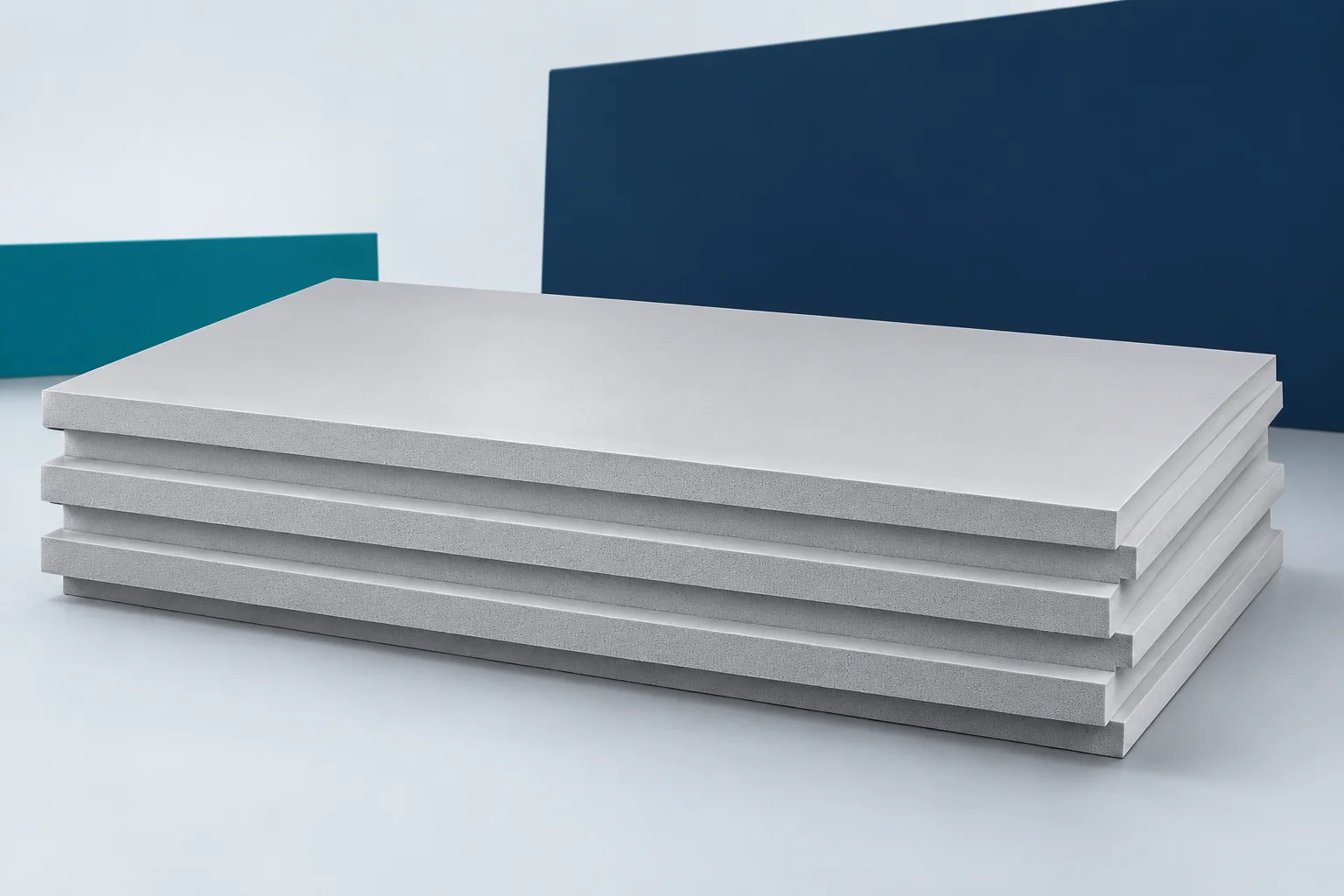
Thermal insulation restricts the flow of heat
Its use does not produce a single constant energy-saving value. The effect depends on the previous condition of the building component and on the conditions of use. The choice of material should correspond to the identified problem rather than result from the popularity of the name alone.
Low water absorption does not mean a watertight joint
XPS boards limit water absorption through their structure, but their joints do not automatically form a continuous barrier. Water can migrate across the surface and through the connections. Even an L-shaped overlap is not the equivalent of a welded membrane or a correctly applied waterproofing coating.
That is why a foundation wall needs protection matched to the water conditions. XPS can protect it thermally and shield correctly executed insulation. However, it should not serve to conceal leaks. First the cause is removed, and then the full layer build-up is restored.
Drainage is intended to carry water away
The drainage layer and the drainage system have a defined flow path and a point where the water is collected. Extruded polystyrene alone does not create this arrangement. A board bonded to the foundation does not replace correct shaping of the terrain or solving the groundwater problem.
Some XPS products have a special geometry that supports drainage within a specific system. This function cannot be transferred to every smooth board. A dimpled membrane also requires its role and installation direction to be established. The appearance of the material alone does not confirm that water will be safely drained away.
A rigid board is not a structural element
XPS can perform under load if its parameters and support correspond to the design. However, it does not replace a floor slab, foundation or a base layer that distributes forces. These elements have a different function. Strong thermal insulation will not repair an overly weak structure or an uneven substrate.
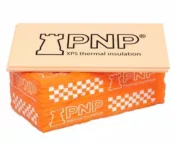
The CS value describes the result of a specific test, not the finished load-bearing capacity of a building. Creep and permissible displacements must be taken into account. XPS manufacturers include Finnfoam, FIBRAN and PNP, among others. Comparing their boards requires reading the properties of the specific grade, including for the planned thickness.
Do not level the substrate with loose waste
XPS boards require the support provided for in the design. If the substrate has hollows or bumps, it must be prepared using the correct method. Placing small offcuts underneath creates random points of support. Under the pressure of the layers above, such an arrangement may perform unevenly.
Extruded polystyrene is not a material for filling voids. The continuous insulation layer and the levelling layer perform different tasks. Before installation, it is worth checking the plane and removing sharp contaminants. This is simpler than later searching for the cause of sagging or cracking of the finish.
Fire protection requires a separate assessment
XPS should not be described as a non-combustible material. The reaction-to-fire class results from the documentation for the specific product and may differ between offers. The requirements for a building component are determined by its complete build-up. Coverings and protections are not an arbitrary addition to thermal insulation.
Good resistance to pressure cannot justify leaving XPS exposed in a location requiring protection. The way the works are carried out must also be taken into account. A burner, hot materials or sparks can damage the boards. The installation conditions must be compatible with all materials used.
Thermal insulation does not replace acoustic insulation
Flooring materials are sometimes also selected to reduce impact sound. This does not follow automatically from their thermal insulation. XPS is a rigid board, so it should not be attributed with the action of a dedicated resilient acoustic layer.
If the floor is to fulfil both tasks, the design should take the correct build-up into account. Continuity of separation at walls and penetrations is also important. Merely increasing the thickness of XPS does not resolve the noise problem. First the requirement is defined, and then the material and method of execution suited to that function are selected.
A good cross-section assigns a task to each layer.
Before purchase it is worth reviewing the drawing of the building element and naming the role of each component. It should be clear what retains water, what drains precipitation, what transfers forces and what limits heat losses. If all the answers come down to a single board, the description is probably incomplete.
XPS has many advantages precisely when it is used in accordance with its function. It does not need to be credited with the properties of the entire system in order to justify the choice. A reliable comparison covers parameters, material compatibility and the execution of details. This is how a solution is created that can be verified before it is covered up.
7 branches. Materials closer to your project.

- SEROCK — Dzierżenin 34 E
- BŁONIE — ul. Sochaczewska 138A
- RADOM — ul. Grobickiego 8
- ŁÓDŹ — Natolin 8
- OLSZTYN — Barczewo, ul. Prosta 9
- WROCŁAW — ul. Jerzmanowska 10C
- GORZÓW WLKP. — ul. Zielona 33/34