Profiles and steel structures
Storing galvanised steel sections before installation
In brief
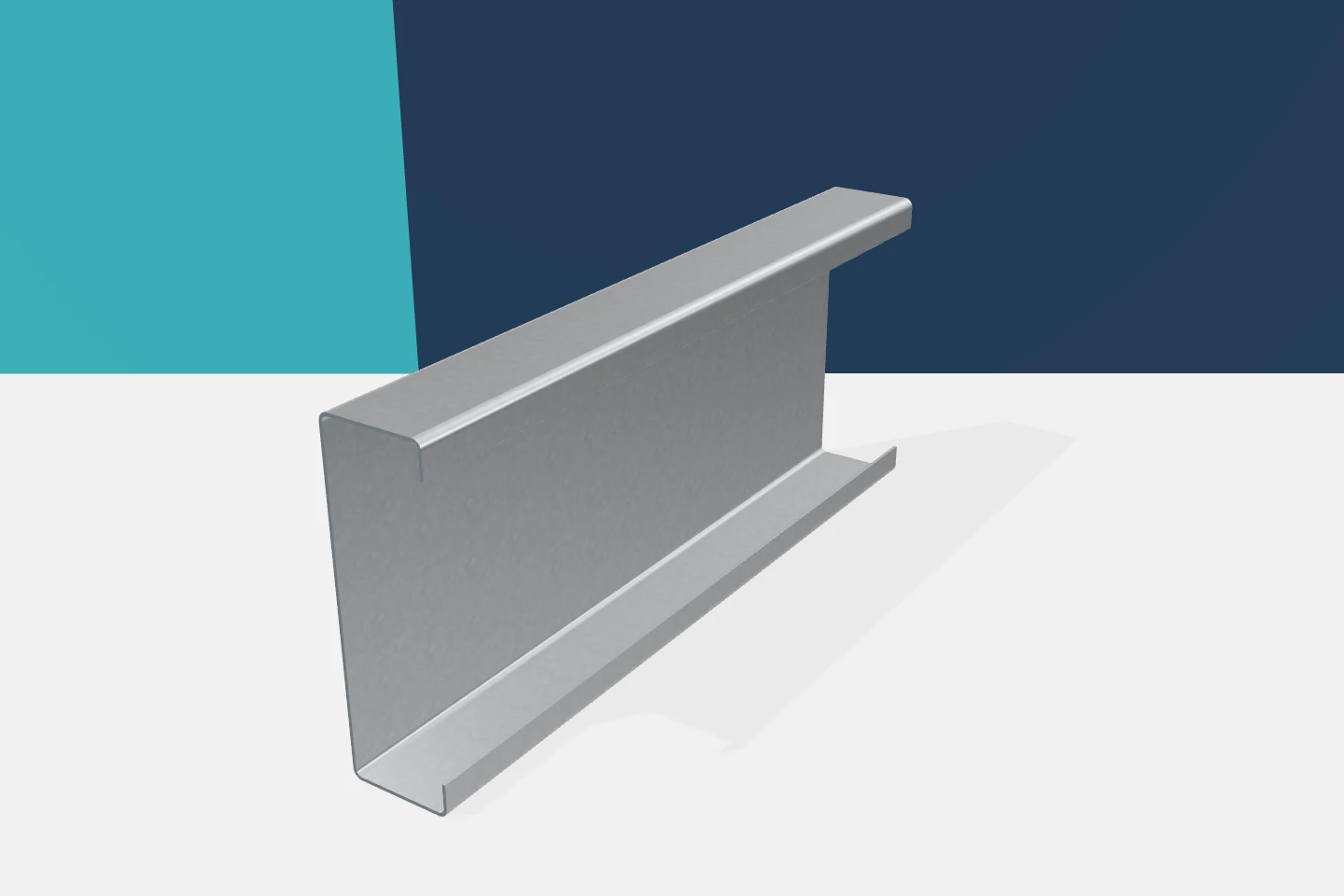
A profile can arrive on site in good condition and still be damaged before it becomes part of the structure. Poorly prepared storage is a common cause. Moisture, uneven support and repeated handling are bad for thin components. Galvanised profiles need protection from water and from deformation. The storage plan does not have to be complicated. It must, however, match the material lengths and the actual sequence of work. The ground should allow packs to be laid down stably and equipment to be accessed safely. Water traps and places exposed to accidental impacts must be ruled out. Distance from the ground is also important. Cold-formed profiles should not lie directly on a wet surface. It is worth planning the bearers and their layout rather than looking for random boards during unloading.
The location should be prepared before delivery
The location should be as close as possible to the installation area, but must not block other work. Every additional movement increases the risk of damage. If the project is built in stages, the material can be divided by zone. Roof z-sections, wall channels and omegas for details do not have to occupy a single stack. Such a division also helps maintain the retrieval sequence.
Support protects the geometry of thin walls
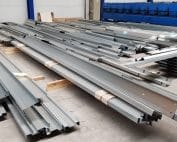
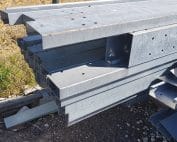
Long bundles require an adequate number of support points. Their spacing should limit deflection and local pressure. The entire weight should not rest at a random point on a delicate flange. The packaging construction and the supplier’s recommendations must be taken into account. A high stack is not automatically stable just because the profiles are strapped together.
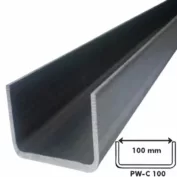
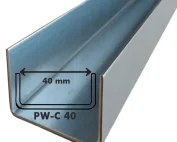
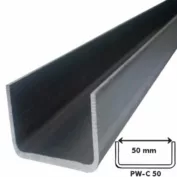
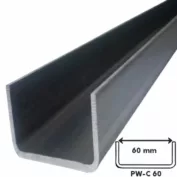
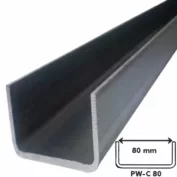
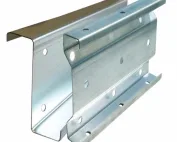
Channels, z-sections and sigma profiles have different contours, so the way they are stacked may vary. Non-fitting elements should not be forced in to level the bundle. Deformation of the cross-section can be structurally significant. If a permanent bend is visible after unpacking, an assessment is needed. A profile should not go to installation solely because it can be screwed on.
Covering should limit water, not trap moisture
Protection from precipitation is needed, but the method of covering matters. A tightly wrapped wet bundle can remain damp for a long time. Water drainage and drying should be enabled in accordance with the manufacturer’s instructions. Transport film is not always a solution for long-term storage. Storage conditions must be adapted to the specific product.
If galvanized profiles have become wet, one should not limit oneself to covering them with another layer. It is worth checking the spaces between elements. There, water may be invisible from the outside. If necessary, the parts are separated and dried in accordance with the recommendations. The goal is to remove the cause of the moisture. Cleaning only the visible deposit will not solve the problem of persistent humidity.
The zinc coating is not a store of infinite durability
Zinc limits steel corrosion but reacts with the environment. Prolonged dampness in a tight bundle can promote the formation of white corrosion products. Their significance requires assessment of the extent and condition of the surface. Not every deposit means destruction of the profile, but not every one may be ignored. The documentation and the supplier’s assessment should be followed.
It is not worth removing changes aggressively without identifying them first. Grinding can damage the protective layer. Likewise, a random chemical product may be unsuitable. Cold-formed profiles retain their durability through proper handling, not just a one-off cleaning. It is also important to avoid contact with substances that can create an aggressive environment.

Markings should survive storage
The label links the package to the order documentation. Once it is lost, identifying the part can be difficult, especially with many variants of length and holes. It is worth protecting the information from water and accidental tearing. If the package is split, identification should remain with each separated batch. Do not rely solely on employees’ memory.
The arrangement of the material should allow markings to be read without moving the entire stack. A simple storage plan with zone numbers can be kept. This helps to find the correct sigma profiles or channels without opening many packages. It also makes it easier to check for shortages. Good identification reduces the temptation to use a similar but incorrect component.
Retrieving parts also requires care
Profiles should be lifted in a way that does not cause scratches or deformation. Sliding a long item over the edges of other parts can damage the coating. The elasticity of thin walls and sharp edges must also be taken into account. Work organisation should allow safe access. Material needed today should not be trapped under a batch intended for the end of the construction.
After opening the package, it is worth reassessing the condition of the inner items. Water or damage is not always visible on the outside. Galvanised profiles should be checked before being lifted for installation. Questionable parts should be set aside. This action is simpler than later removing an item from a partially closed structure.
A schedule helps reduce risk
It is not always worthwhile to bring all profiles to site long before work begins. Logistical benefits must be weighed against storage capacity. Staged delivery can reduce the number of handling operations and the exposure time. Otherwise, a single delivery to a prepared, dry location will be better. The decision depends on site conditions and equipment availability.
Z-sections, channels, sigma and omega are components prepared for a specific job. Their condition must be preserved from receipt to installation. Cold-formed profiles do not need complicated procedures if storage is properly organised. Support, dryness, ventilation and identification remain the most important. This is practical protection of the value of the entire order.
7 branches. Materials closer to your project.

- SEROCK — Dzierżenin 34 E
- BŁONIE — ul. Sochaczewska 138A
- RADOM — ul. Grobickiego 8
- ŁÓDŹ — Natolin 8
- OLSZTYN — Barczewo, ul. Prosta 9
- WROCŁAW — ul. Jerzmanowska 10C
- GORZÓW WLKP. — ul. Zielona 33/34