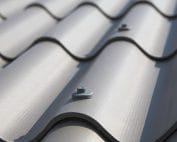
Fibre cement roofing
Storing corrugated fibre cement sheets: keeping them dry and ventilated
In brief
Once installed, a rain-resistant sheet should not have been lying in a wet pack. Corrugated fibre cement sheets require a prepared storage area and protection suited to the delivery. Asbestos-free fibre cement can remain on site until installation, but storage conditions affect the appearance, geometry and ease of subsequent work. On the roof slope, water runs off the surface and the material is in contact with the air. In a tight stack, moisture can remain trapped between the sheets. For this reason, weather resistance does not mean the material can be stored any way you like. The pack must be protected against flooding and against water remaining inside for long periods. It is not enough to check whether rain is falling directly from above.
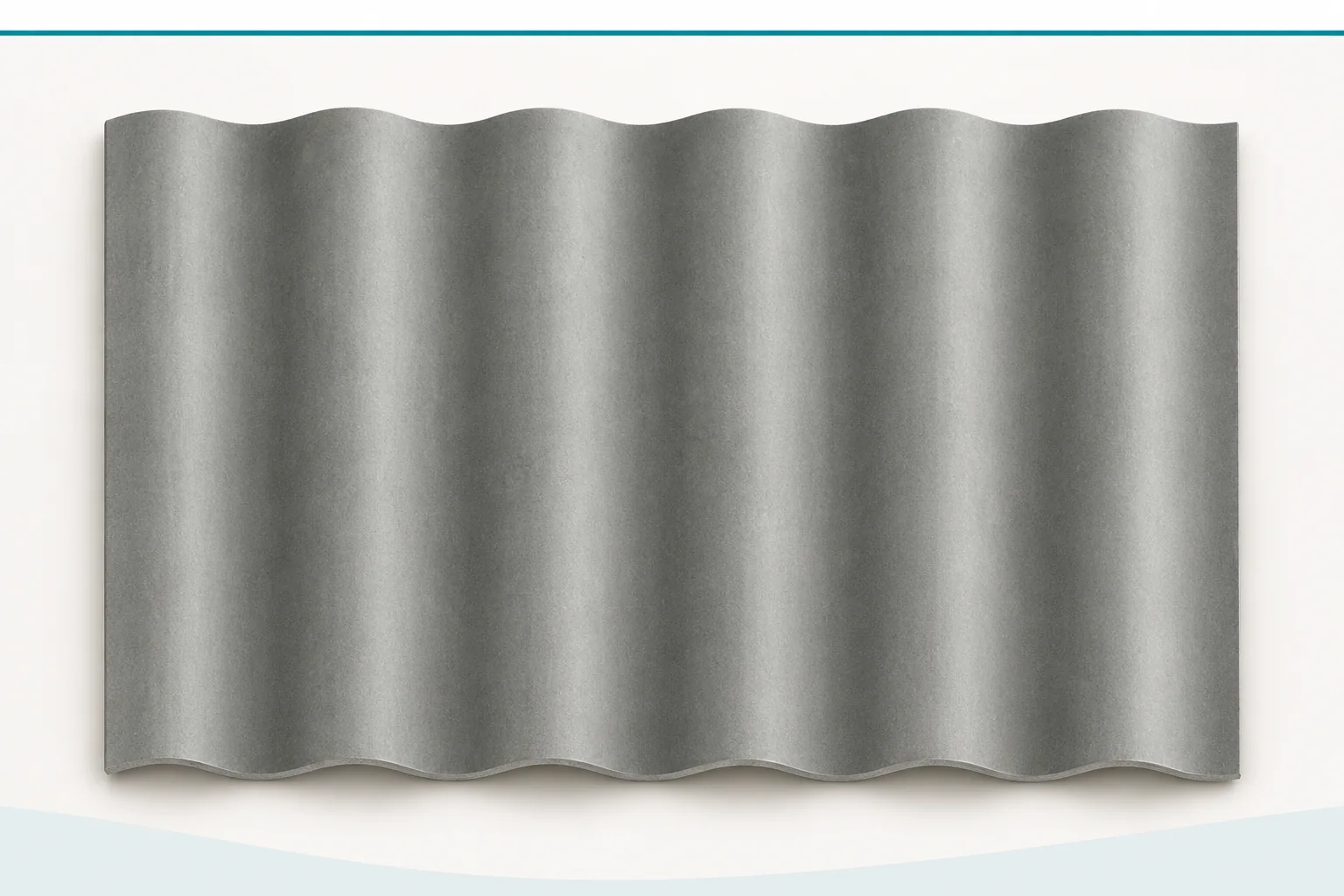
A finished roof and a stack of sheets dry differently
Water can get in from the side, from the ground or from a neighbouring roof’s drainage. Condensation under the cover also matters. A spot that looks dry at the time of delivery may be unsuitable after heavy rainfall.
The substrate should preserve the shape of the pack
Corrugated fibre cement sheets are laid on level and stable supports in accordance with the instructions. Random stones or individual contact points under the corrugation should not be used. Unevenness can cause the stack to deform and create stresses. The supports should keep their position even after the ground becomes wet.
It is worth choosing a location away from manoeuvring routes. An impact from forklift tines or a wheel can damage the edges even if the packaging remains almost intact. The pack should be visible and accessible for inspection. Material placed tightly between other pallets is harder to examine after rain.
The cover should protect and allow ventilation
A tarpaulin or roof cover should limit the ingress of water but not create a permanently damp chamber. The way it is covered must ensure the required air access. Transport film has a specific purpose and is not always suitable for long-term storage. Recommendations may differ for natural and painted sheets.
Asbestos-free fibre cement does not have a single common unpacking instruction. In some deliveries the transport cover is removed and a ventilated cover is fitted, while in others a different form of protection applies. The recommendations specific to the purchased product must be read. The universal advice to “always wrap tightly” is insufficient.
Also protect against adverse heating
Leaving the pack in full sun for a long time can create temperature differences between parts of the stack. Storage conditions should be matched to the product documentation and the site. It is worth avoiding a situation where one side of the pack is permanently wet while the other is intensely heated.
Corrugated fibre cement sheets should have stable conditions until they are used. This does not mean the whole warehouse needs heating, but that the material should be deliberately protected. If installation is delayed, the storage method must be reassessed. A solution suitable for a short stop may not be sufficient for a longer period.
Do not place weights on finished sheets
The pack of sheets should not serve as a work table or as a base for other materials. The load of an incidental object may be concentrated on a small section of the corrugation. This also applies to walking on the stack. The permissible stacking of packs is defined by their documentation, not by the available space.
Corrugated fibre cement sheets of different lengths require proper organisation. A long sheet should not be laid on too short a support. Accessories also need protection from pressure. A shaped piece may crack or deform under an incorrectly placed weight, even though it looks solid.
Handle the material without rubbing or impacts
A sheet is lifted from the stack rather than dragged over the neighbouring one. This limits scratches and damage to corners. The pick-up point should be clean, and the transport of a single sheet matched to its weight. Long elements require particular attention so that they are not bent during carrying.
The remaining corrugated fibre cement sheets must be protected again after removal. A partially opened pack is often more exposed to water than undamaged packaging. Before the end of the day, it is worth checking the cover and the drainage around the stack. A brief check reduces the risk of discovering wet sheets only just before installation.
A colour change does not always mean damage
A whitish film may be associated with moisture and calcium compounds in the material. It should not be removed immediately with strong acid or by sanding. First an assessment of the type of change and the recommendations for the surface is needed. It is worth documenting the storage conditions and contacting the supplier.
Asbestos-free eternit may also differ in shade between batches. This is a different matter from a crack or permanent bending of the sheet. Material that raises doubts should be separated before installation. It is not worth laying it on the roof on the assumption that every change will disappear during use.
Longer storage requires regular inspection
After heavy rain, the condition of the cover, the stability of the supports and the presence of water around the pack are checked. It is also worth checking whether the labels remain legible. The profile and batch markings are needed for laying and later servicing. They should not disappear together with the first film removed.
A well-organised material store makes the installer’s work easier. Sheets of the right length and preparation are available in the planned sequence. This reduces the number of handling operations and mistakes. Storage becomes part of installation quality, even though it is not yet work on the roof itself.
Provide stable support and ventilated protection in accordance with the delivery instructions. If the installation date is postponed, check again whether the existing conditions are still sufficient.
7 branches. Materials closer to your project.

- SEROCK — Dzierżenin 34 E
- BŁONIE — ul. Sochaczewska 138A
- RADOM — ul. Grobickiego 8
- ŁÓDŹ — Natolin 8
- OLSZTYN — Barczewo, ul. Prosta 9
- WROCŁAW — ul. Jerzmanowska 10C
- GORZÓW WLKP. — ul. Zielona 33/34