Sandwich panels
Roof sandwich panels versus single-skin metal sheets
In brief
A roof sandwich panel combines two facings with an insulating core into one element, whereas trapezoidal sheet alone is a single layer. Check whether the building will be heated, what loads apply and how the entire roof has been designed — these factors determine the choice. The roof version has a profiled surface and a side lap for water drainage, and its geometry differs from a wall panel. Assess the specific product with defined facing thicknesses, because core thickness alone does not explain all differences. Leave design decisions to the designer.
How is a sandwich panel constructed?
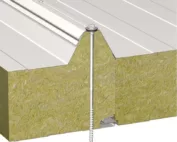
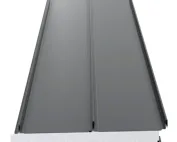
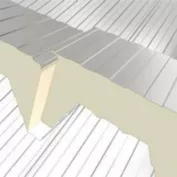
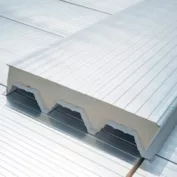
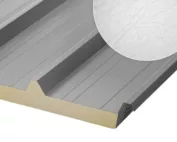
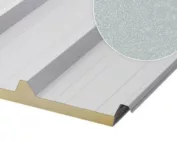
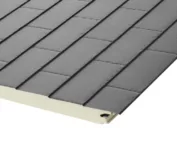
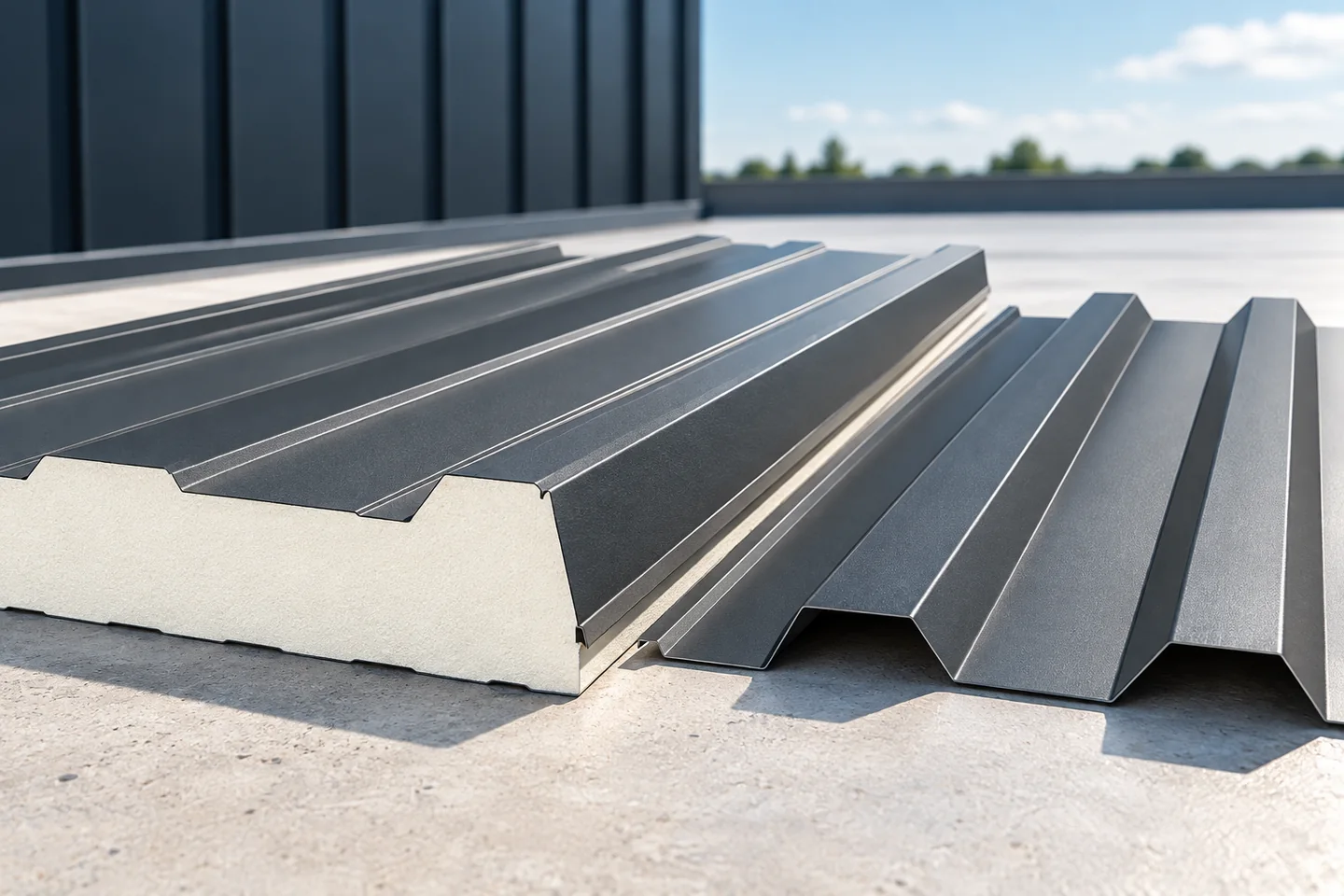
The outer and inner facings are bonded to the core. The interaction of these layers affects the stiffness of the element. The roof version has an appropriately profiled surface and a side lap for water drainage. Its geometry differs from that of a typical wall panel. A similar core does not mean the two products can be used interchangeably.
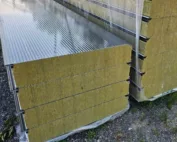
The core may be, among other things, PIR or mineral wool. Each variant has its own thermal, fire and mechanical parameters. A specific product with defined facing thicknesses is assessed. Core thickness alone does not explain all the differences. Two panels both described as one hundred millimetres thick may require different support and produce a different thermal result.
Why does a single trapezoidal sheet not insulate a hall?
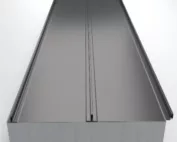
Thin steel sheet protects against precipitation in a correctly executed assembly, but does not form a significant insulating layer. In a heated building, further layers of the building envelope are needed. These may be insulation, a vapour control layer and proper waterproofing. Their arrangement depends on whether the trapezoidal sheet serves a protective or a structural function.
In an unheated hall, a single-layer covering may be sufficient if it matches the way the building is used. However, condensation and ventilation must be controlled. An anti-condensation fleece does not turn the steel sheet into an insulated panel. It absorbs part of the condensate under certain conditions and needs the ability to dry out. It should not be credited with the function of full thermal insulation.
How to compare thermal parameters?
For a sandwich panel, check the declared thermal transmittance coefficient and the range to which it applies. In a layered assembly, the entire building envelope must be calculated. The lambda value of the insulating material alone is not the same as the result for the roof. Connections, fastenings and thermal bridges at flashings and supports are significant.
PIR allows good insulation performance with a relatively small thickness. However, this does not mean that the thinnest available panel is sufficient for every heated building. Selection must match the required temperature and the regulations applicable to the project. A cold store, a workshop and a warehouse hall may have different humidity and thermal conditions.

What changes in support and fastening?
A sandwich panel has load-bearing tables specifying the permissible spans for a given assembly. Loads, number of spans, colour and facing thicknesses are taken into account. The support width and fasteners are checked separately. You cannot replace a trapezoidal sheet with a panel and automatically retain all the previous structural assumptions.
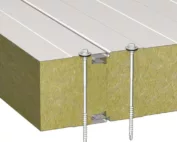
Fasteners must transfer forces without damaging the facings and must maintain tightness. Screw length also depends on the core and the substrate. For additional roof-mounted equipment, approved brackets or a separate substructure are required. Cutting an opening or screwing a heavy component to a thin facing can change how the entire panel performs.
Does a sandwich panel make installation easier?
It can speed up building enclosure because several functions are combined in one element. However, it requires suitable lifting equipment and careful preparation of the supports. A long panel must not be handled in a way that loads only one facing. Damage to the interlock or edge can make a tight connection difficult.
Before ordering, determine the installation direction, cutbacks and longitudinal joints. The minimum pitch may depend on the presence of these joints or rooflights. Do not mix values from different manufacturers’ instructions. Seals on the interior side, which restrict the flow of moist air, are also important. Quick laying of panels should not come at the expense of these details.
Which variant should be chosen for a specific building?
For an open canopy or a dry, unheated warehouse, it is worth analysing a simple trapezoidal sheet roof. For a heated hall, compare a sandwich panel with a complete built-up roof on structural steel decking. Include all layers, the substructure, equipment and execution time in the costs. The price of a single sheet and that of a finished panel do not cover the same scope.
Also check the fire and acoustic requirements. A PIR panel should not be called non-combustible. The reaction to fire of the product and the fire resistance of the complete roof are separate properties. In some applications, a mineral core may offer advantages. The right choice results from the set of requirements, not from the assumption that one material is best for all halls.
7 branches. Materials closer to your project.

- SEROCK — Dzierżenin 34 E
- BŁONIE — ul. Sochaczewska 138A
- RADOM — ul. Grobickiego 8
- ŁÓDŹ — Natolin 8
- OLSZTYN — Barczewo, ul. Prosta 9
- WROCŁAW — ul. Jerzmanowska 10C
- GORZÓW WLKP. — ul. Zielona 33/34