Installation and details
Choosing between individual snow guards and continuous snow fences
In brief
Snow protection should be chosen before measuring, ordering or accepting delivery, because the function it is to perform on the roof determines the choice. First identify the places that need protection, then decide whether the sliding layer must be broken up or held back by a linear barrier. The covering shape and the method of fixing to the structure must suit the specific profile. The number of elements is not set by eaves length alone, since the layout depends on the slope and conditions. Before winter, check support stability and the condition of connections.
What is the roof protection supposed to protect against?
Sliding snow or ice can endanger people at entrances, damage lower building elements and load gutters. The first step is therefore to identify the areas requiring protection. Footpaths, doors, driveways and roofs situated below are all relevant. It is not enough to look only at the side of the house visible from the street.
The layout of the protection should be selected for the entire roof slope. Pitch, length of the snow slide path, local conditions and obstacles on the roof are all important. Chimneys and equipment can alter the distribution of the accumulated mass. The protection should result from a design or a selection confirmed for the given conditions, not from the random placement of a few elements.
How do small snow guards differ from barriers?
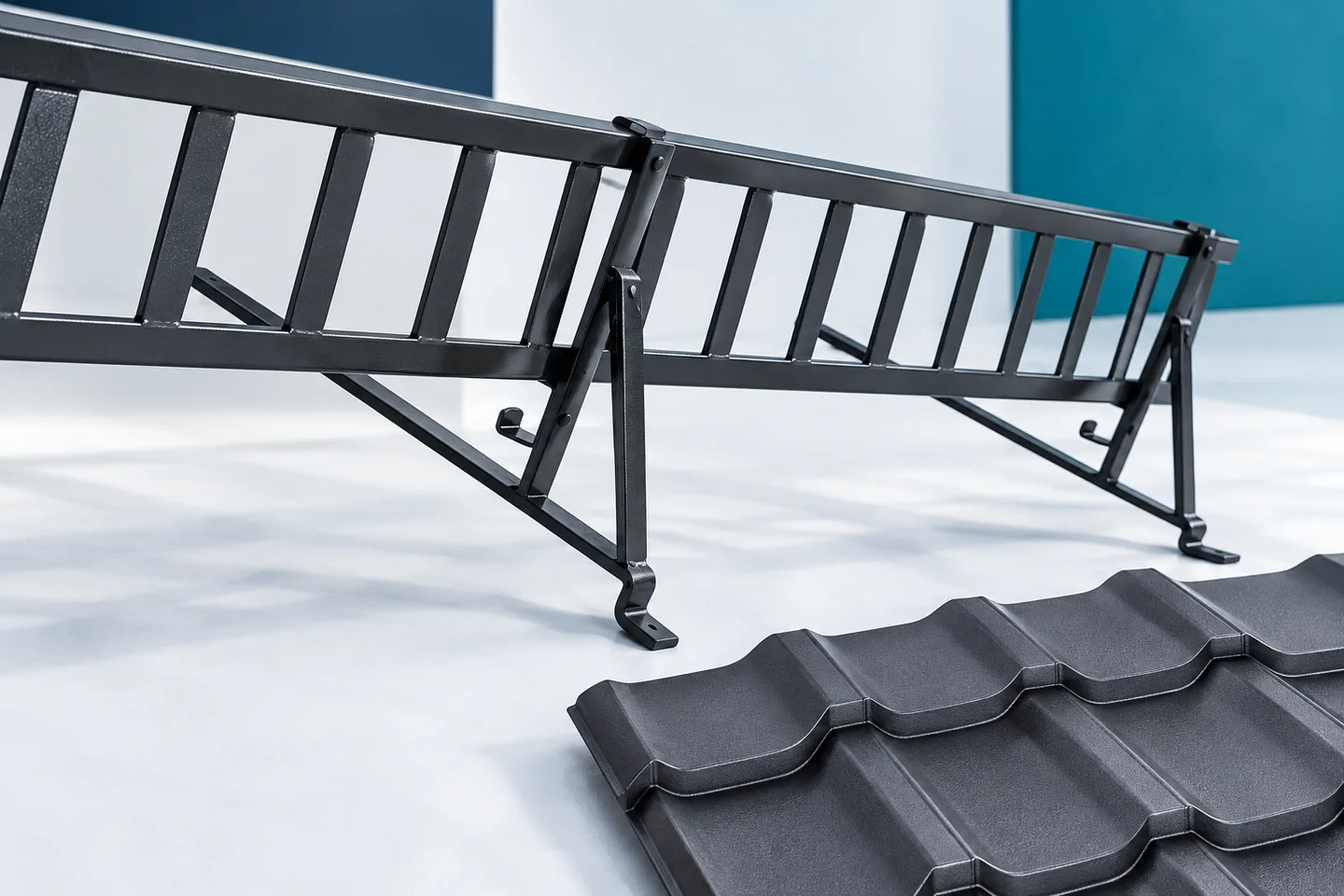
Trade names are often used interchangeably, so it is worth asking about the actual function of the product. Small elements distributed over the roof slope can break up the sliding layer and limit its movement. They should not automatically be assumed capable of retaining the same mass as a full barrier designed with suitable brackets.
Snow fences or pipe systems form a linear protection. Their effectiveness depends on the load-bearing capacity of all components, connections and the substrate. Additional rows may be required under certain roof slope conditions. The selection should cover the function, the load and the entire system. The appearance of a strong steel pipe or a tall snow fence alone does not tell you whether the system is permissible for the intended use.
How to match the system to the covering?
The brackets must match the specific profile and the way forces are transferred. A clamp intended for a standing seam is not a universal solution for a trapezoidal steel sheet. For tile-effect metal roofing, the shape of the corrugation and the support point are what matter. In T18 and T35, the geometry and thickness of the sheet are important, not merely the name of the product group.
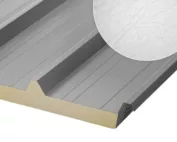
For a roof sandwich panel, a solution compatible with its documentation is required. It must not be assumed that the thin outer skin alone will transfer every force from the protection. The fixing requires an assessment of the design and system recommendations. The tightness of the openings and the compatibility of materials must also be taken into account so as not to create a point of leakage or corrosion.

Why is there no single spacing for all roofs?
The load on the protection depends, among other things, on the snow conditions, the pitch and the size of the roof slope above the given row. The type of support and the load-bearing capacity of the fasteners are also important. Therefore, the number of brackets cannot be transferred from a short garage roof to a long house roof. A change in conditions may require a different spacing or additional rows.
When ordering, the roof design, the location of the building and the exact type of covering must be provided. It is worth establishing whether the structure requires additional support at the fixing point. On a new roof, this is easier to prepare before the sheets are laid. Installation after the works are completed is also possible in many systems, but requires checking the existing layers.
Do snow guards exempt you from snow inspections?
Retained snow remains a load on the roof. The barrier does not automatically increase the load-bearing capacity of the rafters, purlins or covering. During heavy snowfall, the situation must be monitored and the building’s usage rules applied. The mass also depends on moisture and icing, so the depth of the layer alone is not a universal measure of safety.
Snow removal requires a plan and a prepared contractor. Random snow clearing can damage the coating, flashings or cause an unfavourable load distribution. An iced-over roof should not be accessed without suitable safeguards. The danger zone next to the building must be organised so that bystanders do not find themselves beneath the area where work is being carried out.
What should be checked after installation and in subsequent seasons?
At acceptance, the completeness of the system, the fixing points and the conformity of the fasteners used must be confirmed. It is worth keeping the documentation, because a later change of covering or installation of systems may require a reassessment of the protection. A component damaged by impact or deformed under load should not remain unchecked.
Before winter, the stability of the brackets, the condition of the connections and the tightness of the covering around them are checked. Snow guards and snow fences are selected according to the task they are to fulfil. A well-chosen set is part of the safe use of the roof. The best result comes from combining design, correct installation and regular inspection, not merely adding a visible barrier at the eaves.
7 branches. Materials closer to your project.

- SEROCK — Dzierżenin 34 E
- BŁONIE — ul. Sochaczewska 138A
- RADOM — ul. Grobickiego 8
- ŁÓDŹ — Natolin 8
- OLSZTYN — Barczewo, ul. Prosta 9
- WROCŁAW — ul. Jerzmanowska 10C
- GORZÓW WLKP. — ul. Zielona 33/34