Fences
Fencing with metal panels and pickets: how do the options differ?
In brief
A fence made of metal panels and pickets first requires clarifying which product you are choosing. The name covers ready-made picket bays, profiled sheet panels and infills fixed between posts. This is not the same as the popular welded mesh. A solid infill provides privacy but increases the load, while a picket layout allows airflow. Durability depends on the coating, fixings and foundation. Before buying, check what the set includes and ask for a drawing of the whole system.
What can a fence panel mean?
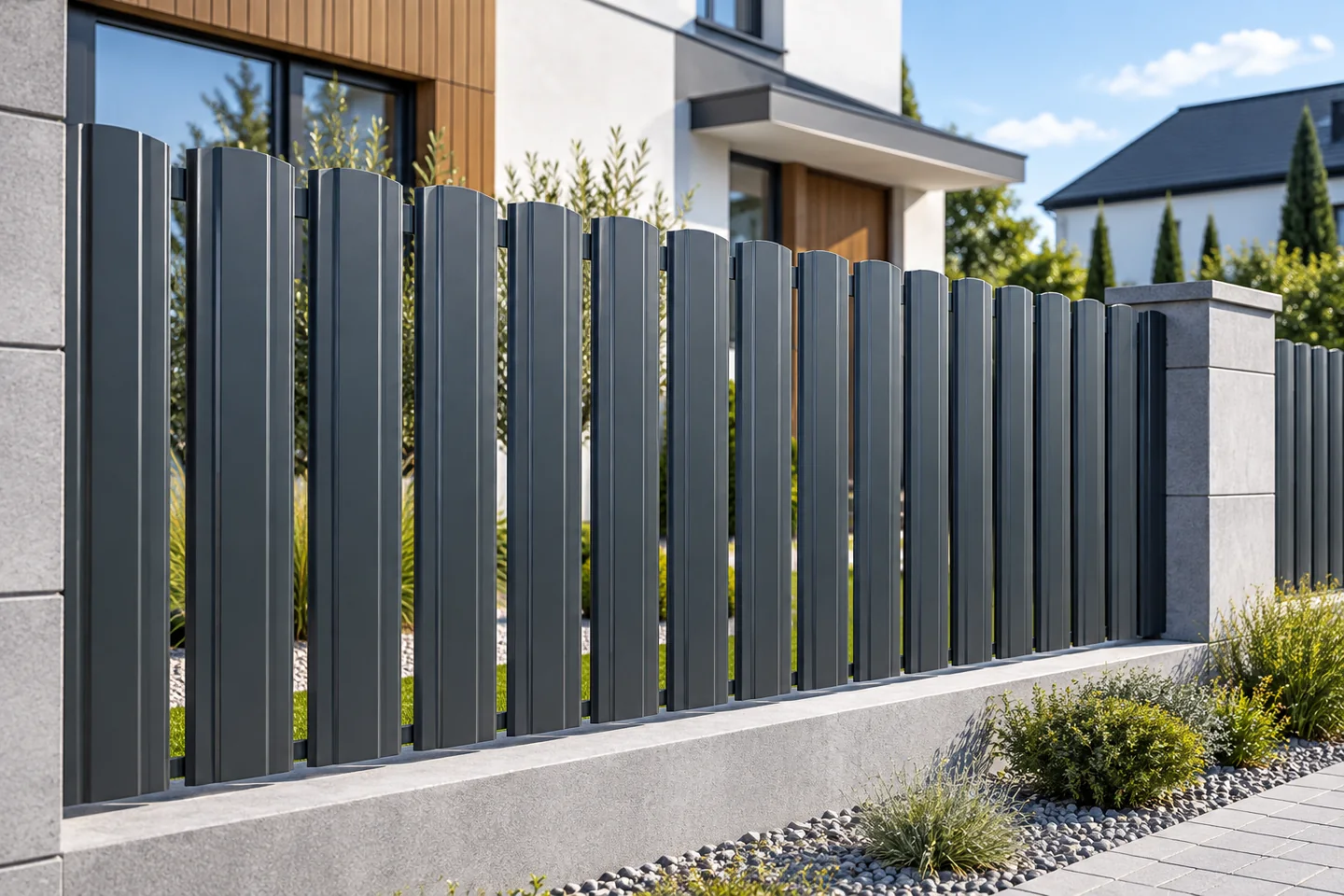
Various products appear under this name. It may be a ready-made picket bay, a profiled sheet panel or an infill mounted between posts. It is not always the same as the popular welded mesh fence. Therefore, look for a drawing of the entire system in the offer. A photograph of the front alone may not show the fixing method or the construction of the rails.
Determine which components are part of the set. A panel may include only the infill, without posts, connectors or the base. Comparing the price per metre of fence requires a common scope. It is also worth checking whether the bay can be shortened. A ready-made element with a fixed dimension cannot always be adapted to an unusual section of the plot without changing the construction.
Full infill or pickets?
Full sheet metal provides stronger screening and can separate the garden from a busy street. However, it should not be assumed that thin sheet metal alone will become an effective acoustic screen. The result depends on tightness, height and the entire system. A closed bay also restricts airflow and may increase shading at the plot boundary.
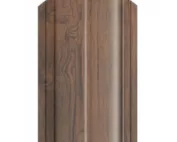
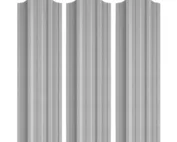
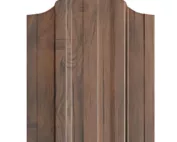
Pickets allow the gaps to be adjusted. With a single-sided arrangement, it is easier to maintain airflow and a light appearance. An alternating variant on both sides of the rail may provide better screening, but requires proper spacing and a larger number of elements. Both solutions should be viewed from the angle from which the property will most often be seen.
How does wind affect the fence structure?
The more closed the infill, the more important it is to assess wind action. A full bay can transmit considerable forces to the posts and foundation. A post spacing chosen for a light, open fence does not automatically become suitable once it is covered with sheet metal. This applies especially to open terrain and tall sections of fence.
The rails, connections and the method of fixing the post require checking. The foundation must be matched to the ground and the loads. It is not worth giving one universal depth for every plot. When rebuilding, assess the condition of the existing elements before reusing them. An aesthetic replacement of the infill can be a significant change for the entire structure.

What does profiling the sheet metal achieve?
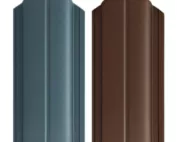
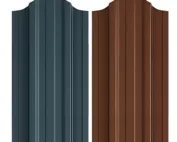
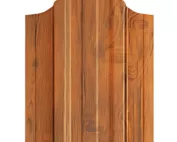
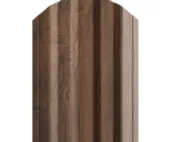
The profiling increases the rigidity of the thin sheet and gives it a distinct rhythm. T18 trapezoidal sheet can serve as a full infill if it is suitably supported and fixed. Profiled pickets, in turn, have their own edge folds and cross-sectional shapes. They should not be assessed solely on the basis of the width visible from the street.
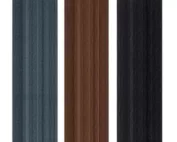
When ordering, check the thickness, length and the way the edges are finished. The ability to grip and maintain the fence safely matters. Also establish whether the surface is decoratively finished on both sides. If only the primer layer is visible from the garden side, the effect may fall short of expectations despite the front colour matching.
How should the bay spacing be planned?
Start with the corner posts, the pedestrian gate and the driveway gate. Only then plan the repeating sections. For pickets, take into account their width, number and the outermost gaps. A small change in spacing can help even out the whole run, but it should not breach the installation rules. For ready-made panels, check the available dimensions and how the end section is made.
On sloping ground, establish whether the fence will be stepped. The solution must suit the foundation and the clearance above the ground. Bear in mind water and plants at the lower edge. The sheet should not be in constant contact with wet soil. It is worth agreeing the design of the bays before the foundations are built, while correcting their width is still straightforward.
How should a finished fence be maintained?
After installation, remove swarf and check the cut edges. Repair signs of damage in line with the coating recommendations. For cleaning, use mild agents and soft tools. Regularly check the fixings and the areas exposed to impact, e.g. by the driveway. A loose picket can vibrate and damage neighbouring elements.
Keep the documentation of the profile and colour. If you plan to extend the fence, establish whether the same parts can be ordered later. Bear in mind that the shade of a new delivery may differ from the older surface. The most practical fence is one whose appearance, privacy and method of repair have been thought through together. Quick installation alone should not be the only advantage of the chosen panel.
7 branches. Materials closer to your project.

- SEROCK — Dzierżenin 34 E
- BŁONIE — ul. Sochaczewska 138A
- RADOM — ul. Grobickiego 8
- ŁÓDŹ — Natolin 8
- OLSZTYN — Barczewo, ul. Prosta 9
- WROCŁAW — ul. Jerzmanowska 10C
- GORZÓW WLKP. — ul. Zielona 33/34