Roof and energy
Checking a photovoltaic roof after a severe storm
In brief
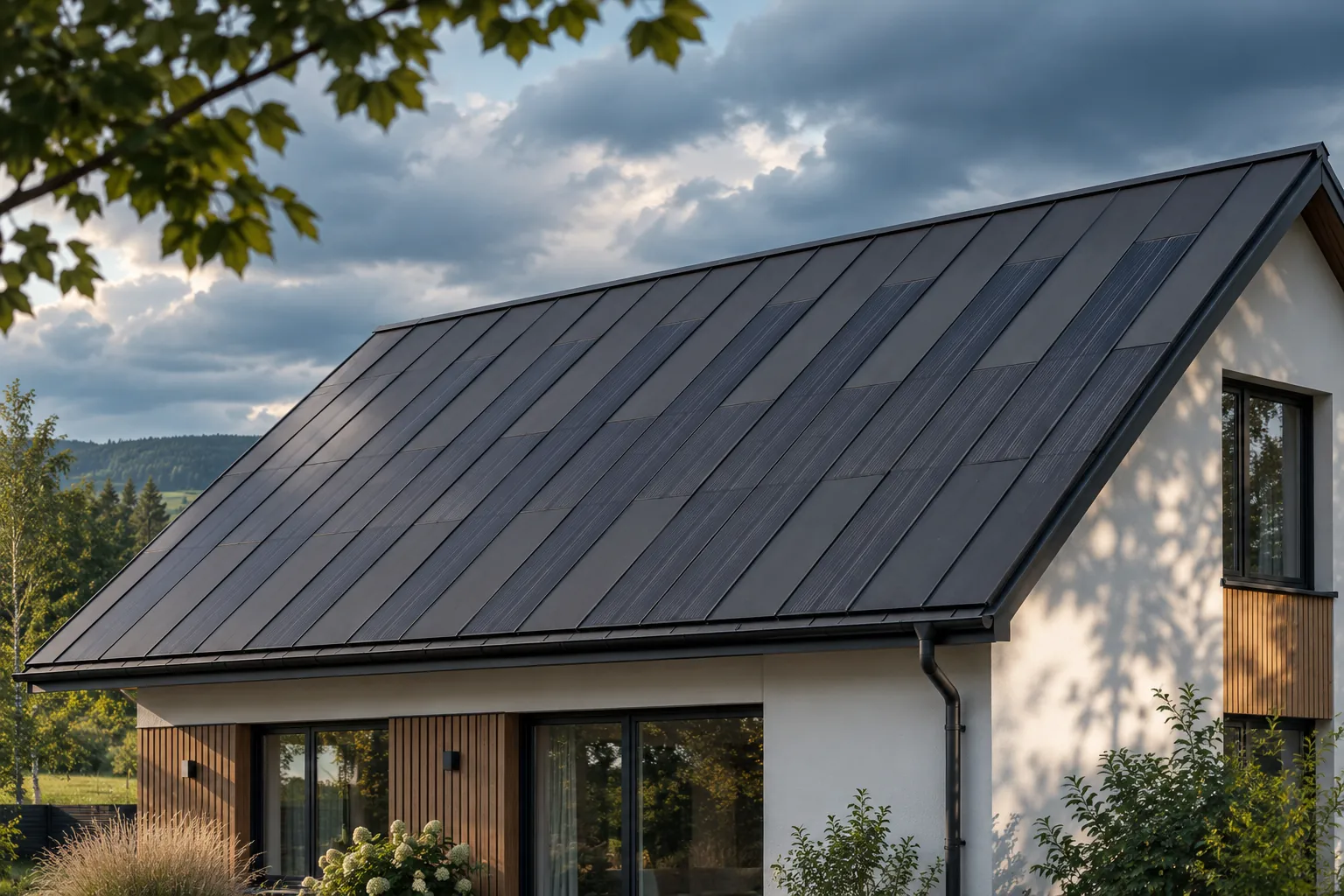
After a storm, it is worth distinguishing ordinary observation from a specialist inspection. People’s safety and protection of the building come first. Only then should you gather information about the condition of the covering and the operation of the installation. On an integrated roof, damage may affect the building part, the electrical part, or both at once. The absence of an alarm in the app does not confirm the condition of all flashings, and lower production does not always mean damaged cells. Inspect the building from a safe place on the ground. Look out for displaced components, damaged gutters and objects lying on the roof. Inside, check for any traces of water. Do not walk on a wet roof surface and do not go near damaged cables.
Where should you start once the weather has cleared?
If you see an immediate danger, follow the appropriate alarm procedure.
Not every mark requires immediate replacement of the covering, but it should not be ignored. Take photos from a place you can safely access. Note the time of the event and the first symptoms. Such information is needed both by the service team and for any damage report. Do not attempt to correct components before they are assessed.
Do not assess the extent of damage based on your neighbour’s roof. Differences in construction, exposure and the course of the event can produce different effects on adjacent plots.
How should you check the electrical information?
Read the messages available to the user and check whether the monitoring data are up to date. A network or communication interruption can cause missing readings without any damage to the roof. An alarm requires interpretation in accordance with the device instructions. Do not open the housings or change the protective devices in order to quickly restore production.
Pass the exact message and the time it occurred to the service team. If the installation has resumed operation, it is still worth keeping a record of the event. The mere return of production does not explain all possible effects of the storm. On the other hand, damage from a surge should not be assumed without diagnostics. First, data and an expert assessment are needed.
Why do the roof and the electrics need to be assessed separately?
Wind can disturb the flashings even though the cells are still generating energy. An electrical problem, however, can occur with an intact covering surface. In an integrated system, both areas are close together but require different checks. This is precisely why the report should indicate both visible damage and the behaviour of the devices.
It is good when the contractor has an established procedure for cooperation between the roofer and the electrician. This helps avoid repairing one element at the expense of the other. After removing a section of the roof, the open area must be secured, and after restoring the covering, the installation must be checked. Such coordination is worth agreeing at the time of purchasing the system.
What should you do if there is a leak?
Limit the effects inside the building only in a way that does not expose you to contact with the electrical installation or damaged components. Contact the service team and describe the location of the water. Do not assume that the position of the stain on the ceiling corresponds exactly to the point of leakage on the roof slope. Water can travel between layers.
Temporary roof protection should be carried out by a specialist familiar with the system. Random foil, weight or fixing can damage the active layer or hinder water drainage. If an emergency repair is planned, the scope should be documented before it begins, provided this is possible without delaying the necessary protection of the building.
How do you prepare a damage report?
Collect photos, the date of the event, a description of the symptoms and any available messages. Include product data and documentation of previous inspections if needed. Separate observation from assumption. The statement that an alarm occurred after the storm is a fact; identifying a specific cause requires determination by the service team.
Check the warranty and insurance conditions, especially reporting deadlines and repair rules. Do not assume that every cost will be covered by the manufacturer or that every weather-related damage is excluded. The scope results from the documents. It is also worth establishing whether additional inspections are necessary before replacing the damaged part.
When can the case be considered closed?
After the repair, the work performed and the required checks should be confirmed. If components have been replaced, their designations should be recorded in the documentation. Restoring the covering should include the correct details and tidiness at the work site. Leftover swarf or stray objects are not a minor matter for the roof surface.
It is worth observing the further operation of the installation over a comparable period. If new symptoms appear, they can be more easily related to the recorded history. An integrated roof can retain its aesthetics and function after a local repair, if the system allows it. However, the decision on the scope of work should be determined by the technical condition, not by the first concern after the storm.
Among manufacturers and brands of photovoltaic roofs are 3S Swiss Solar Solutions, ML System, SolRoof, MDM NT (MyRoof), Electrotile, LUMA Solar, Dyaqua, SunRoof, Wienerberger Wevolt and SoliTek.
7 branches. Materials closer to your project.

- SEROCK — Dzierżenin 34 E
- BŁONIE — ul. Sochaczewska 138A
- RADOM — ul. Grobickiego 8
- ŁÓDŹ — Natolin 8
- OLSZTYN — Barczewo, ul. Prosta 9
- WROCŁAW — ul. Jerzmanowska 10C
- GORZÓW WLKP. — ul. Zielona 33/34