Panel cladding
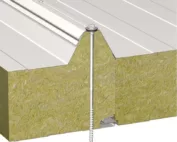
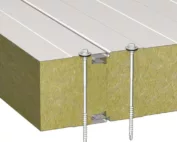
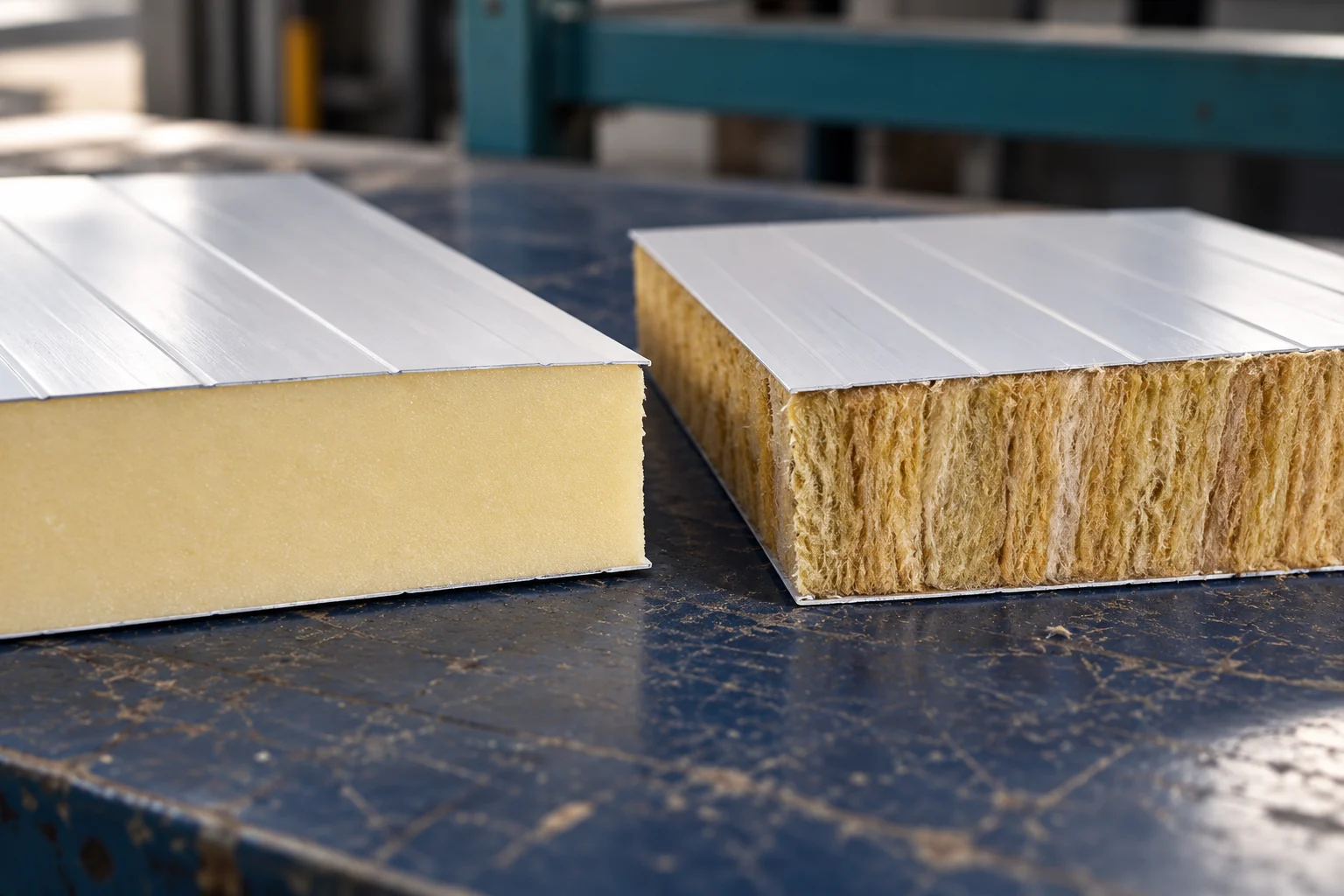
Mineral wool or PIR: which panel core suits a building extension?
In brief
The choice of core affects the weight of the cladding, thermal performance and the ability to meet fire requirements. It is not decided by price or thickness alone. When extending, the existing frame and the method of connecting new walls must also be taken into account. It is worth comparing specific panels within the same design task. First establish the building’s use, the internal temperature and the requirements for the building envelope. A warehouse may require a different choice from a separating wall between zones with specific fire requirements. Also record the acoustic conditions and environment. Without this data it is easy to compare products that perform different tasks.
Which requirement should guide the choice?
When extending, assess the existing structure. A change in panel weight affects the loads, and a change in stiffness and thickness may require different details. It must not be assumed that the new panel can be fixed in an identical way to the old one.
Do not start by looking for a single ‘best core’. A well-chosen product meets specific requirements in the described configuration. Two materials can be suitable in different parts of the same project if the connections and scope of application are designed.
How does the comparison of panels of the same thickness look?
For an example wall PIR panel 100 mm with 0.5/0.5 mm facings, the mass is approximately 12.3 kg/m² and Uc approximately 0.22 W/(m²·K). In a specific panel family with mineral wool 100 mm, the values are approximately 18.1 kg/m² and 0.39 W/(m²·K). These are examples of specific variants, not constants for the entire market.
For 100 m² of cladding, the mass difference between these variants is approximately 580 kg. This matters for delivery and installation, and the structure is assessed for the full set of loads. However, the lighter panel should not be chosen without checking the other requirements.
Such a comparison does not give an equal thermal effect. If the goal is a similar U, appropriate thicknesses from the tables of both families must be compared. A greater thickness also changes the mass, the length of fixings and the position of flashings. Therefore, cost comparison should only follow selection.
What do fire classes really say?
The core, the reaction to fire of the finished panel and the fire resistance of the partition are different issues. Example mineral wool panels have reaction class A2-s1,d0, and specific PIR panels B-s1,d0. On this basis, an EI class cannot be assigned to any wall, nor can every panel be called non-combustible.
Fire resistance depends on the entire configuration: the panel, supports, connections and method of installation. Openings and penetrations also matter. If a document gives a result for a specific configuration, its conditions must be maintained. A thicker core alone does not confirm equivalence.
Requirements should be established before quoting. A later change of core may require different spacings, details or support arrangements. It is better to clarify this before production than to try to adapt documents to an already installed envelope.

How does the core change the organisation of installation?
Heavier panels may require different lifting equipment. The mass of the whole element, its length and the permitted handling method all matter. A 1.13 × 5 m panel is 5.65 m². In the variants cited, at 100 mm this would be approximately 69.5 kg for PIR and 102.3 kg for mineral wool.
The method of unloading and installation should be matched to the actual product. Do not lift a long panel at random points just because the core is light. Bending can damage the bond between the facings and the insulation. Adequate support is important in both groups.
For an extension, plan the junction between the old and new envelope. A different thickness requires a suitable transition. Joints from different families do not necessarily fit together. A colour match does not mean mechanical compatibility or joint tightness.
Also determine the temporary storage location. The mass of the pack and the way it is supported matter during unloading. Do not load an existing ceiling or platform with a pack of panels without checking its capacity.
How should you complete the comparison and order the right variant?
Prepare a schedule of requirements and selected panels. Include Uc, mass, fire classification range, load-bearing capacity and facings. Add fixings, flashings, transport and installation equipment to the cost. Only then does the price difference say something about the actual choice.
If noise is important, use the data for the specific panel. Mineral wool concealed behind a full steel facing does not automatically mean strong reverberation absorption. Acoustic insulation and absorption must be assessed separately.
Record the full configuration on the order. The information “100 mm with mineral wool” or “100 mm PIR” alone is not precise enough. On delivery, check that the markings match the agreed schedule before the elements reach the structure.
Short answers from the construction site
Do a PIR panel and a 100 mm mineral wool panel give the same thermal effect?
Do not assume this. Compare the Uc of specific variants. The same thickness does not mean the same thermal performance or weight.
Can cores be mixed within a single building?
This is possible in a designed configuration. The use of individual building envelope elements, the connections and compliance with the requirements of the whole building must be determined.
7 branches. Materials closer to your project.

- SEROCK — Dzierżenin 34 E
- BŁONIE — ul. Sochaczewska 138A
- RADOM — ul. Grobickiego 8
- ŁÓDŹ — Natolin 8
- OLSZTYN — Barczewo, ul. Prosta 9
- WROCŁAW — ul. Jerzmanowska 10C
- GORZÓW WLKP. — ul. Zielona 33/34