Building insulation
Why does the north wall get damp and what should be checked before insulating it?
In brief
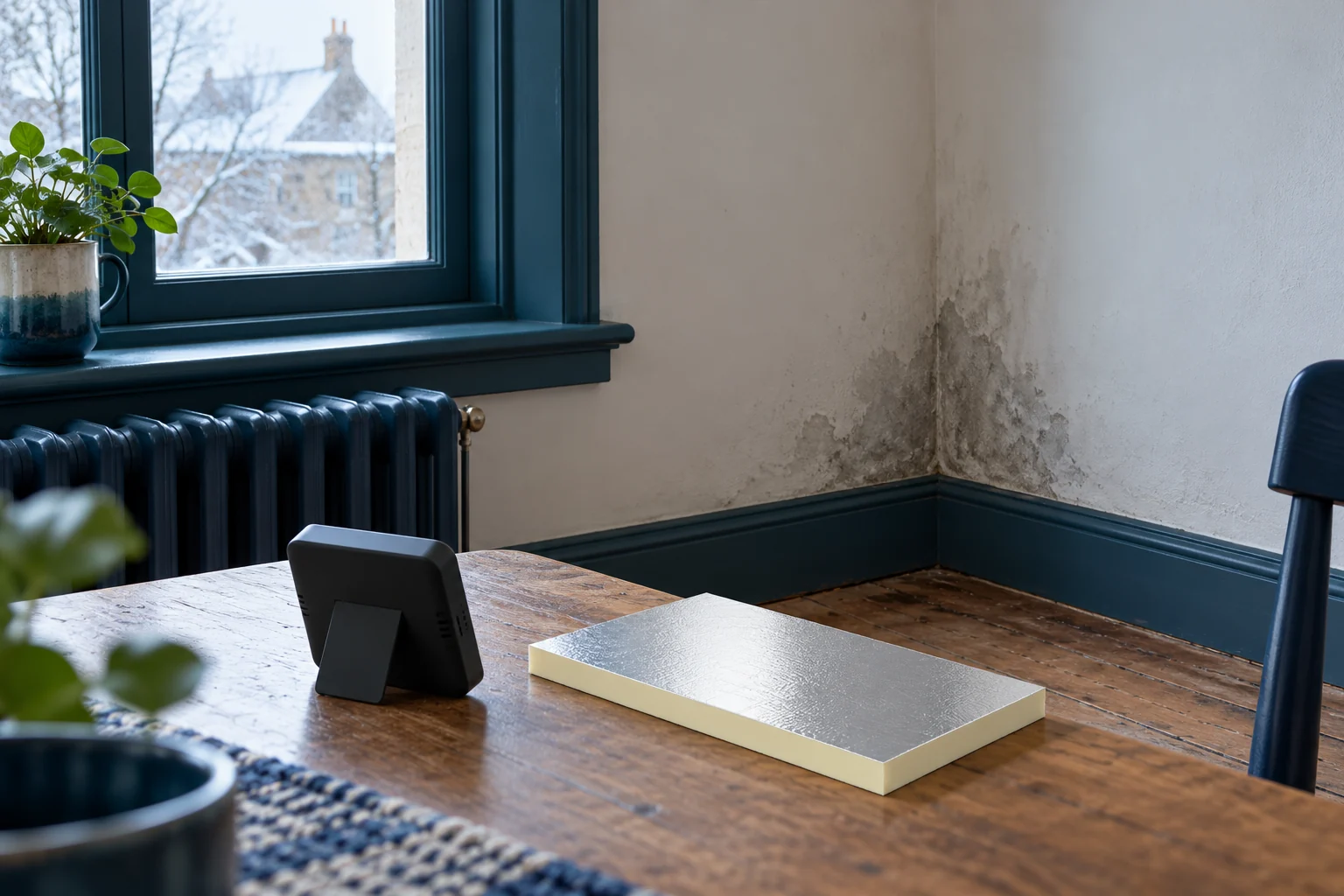
A damp north wall does not always mean a lack of insulation. The cause may be a leak, moisture from the ground or an internal surface that is too cold. A north-facing elevation usually receives less sun, so it dries more slowly. A good renovation starts with identifying the path of the water, not with buying the thickest board. Note whether the patch grows after rain, after several cold nights or regardless of the weather. Inspect the wall on both sides. A stain at ceiling level may be linked to the roof or flashings. Moisture in the lower section requires checking the plinth, the ground and the insulation at ground level. The shape of the patch alone does not yet give a reliable diagnosis.
When does dampness occur?
Check the gutter and water drainage. Look for cracks, window sills and the points where cables enter. Rain can get behind the façade in a different place from where the mark appears in the room. Do not assess tightness solely during a sunny visit.
Document changes with photos and short notes. If the cause is unclear, an inspection by someone familiar with the building envelope is needed. Accidental drilling or covering the wall can make later diagnosis more difficult.
How does moisture form on a cold surface?
The air in the room contains water vapour. When it comes into contact with a sufficiently cold surface, condensation can occur. The risk increases with indoor humidity and as the wall temperature falls. The phenomenon often appears at corners, reveals and uninsulated reinforced-concrete elements.
Behind a large wardrobe, heat exchange with the room is limited. The surface there can be colder than on an exposed section. This is a reason to check the conditions behind furniture. However, it does not prove that the furniture alone is the sole cause of the problem.
A northern orientation does not create a separate type of moisture. Limited sunlight can reveal a weakness in the building envelope that is less visible on another façade. It is therefore worth comparing temperatures and humidity over a period of time rather than drawing conclusions from a single reading.
What should be repaired before adding insulation?
First, remove the ingress of water. Repair the leak in the installation or flashing if it has been confirmed. Determine the condition of the plaster and masonry. A crumbling layer is not suitable for direct covering. How to treat the affected surface must be matched to the scale of the problem and the type of substrate.
At the same time, check the ventilation and the air supply. After replacing windows, the previous air exchange may have changed. Heating the room only for a short time can also leave cold corners. Do not close the vents in an attempt to combat draughts.
Stopping the leak does not mean all layers dry out immediately. Determine when the building element can be covered. An assessment of moisture in the relevant places is helpful, not just checking whether the paint on the surface looks dry.

Will PIR from the inside solve the problem?
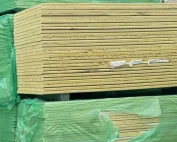
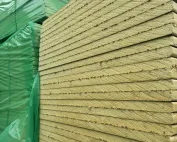
It can improve the surface temperature on the room side if it has been correctly selected. At the same time, it restricts the heat supply to the old masonry. Internal insulation therefore requires a thermal and moisture assessment. It is not a universal drying method and does not eliminate the leak.
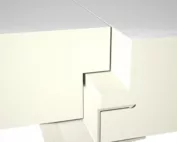
A board with an aluminium facing can form a layer with high diffusion resistance. It requires planned airtight joints and perimeter connections. If moist air gets behind the insulation through an open detail, the properties of the foil alone are not enough.
Places that cannot easily be thickened are also important. The reveal, the junction with the ceiling and the transverse wall can remain cold. In such a configuration, a detail design is needed. Adding extra centimetres in the middle of the wall does not replace a solution for the corner.
How should post-renovation checks be carried out?
In the example flat in Włoszczowa, an observation plan for the first heating season can be established. It is worth recording the room temperature and humidity and checking the most problematic places. This helps distinguish temporary moisture after the works from a recurring defect.
Also check the façade and rainwater drainage. Correct thermal insulation does not exempt you from maintaining the gutters. If the mark returns in the same place after rainfall, go back to looking for the leak. If it appears on cold days at high humidity, the surface conditions need to be reassessed.
Do not limit acceptance to the colour of the new paint. It should cover the removed cause, the seals made and the way the room is used. Only these elements together allow the durability of the repair to be assessed.
Short answers from the building site
Is every stain on the north wall the result of a thermal bridge?
No. A similar mark can arise from rain, a leaking installation or moisture from the ground. Diagnosis should precede the choice of repair method.
Will stronger heating replace renovating a damp wall?
It may change conditions at the surface, but it does not remove the water supply. The cause and the condition of the layers must first be established. Only then are the insulation and the mode of use selected.
7 branches. Materials closer to your project.

- SEROCK — Dzierżenin 34 E
- BŁONIE — ul. Sochaczewska 138A
- RADOM — ul. Grobickiego 8
- ŁÓDŹ — Natolin 8
- OLSZTYN — Barczewo, ul. Prosta 9
- WROCŁAW — ul. Jerzmanowska 10C
- GORZÓW WLKP. — ul. Zielona 33/34