Roof covering
How do you put together the flashings so that the roof installation doesn’t stall?
In short
Missing a few flashings can stop the closing of the entire roof slope. That is why it is worth preparing their list together with the sheets. You need the edge dimensions, chimney details and the number of roof penetrations. The length of the finished flashing does not always equal the length of the covering. Overlaps, corners and the installation direction must be taken into account. The basic list includes eaves, gable edge and ridge flashings. On a roof with valleys, elements guiding water between the slopes are added. Chimneys, walls of the higher part of the building, windows and service penetrations are listed separately. The scope depends on the building form, so there is no single set that fits every house.
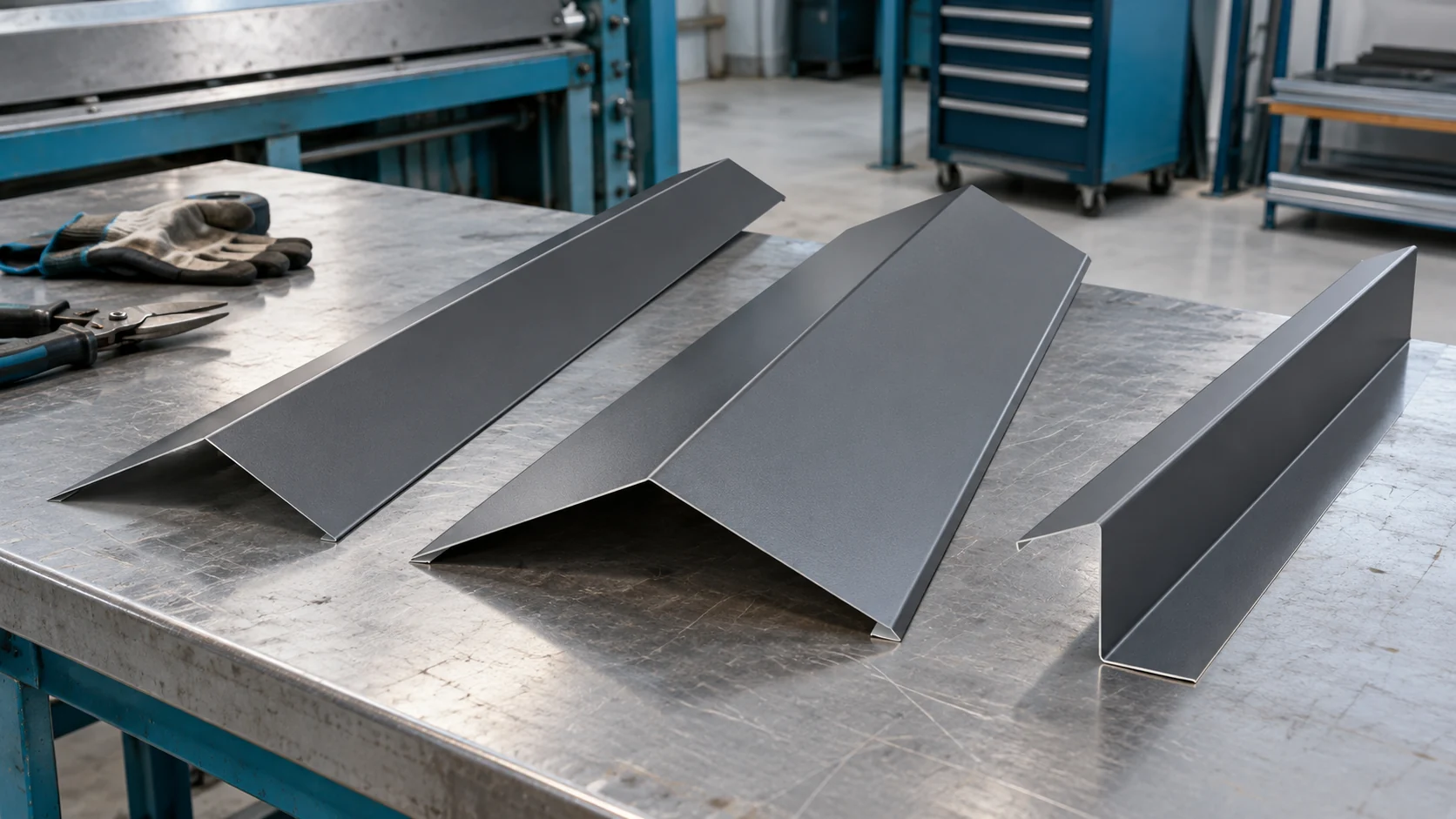
What elements occur on a roof?
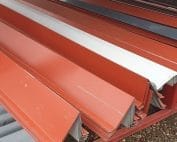
Some details consist of more than one component. At the eaves you may encounter separate solutions for draining water from the covering and from the underlay. The name used by the crew is not always identical to the name in the offer. A cross-section sketch with the function of each part marked is helpful.
For a simple gable roof, the schedule can start with two eaves, four gable edges and one ridge. Then elements resulting from chimneys and penetrations are added. This organises the measurement, but does not yet determine the cross-sections or the number of pieces.
How do you measure lengths for ordering?
Measure each edge and record it separately. Do not immediately combine all the metres into one total. Two short edges may require a different number of finished elements than one long edge of the same total length. The result is determined by the available lengths, the overlaps and the way the end is finished.
Calculation example: the edge is 9.4 m and the finished flashing is 2 m. If an overlap of 0.10 m is assumed for the detail under consideration, five elements give 9.6 m of continuous covering. Four give only 7.7 m. The overlap value in this example serves the calculation. In actual work, the dimension appropriate to the joint must be used.
What should be established before ordering bending?
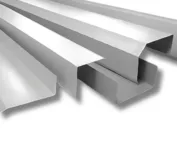
A cross-section with leg widths and angles is needed. The coated side and the direction of the bends must be indicated. For asymmetrical elements, it is worth describing the view from which the sketch was made. A mirror image can mean that the flashing does not fit despite correct lengths.
Also take into account the sheet thickness and its coating. The additions should match the covering in terms of material and appearance. On a large, well-lit edge, a different gloss will be visible even with the same RAL colour. If the roof is being built in stages, keep the pattern of the ordered flashing and the description of its finish.
When several flashings are similar, give them clear markings on the order sketch. The markings are for the team and need not be visible on the finished roof. They make it easier to check the delivery and assign components to the correct roof slope.

Which flashings must arrive earlier?
Components installed beneath the covering should be available before the sheets are laid in that area. This applies in particular to parts of eaves solutions, roof valleys and wall junctions. A missing detail of this kind may force freshly laid sheet to be unscrewed again. Agreeing the sequence with the roofer prevents this downtime.
Some cover elements, by contrast, close the work after the covering has been laid. This does not mean they can be ordered without prior measurement. Their dimensions should derive from the actual profile and the layer build-up. In the schedule, it is worth noting the collection date for the flashings and the point at which the first piece is checked.
How do you check compliance on site?
Before unpacking the whole batch, compare the first component with the sketch. Check the colour, the coated side, the angles and the widths of the legs. With an unusual detail, a trial fit of one piece can prevent an error repeated across the whole roof. Carry long components so that they are not bent in the middle.
During installation, do not replace a missing flashing with a random strip of sheet. It may not provide drainage or proper support. Cutting should comply with the coating requirements. After the work, remove swarf and remnants of protective film. Small contaminants are easily overlooked but can later leave corrosion marks.
What should you leave the crew for the final finishing?
The acceptance list should cover corner closures, ridge terminations and details at penetrations. It is worth checking whether the laps direct water as planned. The flashing is to protect the junction but must not accidentally block the intended ventilation. Not every visible gap should be filled with sealant.
After completion, keep the sketches and the material marking. For future extension, they will make it easier to reproduce the detail. A spare plain component may be useful if it can be stored safely. However, storing many random offcuts does not replace a clear description of what was actually installed.
Short answers from the site
Are flashings always priced solely in linear metres?
Not always. The price may depend on the developed width of the sheet, the number of bends and the length of the piece. The quote should clearly state the unit and the scope of work.
Can flashings be ordered based solely on colour?
The cross-section, thickness and type of coating are also required. The same colour does not guarantee matching gloss, rigidity or geometry of the component.
7 branches. Materials closer to your project.

- SEROCK — Dzierżenin 34 E
- BŁONIE — ul. Sochaczewska 138A
- RADOM — ul. Grobickiego 8
- ŁÓDŹ — Natolin 8
- OLSZTYN — Barczewo, ul. Prosta 9
- WROCŁAW — ul. Jerzmanowska 10C
- GORZÓW WLKP. — ul. Zielona 33/34