XPS insulation
XPS and solvents. How can you check material compatibility?
At a glance
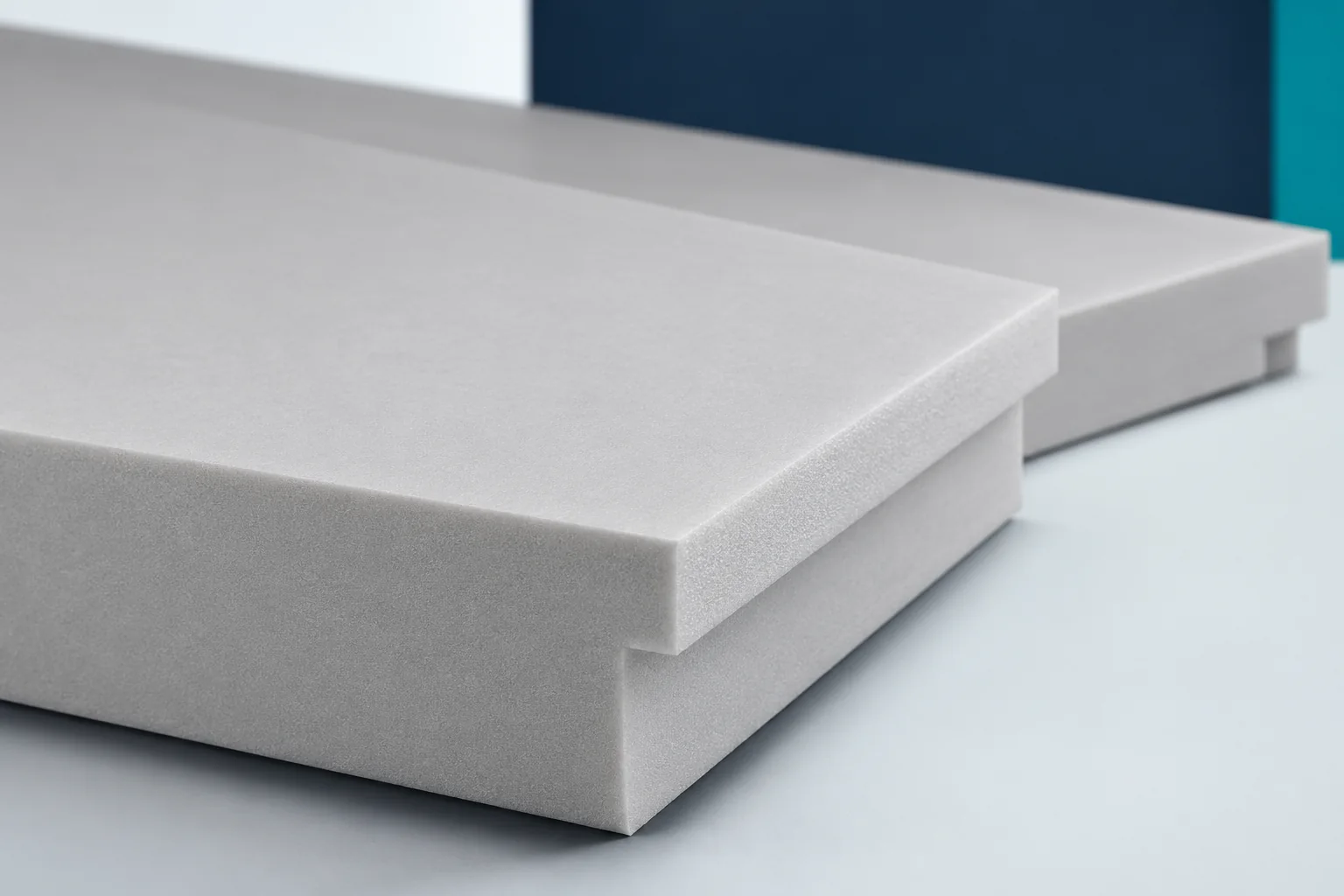
XPS performs well in many damp and load-bearing locations in a building. That does not mean it is resistant to every substance used during construction work. Extruded polystyrene can be damaged by an incompatible adhesive, primer or cleaning agent. The colloquial name Styrodur does not help in assessing this compatibility. You have to check the composition and scope of application of the materials that will come into contact with the board. The closed cells of XPS limit water absorption. This is an advantage with foundations and in certain roof assemblies. However, contact with water is a different effect from contact with an organic solvent. Good water-related parameters do not confirm resistance to any and all construction chemicals.
Water resistance is not chemical resistance
Extruded polystyrene should be assessed with regard to the specific substance. Concentration, temperature and contact time may matter. The resistance table is an aid, but does not replace the documentation for the finished preparation. A mixture sold under one name may contain ingredients with differing effects on the foam.
Adhesives and primers require particular attention
Before bonding XPS, it is worth checking whether the adhesive manufacturer permits contact with extruded polystyrene. Compatibility with the substrate is also required. A preparation suitable for concrete need not be suitable on a specific waterproofing coating. The entire bond is what counts.
One should not assume that a strong odour is the only signal of risk or that its absence proves safety. Extruded polystyrene requires confirmation in the instructions. The application method and the time before the layers are joined are important. Good adhesion on a small sample does not yet describe durability under service conditions.
Bituminous adhesive is not a single material
Products with different bases and purposes appear under the same name. Some may be compatible with XPS, while others may contain ingredients harmful to polystyrene. Therefore, you should not rely solely on the black colour of the compound or on experience with another container.
XPS is produced by, among others, FIBRAN, Finnfoam and PNP. Their instructions may specify requirements for contact with adjacent materials. These must be compared with the waterproofing manufacturer’s information. If compatibility is not unambiguous, it is better to obtain a written clarification before installing the entire wall.
Do not clean the foam with an arbitrary thinner
Removing a stain from XPS with a tool-cleaning agent may damage a larger area than the soiling itself. Manufacturers’ documentation indicates that polystyrene is incompatible with numerous solvents, including acetone and petrol. They should not be used to degrease the boards.
Extruded polystyrene must be protected from soiling already during storage. If contact with an unknown substance occurs, its type must be determined and the damage assessed. Wiping the surface is not an automatic way of restoring the properties. Sometimes the right decision will be to replace the element.
Check adjacent materials on the roof as well
XPS may come into contact with the membrane, a separating layer, adhesive and fastening elements. The required separating layers depend on the specific system. They are not an addition that can be removed to simplify the build-up. Their purpose may be to protect materials against adverse contact.
The properties of the foam do not determine the compatibility of the entire cross-section. The requirements of the covering must also be taken into account. XPS should not be installed alongside work with an open flame without a designated protective solution. Excessive temperature and chemical influences are separate causes of possible damage.
A compatibility test has defined limits
A small sample can help to notice rapid deterioration of the surface or a lack of adhesion. However, on its own it does not confirm all properties after years. It should be carried out in accordance with the recommendations specific to the joint. It does not replace the documentation if a specific system is required.
An inspection of XPS after brief contact does not show every effect. Therefore the result of the test must be assessed together with the instructions for the preparation and the site conditions. In case of doubt, it is worth passing on to the supplier the full name of the substance, the technical data sheet and a description of the place of use. A question about any adhesive is too general.
Separate the board zone from construction chemicals
It is best to store packs of XPS in a clean, tidy place. They should not lie next to open containers of solvents or where tools are washed. Protection against accidental spills is simpler than subsequently establishing the extent of the damage.
It is also worth planning the sequence of work for several crews. A preparation sprayed onto an adjacent surface may land on exposed boards. XPS is light and easy to carry, so the delivery can often be moved away from the work zone. Good storage helps preserve its properties until installation.
Record compatible material combinations
After choosing a solution, the documents for the boards, adhesive and adjacent layers should be kept. If the preparation is changed, compatibility must be checked again. A similar name or the same commercial category does not prove an identical composition.
A well-chosen XPS provides a lasting thermal function under the intended conditions, without the need to attribute resistance to everything to it. Checking chemical compatibility is part of this selection. It allows the material’s low water absorption and rigidity to be used while avoiding damage that is not visible in the lambda and strength table alone.
7 branches. Materials closer to your project.

- SEROCK — Dzierżenin 34 E
- BŁONIE — ul. Sochaczewska 138A
- RADOM — ul. Grobickiego 8
- ŁÓDŹ — Natolin 8
- OLSZTYN — Barczewo, ul. Prosta 9
- WROCŁAW — ul. Jerzmanowska 10C
- GORZÓW WLKP. — ul. Zielona 33/34