Renovation and maintenance
When and how to maintain a sheet metal roof
In brief
Plan tin roof maintenance according to the covering instructions and warranty terms, not a single date for every roof. Check the building surroundings: leaves and needles from trees, deposits from a chimney, road or industrial plant can accelerate soiling. It is worth linking inspections to winter preparation and the post-winter assessment, with an extra check after a gale, heavy hail or installation work. From a safe place, inspect the eaves line, ridge and flashings, and from inside the accessible attic. Look for loose elements, new stains and damp insulation before a leak appears.
How to set an inspection schedule?
Start with the warranty conditions and user instructions for the specific covering. Then take the surroundings into account. A house under trees will require more frequent removal of leaves and needles than a building in open terrain. Proximity to a chimney, road or industrial plant may increase the amount of deposits. There is no single schedule suitable for every roof.
In practice, it is worth linking the inspection with preparation for winter and an assessment after the winter season. An additional check is advisable after a gale, heavy hail or installation work on the roof slope. There is no need to wait for a stain on the ceiling. From the outside, a loose flashing, accumulated branches or a displaced drainage element can be noticed earlier.
What can be checked without going onto the roof?
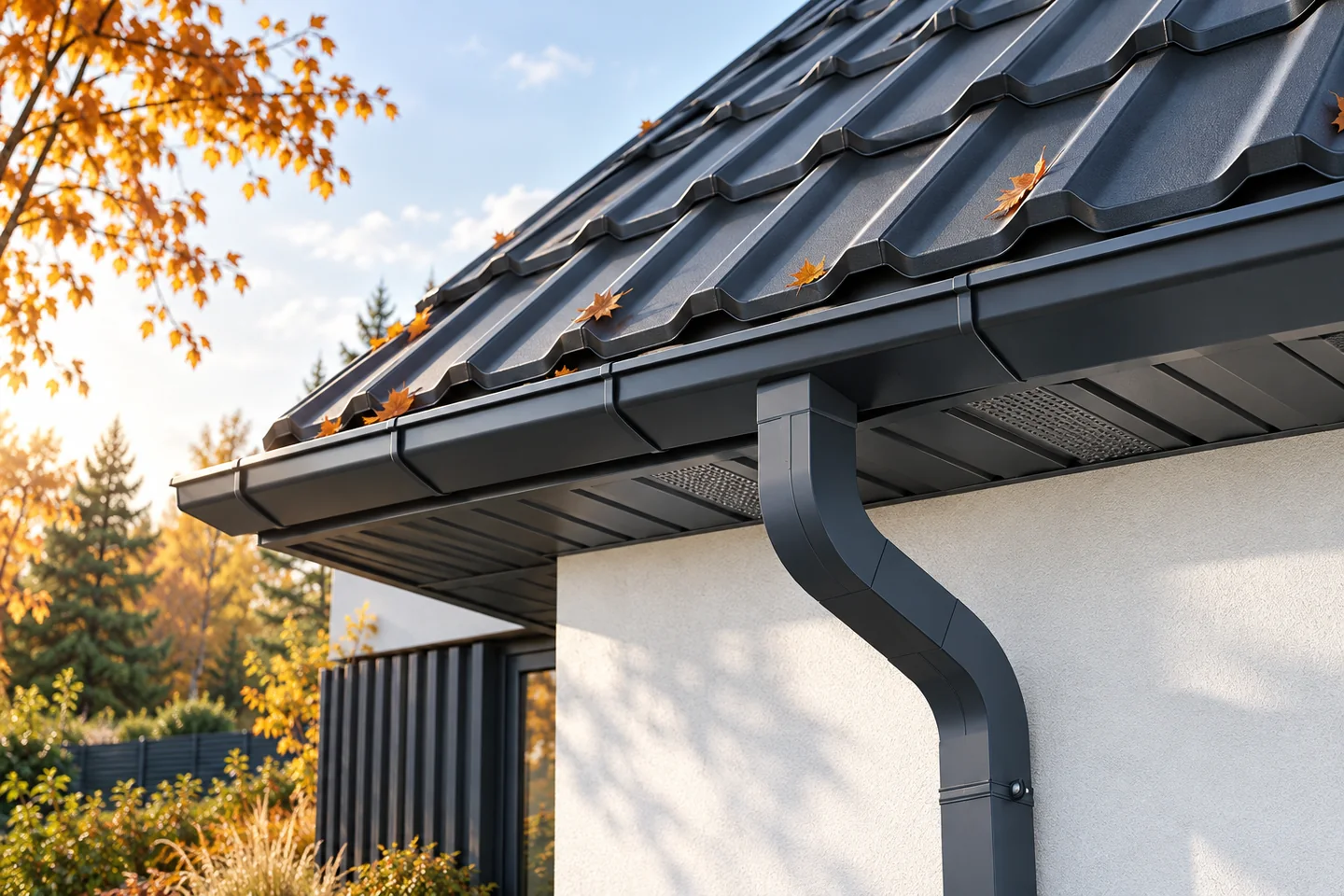
From a safe position, inspect the eaves line, ridge and visible flashings. Look for unevenness, soiling of the façade below the gutter and signs of water overflow. Enlarged photographs are helpful. They do not replace a close-up inspection, but they allow you to determine where a more detailed examination will be needed.
From the inside, check the accessible attic. Look for new leaks, drips, dark marks on timber and damp insulation. Compare observations with previous photographs. If the problem occurs without rainfall, condensation must be considered. Maintenance does not end with the visible sheet metal, because the condition of the layers beneath it affects the performance of the entire roof.
Which details require the most attention?
Check the roof valleys, the area around the chimney, windows and installation penetrations. In these places water changes direction or meets several connections. Contamination can restrict drainage and prolong contact with moisture. Also inspect the barge boards and fixings in the edge zones. A loose element may, under wind load, damage other parts of the covering.
Screws are assessed together with the washers and the condition of the sheet metal around the hole. Not all should be tightened unnecessarily. Excessive pressure can impair tightness. Where looseness is found, determine the cause and the method of repair. It is also important to keep ventilation gaps clear. Blocking them with leaves or accidental foam can change the conditions beneath the covering.

How to clean the roof and drainage?
Remove loose leaves, branches and deposits with soft tools. Select the cleaning agent and pressure to suit the coating. Do not use an aggressive product simply because it quickly dissolves dirt on paving stones. Water should flow in accordance with the arrangement of the laps. Forcing it under the sheet metal can cause dampness that was not there before.
Gutters and downpipes are cleaned in such a way as not to damage the seals and surfaces. Also check that the pipes are clear and the final rainwater discharge. Sediment removed from the gutter should not end up deep in a blocked downpipe. With concealed drainage, service access is particularly important. If it is missing, it is worth resolving this problem before the next rainy season.
When is a minor repair enough?
A local scratch or minor damage to the flashing may require a limited correction. The repair material must match the existing coating. Before applying the touch-up, the surface is prepared in accordance with the recommendations. Do not paint over loose corrosion and do not spread random paint over a large area of healthy lacquer.
In the case of perforation, extensive deformation or a recurring leak, a broader assessment is needed. Sometimes replacing a section will be better than another layer of sealant. If the repair concerns an installation penetration, also check its fixing to the structure. Sealing the surface alone will not solve the problem of an element that is still moving.
How should maintenance be documented?
Keep a simple record of dates, observations and work carried out. Attach photos of the places that require observation. Keep the name of the cleaning agent and repair material. Such documentation makes it easier for the next contractor to assess the roof and may be needed when using warranty protection. It is also helpful when selling the building.
Plan safe access before a failure occurs. Wet or icy sheet metal is not a place for improvised work from a ladder. On a difficult roof, the inspection should be carried out by a prepared specialist. Regular maintenance is intended to limit the risk and cost of repairs. It delivers the most when it covers the causes of problems, not just superficial improvement of appearance.
7 branches. Materials closer to your project.

- SEROCK — Dzierżenin 34 E
- BŁONIE — ul. Sochaczewska 138A
- RADOM — ul. Grobickiego 8
- ŁÓDŹ — Natolin 8
- OLSZTYN — Barczewo, ul. Prosta 9
- WROCŁAW — ul. Jerzmanowska 10C
- GORZÓW WLKP. — ul. Zielona 33/34