Walls with mineral wool
What extends the life of a wall made from mineral wool panels?
In brief
There is no single number of years common to all mineral wool panels. The durability of the wall is determined by the facings, the surroundings and the quality of the details. The way the building is used also matters. Later openings, extensions and fixings must be planned with particular care. A small change can compromise a well-functioning envelope. The panel acts as a composite element. The steel facings, the bonding layers and the core work together. The condition of the mineral wool alone is therefore not enough to assess the whole panel. The joints, coatings and fixing points also matter. Damage to the surface can open the way to corrosion, even if the core looks sound.
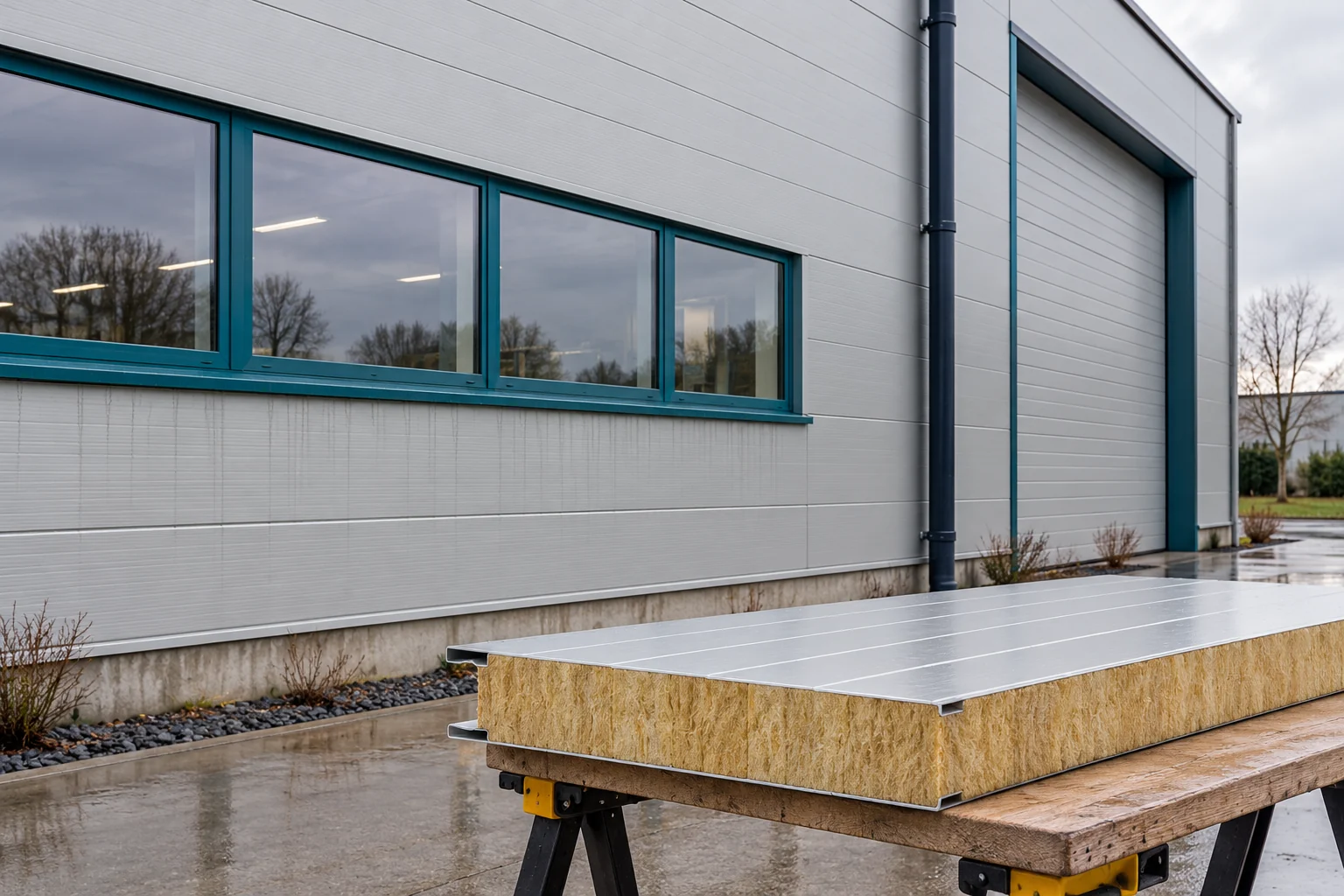
Why does the core alone not determine durability?
Internal and external conditions can vary widely. A dry warehouse wall performs differently from the cladding of a room with moisture and aggressive substances. The choice of coating should match the environment. It cannot be assumed that a standard finish is suitable for every process carried out later inside.
What matters already during installation?
Swarf left on the surface can rust and cause staining. Damage from cutting or handling should be assessed immediately. Approved minor repairs are carried out with materials compatible with the coating. Not every defect should be treated as a problem that can be covered later with paint.
Sealing at the base, openings and ends protects against water. The correct arrangement of seals and drainage must be maintained. An over-tightened fastener can deform the panel or the seal. Good installation quality means checking details, not just straight lines visible from a distance.
How to plan inspections of a wall in use?
The scope and frequency should match the building conditions and the requirements of the material used. Particular attention is paid to the lower zone, areas around gates, flashings and places exposed to impact. After strong wind or a mechanical incident, the cladding should be inspected additionally.
Record observed changes and repairs carried out. Photos from a similar location make it easier to compare condition over time. If a crack or deformation is growing, an assessment of the cause is needed. Repainting alone may hide the symptom but will not explain a problem with support or structural movement.
Pay attention to areas sheltered from natural rain washing. They may accumulate contamination longer than an exposed façade. Contact between different metals and incompatible accessories also requires checking. The inspection should relate to the conditions of the specific building and not be merely a cursory walk around the walls.
What to avoid during cleaning?
Do not select products solely on their effectiveness against dirt. The product must be compatible with the coating. Concentration, temperature and the rinsing method also matter. A strong jet directed at the joints can introduce water into places not designed for such loading.
First, carry out a test on a small area in accordance with the recommendations for the surface. Do not use sharp tools to scrape off dirt. Access to drains and flashings should remain at the wall. Burying the plinth in soil or leaning wet material against the panel changes the conditions in which it performs.

How can an extension shorten the service life of the cladding?
A new service penetration or door requires the opening to be designed and supported. Cutting out a section of panel can change its performance. Heavy equipment should not be suspended without checking how the load is transferred. The cladding does not automatically replace a structure for all additions.
For an extension, the junction between the two parts and the drainage from the new roof must be resolved. Water should not be directed onto a detail that was not previously loaded in that way. In the example of a workshop extension in Przeworsk, it is worth inspecting the old wall before installing the new roof slope. This is the moment to repair places that will later be difficult to access.
When to repair and when to replace a component?
The decision depends on the type and extent of the damage. A minor coating defect may be eligible for repair. A deep dent, detached cladding or damaged lock may require replacement. If the wall has a specified fire resistance, the scope of repair must preserve the conditions of the proper solution.
It is worth keeping the product designation and installation documentation. This allows a compatible component to be selected instead of looking for a substitute based only on colour. The warranty period is not a simple forecast of the wall’s life. In practice, durability is determined by the conditions, the workmanship and the response to the first signs of damage.
When replacing one element, access to the fastenings of adjacent panels must be checked. A dismantling plan helps reduce the risk of damaging serviceable parts. Purchasing a compatible panel alone does not yet complete the scope of repair.
Short answers from the site
Can the same durability be promised for all panels with mineral wool?
No. They differ in coatings, claddings and operating conditions. Installation and subsequent maintenance of the specific cladding also matter.
Can every panel be repaired locally after an impact?
Not always. The core, the bond and the connections must be assessed. A cosmetic repair does not confirm that the mechanical or fire properties have been restored.
7 branches. Materials closer to your project.

- SEROCK — Dzierżenin 34 E
- BŁONIE — ul. Sochaczewska 138A
- RADOM — ul. Grobickiego 8
- ŁÓDŹ — Natolin 8
- OLSZTYN — Barczewo, ul. Prosta 9
- WROCŁAW — ul. Jerzmanowska 10C
- GORZÓW WLKP. — ul. Zielona 33/34