Installation and details
What an eaves flashing does where the roof meets the gutter
In brief
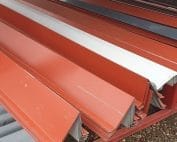
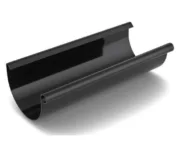
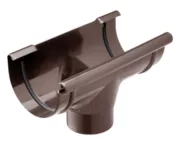
The gutter flashing takes rainwater from the roof slope straight into the gutter and shields the eaves area from backflow. Its edge and drip should guide the stream to the intended point, not underneath the sheeting. The whole detail must work with the covering, membrane, brackets and roof ventilation. Also trace the water path from the underlay — with no pooling and no moisture directed onto the fascia board. Before buying, compare the cross-section drawing, as the name alone can mislead.
What path does water take at the eaves?
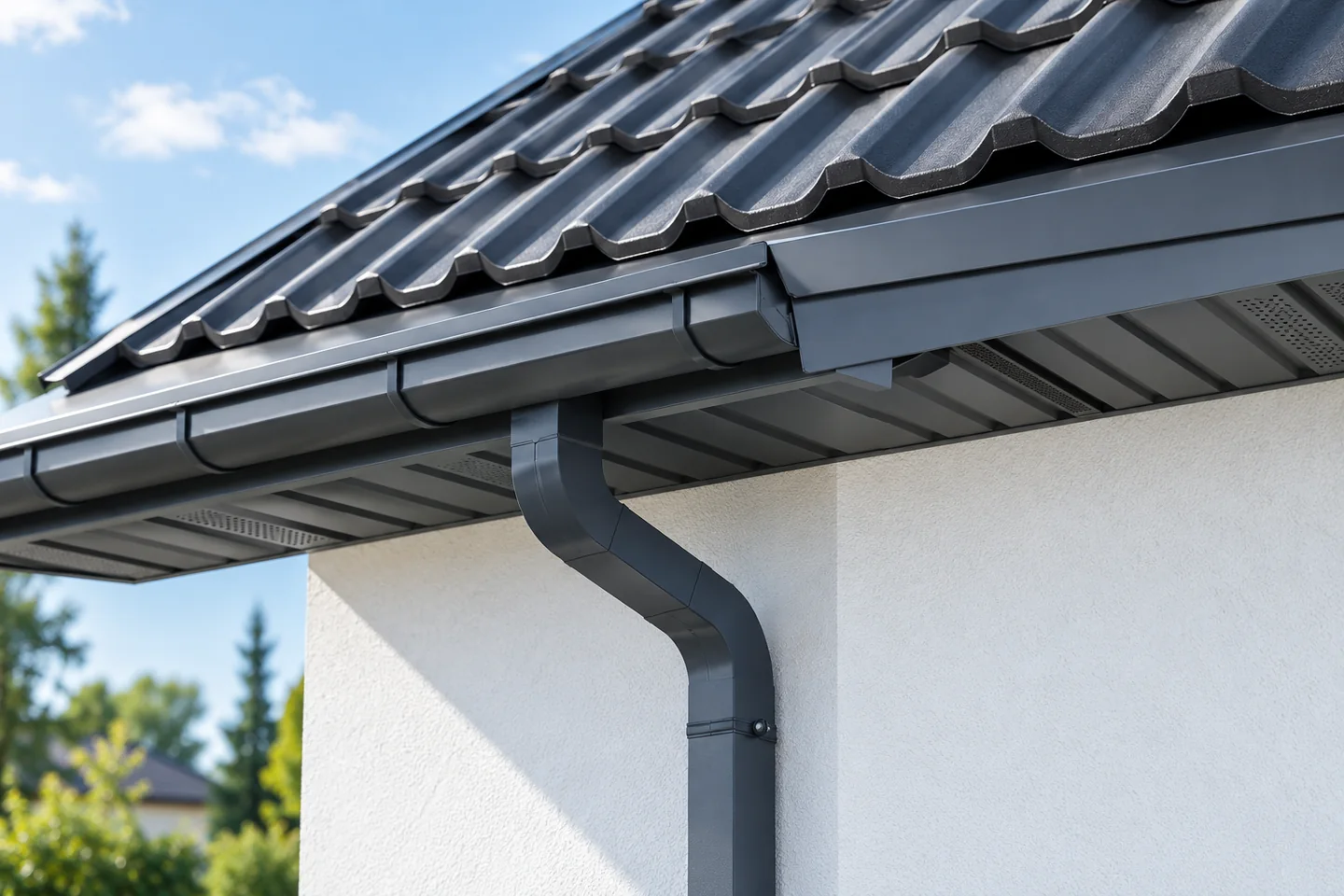
Rain runs down the covering towards the lower edge of the roof. The eaves flashing is intended to direct this flow into the gutter so that it does not run back under the steel sheet. It is important that the edge is properly led out and the drip edge is shaped correctly. This ensures that the water detaches at the intended point instead of being drawn under the underside of the element.
Water from the underlay must be planned for separately. It can occur there after wind-driven rain or as a result of condensation under the covering. The way the membrane is terminated depends on the eaves design. It should not form a pocket or discharge moisture onto the wooden board. The covering and the underlay need a consistent drainage path.
How does the gutter apron differ from the under-gutter flashing?
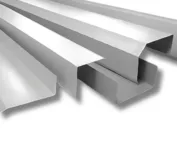
The gutter flashing operates at the upper zone of the gutter and directs water from the roof slope into it. The under-gutter flashing serves, among other things, to protect components located below, such as the fascia board. The names are often used colloquially, so when ordering it is better to show a cross-section drawing than to rely on the term alone.
Two flashings of similar length can have completely different bends and applications. Swapping one for the other usually necessitates rework on site. On a complex eaves detail there may also be ventilation strips and starter elements. Their functions must be kept separate, and it should then be checked that they do not block each other when assembled.
How to choose the flashing for tile-effect metal roofing and trapezoidal steel sheet?
The covering profile affects the height of the first row and the way it is finished at the eaves. Modular tile-effect metal roofing may require a different starter element than a long sheet cut to size. Trapezoidal steel sheet, by contrast, has a different run of valleys and ribs. The ready-made flashing should correspond to the instructions for the particular solution.
The type of gutter brackets is also important. Fascia brackets and rafter brackets occupy a different position in the eaves cross-section. The flashing must not hinder their stable fixing. Before ordering material, it is worth establishing the arrangement of the first batten, counter-battens, membrane and gutter. Such coordination reduces later accidental cutting of elements.

How not to block roof slope ventilation?
In a typical ventilated roof, air enters at the eaves and moves under the covering. The flashing, strips and bird protection must preserve the required inlet cross-section. Closing the entire space with foam can trap moisture in the layers. Merely making holes in a random location does not guarantee a clear channel.
The inlet should connect with the space created by the counter-battens. An appropriate outlet is then needed, usually in the upper part of the roof slope. If the channel is interrupted by a dormer or other obstacles, the design must provide a solution. A good membrane helps control moisture, but does not replace the ventilation provided above it.
What mistakes cause leaks at the gutter?
An excessively short flashing outlet can direct water behind the gutter. An incorrect lap or damaged coating leads to leaks at the joints. Deflection of thin, unsupported flashing is also a problem. When accepting the roof, one must look at the actual drainage path, not just a straight line viewed from the front.
However, damp patches can also result from an overflowing gutter, a poorly positioned outlet or a blocked pipe. Not every wet fascia board indicates a defect in the gutter apron. First, it must be established when the problem occurs and where the water flows from. Applying another layer of sealant without identifying the cause may only make later repair more difficult.
What should be checked during installation and acceptance?
Before covering, inspect the connection between the membrane and the flashing and the way the strip is supported. The laps must correspond to the direction of flow and to the instructions. Fixings should not create unnecessary leakage paths. After cutting and drilling, swarf must be removed, as in damp conditions it can leave rusty marks on the paint finish.
Finally, check the interaction of the gutter, covering and ventilation. It is worth keeping a photograph of the entire eaves cross-section before the last elements are laid. During subsequent inspections, check for dirt, deformation and signs of seepage. A small flashing is of great importance, because it concentrates water drainage, timber protection and the supply of air under the roof in one place.
7 branches. Materials closer to your project.

- SEROCK — Dzierżenin 34 E
- BŁONIE — ul. Sochaczewska 138A
- RADOM — ul. Grobickiego 8
- ŁÓDŹ — Natolin 8
- OLSZTYN — Barczewo, ul. Prosta 9
- WROCŁAW — ul. Jerzmanowska 10C
- GORZÓW WLKP. — ul. Zielona 33/34