Fibre cement coverings
Spare roofing sheets and accessories for future repairs
At a glance
A small stock of the correct material can make a future repair easier. However, fibre cement sheets must be selected and stored consciously. Asbestos-free fibre cement of a similar appearance does not necessarily match the existing roof surface. It is worth keeping not only the sheets but also the data on the profile, the variant and the accessories used. The number of spare sheets depends on the size of the roof surface, the number of formats and the possibility of obtaining them later. There is no single percentage value suitable for every project. A simple roof with one format requires a different approach from a layout with many short elements and penetrations. It is worth distinguishing between stock for offcuts during installation and material intended for later servicing.
The reserve should be based on the specific roof
The first is part of the cutting plan, the second is to remain in good condition. If everything is used up on site, there will be no repair reserve. Both items should be clearly described in the order.
The length dimension alone is not enough
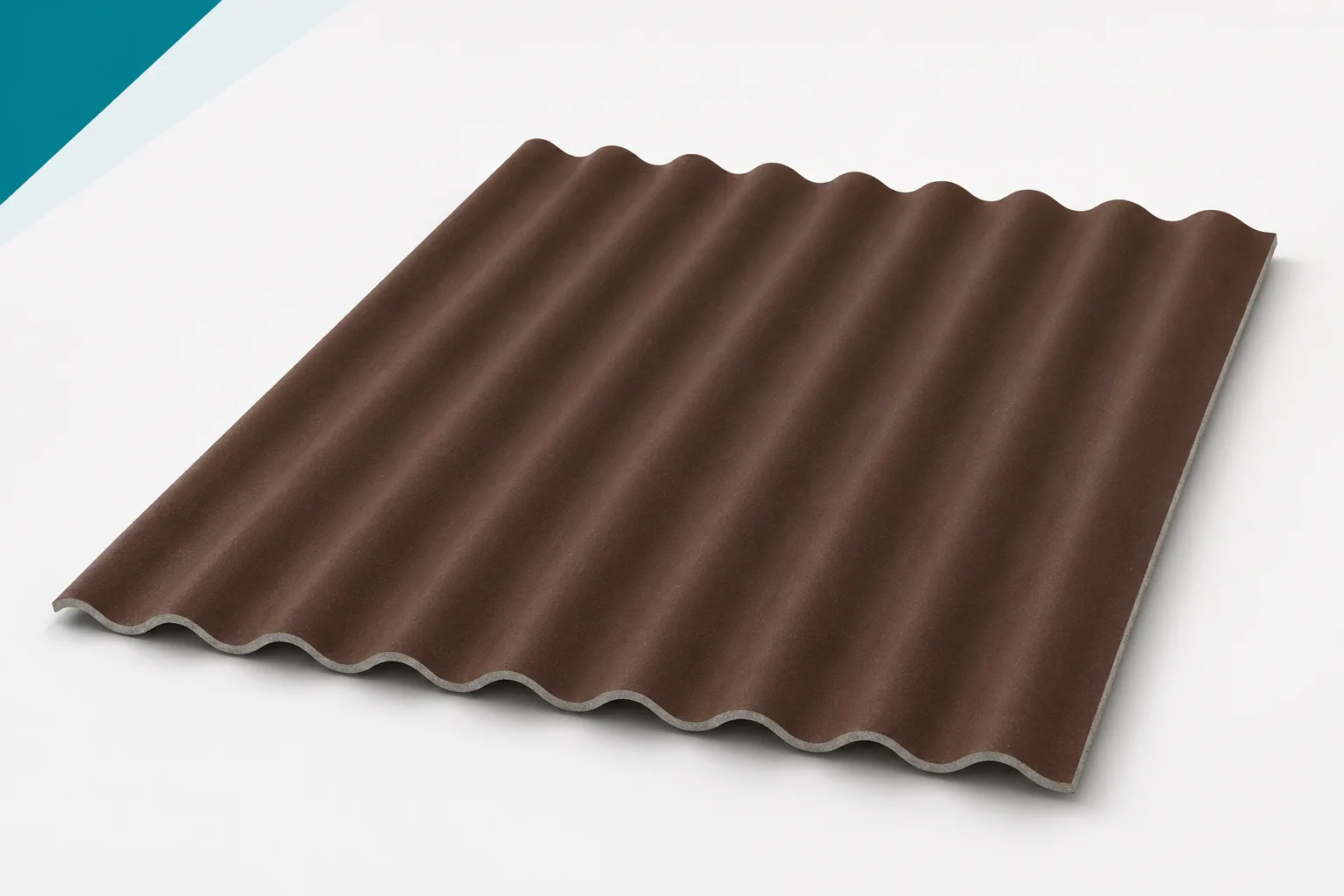
Fibre cement sheets differ in pitch and wave height, working width and edge shape. Two sheets with a similar number of waves may not form a correct lap. When repairing, parts should not be selected solely on the basis of a photo of the roof. Unambiguous identification is needed.
The standard version or a factory-prepared version also matters. Holes and mitred corner cuts can restrict where a sheet can be used. Asbestos-free fibre cement does not mean one universal product. The reserve should correspond to the actual system, and its markings should be kept together with the documentation.
Accessories can be just as important as the sheets
A leak may concern the seal, the connector or the ridge fitting. It is worth knowing which components were used and where they can be sourced. It is not always necessary to stock many parts, but their specification is needed. A general description of “roofing screw” will not make a correct repair easier.
Fibre cement sheets and their accessories should form a compatible set. A replacement must match the geometry and the requirements of the connection. Colour is only one of the criteria. Equally important are the seal material, the type of substrate and the fastening’s resistance to the building environment.
The appearance of the spare stock may differ after years
A sheet stored under cover does not age in the same way as a sheet on the roof slope. After replacement, a visible difference in shade is possible, even if it comes from the same delivery. It is worth taking this into account when planning aesthetic repairs. An identical designation does not guarantee an identical appearance after long exposure.
A natural material can also change tone under the influence of moisture and the surroundings. One should not attempt to even out the difference with random painting. Fibre cement sheets have specific recommendations regarding coatings and maintenance. The decision on the treatment should be based on the documentation, not merely on the wish to mask the new element.
The reserve needs a suitable storage location
The sheets should have even, stable support and protection from water and dirt. They should not be stored on random points or under a downpipe outlet. Moisture trapped in the stack can cause surface bloom and problems with geometry. The cover should comply with the instructions and allow the required ventilation.
Asbestos-free fibre cement should not be a reserve hidden under a pile of other materials. It must be possible to remove it safely and inspect it. Pressure from random weights can damage the corrugation or the corner. Accessories are stored separately, with protection for their surfaces and markings.
Documentation is part of the reserve stock
It is worth recording the profile, lengths, surface variant and delivery date. Photographs of the labels, the instructions and the laying plan are useful. The fixings and finishes used should also be noted. This information helps even when no spare sheet remains in stock.
Fibre cement sheets may later be available under a changed designation or in a different range of formats. Documentation allows parameters to be compared instead of guessing. Compatibility should not be assumed solely on the basis of a similar name. The actual geometry and method of installation remain decisive.
Before use, reassess the condition of the material
A sheet from the reserve may have been damaged during subsequent work in the warehouse. Before lifting it onto the roof, cracks, edges and any deformation must be checked. The material should not be considered serviceable merely because it has never been installed. Storage conditions also matter.
Asbestos-free fibre cement removed from a damaged location is not always suitable for reuse. Additional holes and mitres can limit its usefulness. The assessment should take into account the future support and the connections. The mere absence of a large crack does not confirm that the element fits another section of the roof.
The repair also requires access and diagnosis
A reserve shortens the wait for material, but does not replace identifying the cause of the fault. If a sheet cracked because of uneven support or excessive pressure, a new one may have the same problem. The cause must be corrected before replacement. It is worth recording what was changed.
Fibre cement sheets are repaired without walking directly on the covering. A prepared organisation of the work and protection of adjacent elements are needed. A material reserve is one of the aids. The full plan covers the right parts, knowledge of the roof and a safe way of carrying out the intervention.
Keep the profile markings and the list of accessories, and store the spare sheets as fully usable material. Before every repair, check their condition and their suitability for the place of use.
7 branches. Materials closer to your project.

- SEROCK — Dzierżenin 34 E
- BŁONIE — ul. Sochaczewska 138A
- RADOM — ul. Grobickiego 8
- ŁÓDŹ — Natolin 8
- OLSZTYN — Barczewo, ul. Prosta 9
- WROCŁAW — ul. Jerzmanowska 10C
- GORZÓW WLKP. — ul. Zielona 33/34