The appearance of the house
Using trapezoidal sheets on a traditionally styled house
In brief
Trapezoidal sheet metal can suit a traditional house if its profile, colour and details harmonise with the building’s form. This is best assessed on the whole roof slope, not on a small sample. The classical character comes from the proportions of the volume, the roof pitch, the eaves and the façade divisions. Check whether the regular rhythm of the trapezoid will emphasise a calm form or compete with dormers and decorations. View a sample and a photo of a larger roof slope, and leave the profile choice to the designer, who will verify the support, sheet thickness and loads.
Does a traditional house need a covering that resembles roof tiles?
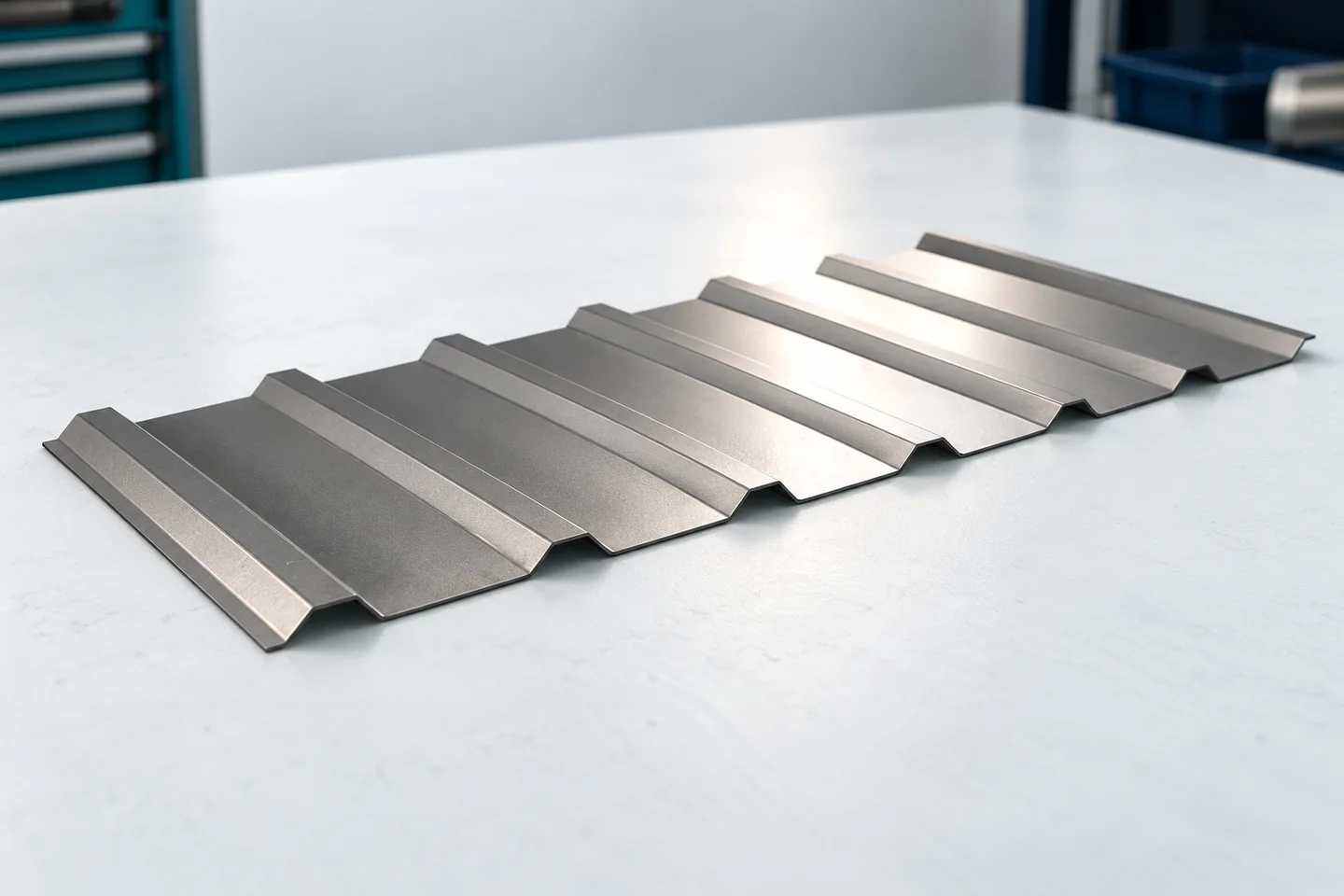
The classic character of a house is created by the proportions of its volume, the roof pitch, the eaves and the divisions of the façade. A covering with simple longitudinal ribs can be part of such a composition. It does not have to imitate another material. It is worth assessing whether the regular rhythm of the trapezoidal profile will emphasise the calm form of the building or compete with numerous dormers and decorative details.
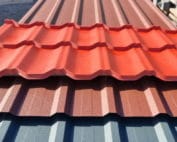
Create a visualisation from the entrance view and from the road. On a steep roof the covering occupies a large part of the image of the house. At a low pitch the eaves and flashings may be more visible. If the character of the building relies on a distinct tile pattern, cut tile-effect metal roofing may provide a better match. The choice is worth basing on the effect of the whole façade.
What do T18 and T35 look like on a smaller building?
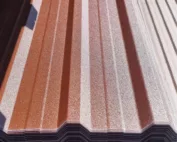
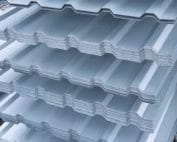
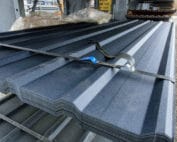
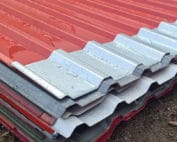
T18 has a lower profile than T35, so the pattern of light and shadow is usually more delicate. T35 creates more pronounced ribs. The final effect also depends on their spacing, the width of the pans and the colour. The height designation does not describe the entire geometry. Before deciding, look at a sample of the specific product and a photograph of a larger, completed roof surface.
Do not assume that T18 is always right for a house and T35 exclusively for a hall. Both profiles must be matched to the support, the sheet thickness and the loads. An aesthetic preference can be passed to the designer, who will check the technical feasibility of realising it. Changing the profile after ordering the panels or flashings may require adjusting the remaining elements.
Which colour harmonises with a traditional façade?
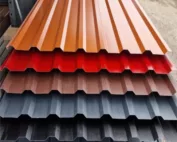
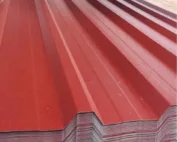
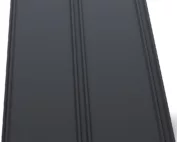
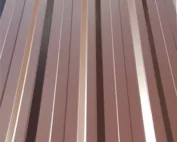
Graphite, brown or a muted red can combine well with light render, brick and wood. However, this is not a ready-made rule for every house. The shade of the façade and the joinery also matter. View samples in daylight, also next to the gutter material. On screen, a matt and a glossy coating can look similar.
The colour is chosen together with the type of coating, not instead of it. The protection should match the environmental conditions and the expected manner of use. It is also worth checking local requirements regarding the appearance of the roof before placing an order. For a building under protection, additional approvals concerning the material and form of the covering may be required.

Which details help maintain a calm appearance?
The proportions of the barge boards, the finish of the eaves and the width of the visible metal strips are of great importance. Excessively elaborate flashings can overwhelm a small house. However, the design should first ensure proper drainage and edge protection. Reducing the flashings purely for appearance may impair the performance of the joint.
On simple roof slopes, the evenness of the ribs and screw lines is clearly visible. This requires careful setting out and a level substrate. The colour of the fixings and gutters also affects the overall impression. If you are planning metal fencing on the property, a consistent colour palette is enough. The fence does not have to repeat every division of the roof to form a clear set with it.
What should you check when replacing an old roof covering?
Before renovating, assess the roof structure, the evenness of the slopes and the condition of the supports. A lighter material will not repair rotten rafters and incorrect connections. You also need to check whether the current pitch falls within the requirements of the chosen profile. The minimum value depends on the specific product and the details of execution, including the sheet connections.
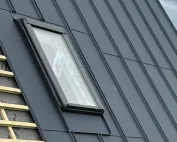
If the house has a usable attic, plan the insulation, airtightness from the inside and roof ventilation straight away. The trapezoidal sheet alone will not provide thermal comfort. The possibility of using PIR boards or another insulation depends on the entire system. The height of the new layers must be taken into account at the eaves, roof windows and connections to chimneys.
How do you order material without accidental compromises?
Once the appearance is settled, prepare a joint specification for the covering, flashings and drainage. For long sheets, check the transport and carrying conditions onto the roof. The longest possible strip is not always the most convenient. Difficult access or numerous obstacles may justify a different division, in line with the instructions and the roof pitch.
Compare quotes for the same effective covering area and a full set of accessories. A well-chosen trapezoidal steel sheet can give a simple, orderly roof even on a traditional building. Success depends on the geometry, colour and details matching the house. It is worth taking the time for this assessment before purchase, while changes do not yet cause costly corrections.
7 branches. Materials closer to your project.

- SEROCK — Dzierżenin 34 E
- BŁONIE — ul. Sochaczewska 138A
- RADOM — ul. Grobickiego 8
- ŁÓDŹ — Natolin 8
- OLSZTYN — Barczewo, ul. Prosta 9
- WROCŁAW — ul. Jerzmanowska 10C
- GORZÓW WLKP. — ul. Zielona 33/34