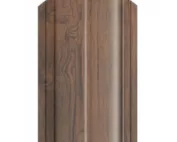
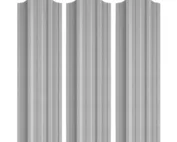
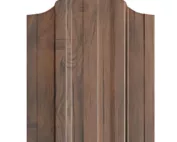
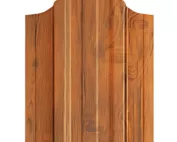
Metal fence pickets and fences
Scratched metal fence pickets: touch up or replace?
In brief
Damage to a single picket does not necessarily mean renovating the whole fence. First, establish what has actually been affected. A surface mark, a deep scratch and a deformed profile are three different situations. Metal fence pickets can be repaired locally or replaced, but the choice of method should be based on the material documentation. An off-the-shelf paint in a similar colour is not a universal solution. Photograph the damage close up and from further away. Show its position relative to the edge and the fixing. Note whether the mark occurred during delivery, installation or later use. This information helps to identify the situation. If warranty conditions apply, check the reporting procedure before starting the repair.

Preserve the condition for assessment
Do not polish the area or scrape off the paint to check the depth. Such an attempt may make the damage worse and complicate the assessment. First remove only the soiling using a method permitted for the coating. Examine the surface in even light. A reflection on the profile can make it difficult to distinguish a mark from a change in reflection.
Separate a change in appearance from damage to the substrate
Some marks are only surface dulling. Others go deeper and expose the layers beneath the paint. The approach depends on the type of coating and the recommendations for the specific material. Do not assume that every fine line requires extensive painting or that a small scratch is always insignificant.
Areas at the ends and around holes require particular attention. Their protection and geometry differ from the broad face. If the damage is accompanied by a crack, tear or deformation of the joint, touch-up alone does not solve the whole problem. It is necessary to assess whether the picket is still suitable for proper fixing.
Match the repair material to the coating
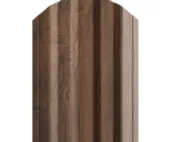
The supplier should specify the product and the method of use compatible with the item. A similar colour does not confirm chemical compatibility or adhesion. Sheet-metal pickets may have various finishes, including textured and wood-effect ones. Instructions for one variant need not be suitable for the others.
Check the surface preparation method, the required working conditions and the time before further use. Do not accidentally combine several paint systems. The exact procedure should come from the repair documentation. If there is uncertainty about the type of paint, it is better to reproduce the order details than to experiment on a visible section. Keep the packaging of the product used or its description. In the event of a later change to the surface, it will be known what the repair was carried out with. This matters especially when subsequent work is taken over by another person.

Limit the repair to the necessary scope
Touch-up is intended to protect the damaged area. Applying it too widely may create a patch that differs in gloss and texture. It is worth using the method recommended for the scale of the damage. Do not assume that a thicker layer will always improve the result. The application method affects the aesthetics and the behaviour of the repaired section.
On an older fence, even a correctly matched product may look different from its surroundings. The coating has already been in service, while the repair has a fresh surface. One should not promise an invisible result in every situation. With a wood-effect finish, there is also the difficulty of reproducing the pattern.
When to consider replacing a picket
Replacement may be appropriate for extensive damage, a sharp bend or deformation of the fixing. This also applies where the repair does not achieve the expected aesthetic result. The decision requires an assessment of the specific element. Not every thin sheet can be straightened without affecting the coating and shape.
Individual pickets make local replacement easier, but a matching replacement is needed. The cross-section, length, end finish and surface finish must all match. The condition of the support and the holes should also be checked. The new element should not end up in a connection that caused the earlier damage.
Remove the cause before closing the repair
If a picket rubs against a moving leaf, touch-up alone will only last until the next contact. The same happens with a constantly rubbing branch or poorly routed equipment. The conditions that led to the damage must be changed. Otherwise the coating will be disturbed at the same point.
For garden work, check the risk of impact from a stone or tool. During renovation, assess how the fence is protected. Sheet-metal pickets require normal care around a finished surface. Protection against a recurring event is as important as choosing the right repair product.
Record the work carried out
In the note, record the date, location, name of the product used and the preparation method. Keep before-and-after photos of the repair. At the next inspection, it will be easier to assess whether the condition is stable. Such documentation also helps in conversation with the supplier if another question arises.
Repairing metal fence pickets should be proportionate to the problem. A small damaged point may require local action, while a deformed profile may require separate replacement. First diagnosis, then a matching method and a check of the result. This order helps preserve the best possible appearance of the fence without unnecessarily painting sound surfaces.
7 branches. Materials closer to your project.

- SEROCK — Dzierżenin 34 E
- BŁONIE — ul. Sochaczewska 138A
- RADOM — ul. Grobickiego 8
- ŁÓDŹ — Natolin 8
- OLSZTYN — Barczewo, ul. Prosta 9
- WROCŁAW — ul. Jerzmanowska 10C
- GORZÓW WLKP. — ul. Zielona 33/34