Costs and purchases
Roofing costs: where can you save without compromising the roof?
In brief
Saving on a roof should begin with a reliable measurement, simple details and a comparison of complete offers. Limit waste and unnecessary delivery costs, but do not omit the layers or fixings that are essential for the covering to perform. Check whether the prices being compared refer to a gross or effective covering metre, then compare the steel core thickness, coating and intended use of the sheet. For an existing roof, establish who is responsible for the measurement and checking the structure. On a simple slope, consider blachodachówka cut to length and trapezoidal sheet, while shorter modules may suit a more complex layout. The final outcome is determined by the cutting plan, not a general promise of waste-free installation.
Which decisions allow savings earliest?
The greatest opportunities arise at the design stage. A regular roof slope without numerous breaks usually requires fewer cuts and less complicated flashings than a roof of similar area with multiple roof valleys. It is worth assessing whether additional dormers are needed. Later switching to a cheaper material does not always offset the cost of difficult geometry.
With an existing roof, accurate measurement and planning of components become more important. An error in length can mean a repeat delivery or an awkward joint. Establish who is responsible for measuring and checking the structure. It is better to pay for correct order preparation than to buy too much material that cannot be sensibly used.
Does a cheaper metre of steel sheet always mean a cheaper roof?
First check whether both prices refer to a total or an effective coverage metre. Then compare the steel core thickness, the coating and the intended use of the sheet. Two sheets described as T18 may have different widths and parameters. Without a common specification, comparing prices alone leads to apparent savings.
Add flashings, accessories, labour and transport to the material value. An offer with cheaper covering may require more expensive details or more joints. Ask for a clear indication of items not included in the quote. The comparison should end with the price of the completed scope, not solely the price of the easiest element to advertise.
Where can waste and delivery costs be reduced?
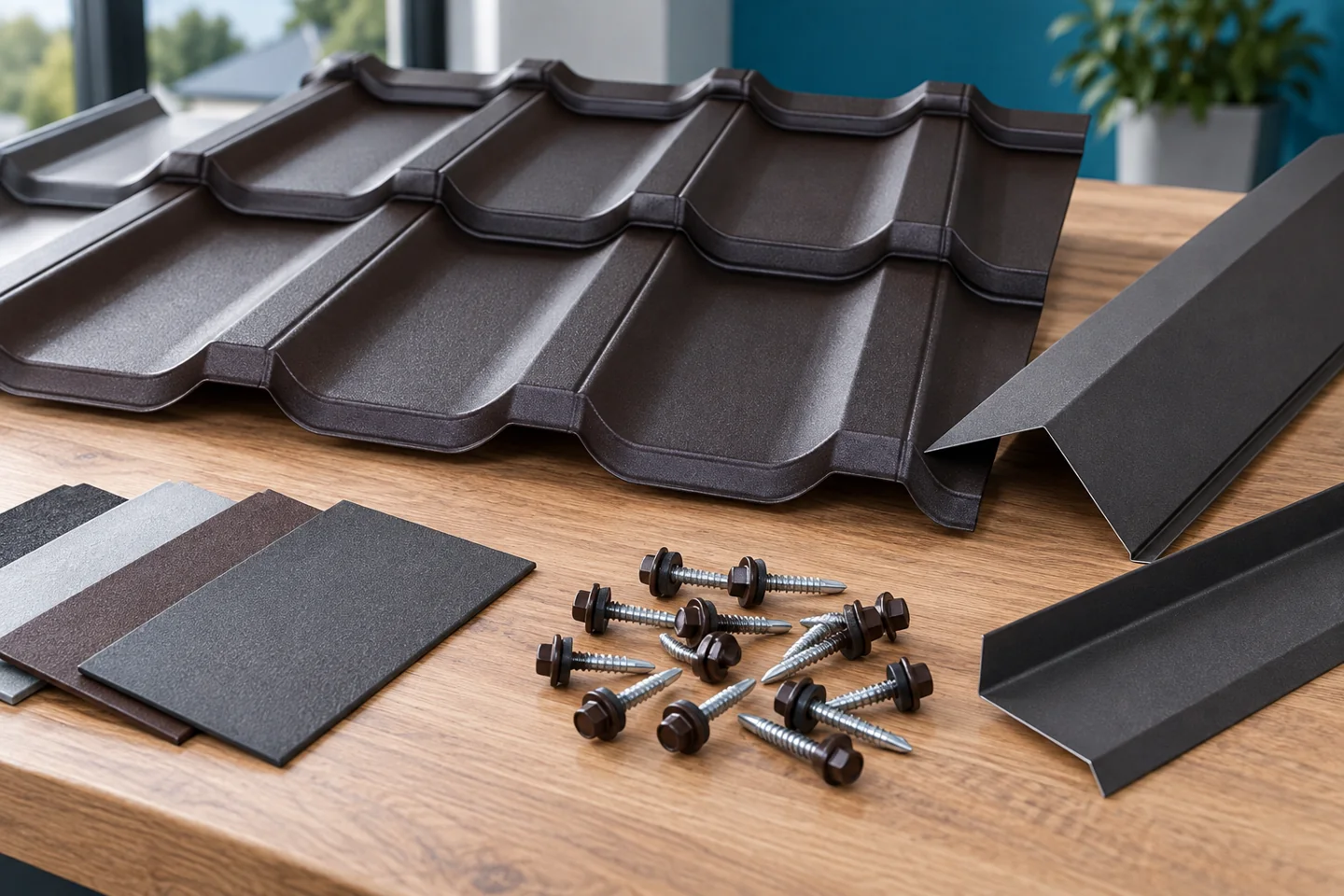
On a simple roof slope, it is worth checking tile-effect metal roofing cut to length as well as trapezoidal sheet. With a more complex layout, shorter modules may be useful. The outcome is determined by the cutting plan, not by a general promise of waste-free installation. A well-prepared layout shows the number of strips, lengths and elements that cannot be reused.
One complete delivery can simplify work organisation, provided there is safe storage space on site. A missing flashing or the right screws can bring the crew to a halt. However, it is not worth ordering sheets many months in advance without storage conditions. Damage to the pack can swallow up the saving obtained during a promotion.

Which parameters should not be economised on without checking?
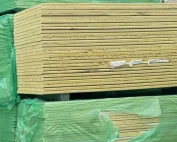
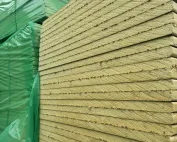
Steel thickness, profile and support spacing form a system requiring structural assessment. A switch to a thinner sheet must be confirmed as still meeting the requirements. The same applies to a sandwich panel: the type of core alone does not determine load-bearing capacity and thermal insulation. The required fasteners must not be removed or replaced with a random substitute.
The coating is selected to suit the service environment. A cheaper variant may be appropriate under given conditions, but the documentation and scope of protection must be compared. Foregoing proper protection in an aggressive environment may increase the risk of repairs. The warranty period should be read together with its terms, exclusions and maintenance obligations.
Can insulation and accessories be deferred until later?
Some works can be staged, but this must be planned before installation. Adding insulation later may require dismantling the finish or altering the details. In a habitable loft, airtightness and thermal performance are part of the roof’s function. The choice of PIR, EPS, XPS or wool should follow from the application and required properties, not just the price per pack.
Safety elements, chimney access and drainage must be included in the design. Omitting them may hinder servicing or cause costly rework. It is often more sensible to simplify the pattern or reduce additional decorations than to remove functional components. Not every aesthetic effect is necessary, but every required layer has a specific task.
How can the budget be protected during installation?
The contract should specify the scope, the method of settling changes and responsibility for substrate preparation. For renovation, leave a reserve for damage visible only after the old roof is uncovered. Commissioning repairs as they arise without an agreed procedure makes cost control difficult. Photographs and acceptance of additional works help avoid later disputes.
Finally, accept the details, the tidiness of the roof slope and the complete set of documents. Swarf left after cutting and poorly executed flashings can quickly cause problems. A good purchase is material suited to the task and correctly laid. The safest saving consists in reducing errors, unnecessary operations and losses that do not improve the quality of the finished roof.
7 branches. Materials closer to your project.

- SEROCK — Dzierżenin 34 E
- BŁONIE — ul. Sochaczewska 138A
- RADOM — ul. Grobickiego 8
- ŁÓDŹ — Natolin 8
- OLSZTYN — Barczewo, ul. Prosta 9
- WROCŁAW — ul. Jerzmanowska 10C
- GORZÓW WLKP. — ul. Zielona 33/34