Stages and execution
Planning safe access to a sandwich panel roof
In brief
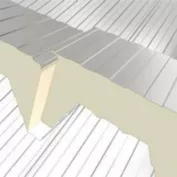
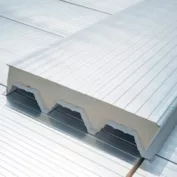
Do not walk on a panel roof without first checking the access conditions. The panel can carry the loads specified in the design, but local pressure and the way of moving also matter. During installation or servicing, an access plan, fall protection and protection of the roof surface are required. Load tables apply to specific panel and support arrangements. A load distributed over a large area does not act the same as the pressure of a boot or a trolley wheel. The thin cladding can be locally damaged even though the structure carries the assumed uniform load.
Why does roof load capacity not mean the roof can be walked on freely?
Before stepping onto the roof, establish the panel type, facing thickness and position of supports. Check the documentation and the requirements for installation and service traffic. On an old roof, also assess the condition of the sheets, joints and core. The original properties of a damaged panel cannot be assumed without examining its condition.
What to prepare before the team goes up?
Determine a safe means of access and a route to the work location. Plan fall protection in accordance with the site conditions. Anchor points and other safeguards must have adequate support. A single screw through the facing is not proof that protective equipment can be attached to it.
Check the weather and the condition of the surface. Wet, icy or dirty sheet metal increases the risk of slipping. Wind can make handling large-surface materials difficult. If conditions do not allow the work to be carried out safely, it should be postponed. An inspection deadline does not justify going onto the roof in unsuitable conditions.
How to distribute pressure without damaging the cladding?
If the documentation specifies walkways or other load-distributing elements, use a solution suited to the roof. It should be supported in accordance with the design. A random board laid across several high ribs can create unfavourable point loads and does not constitute ready safety instructions.
For movement itself, footwear suited to the surface and working conditions is used. Clean the soles of stones and filings that could scratch the coating. Do not jump onto the panel and do not drop tools. Permitted foot placement positions and access rules are determined according to the documentation for the specific covering.
Where not to place tools and materials?
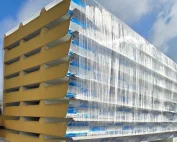
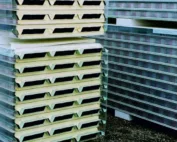
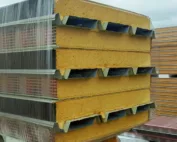
A pack of panels, a roll of material or a toolbox can cause a large concentrated load. Do not place them on the roof without assessing the storage location. This also applies to a short stop during installation. The weight of several small items can add up to a significant load.
Secure tools and cables against slipping. Keep the access route clear. Do not rest heavy objects on rooflights, opening edges or flashings. These elements are not necessarily designed to bear human load. Their appearance from above does not allow their load-bearing capacity to be assessed.

How to plan frequent servicing of roof-mounted equipment?
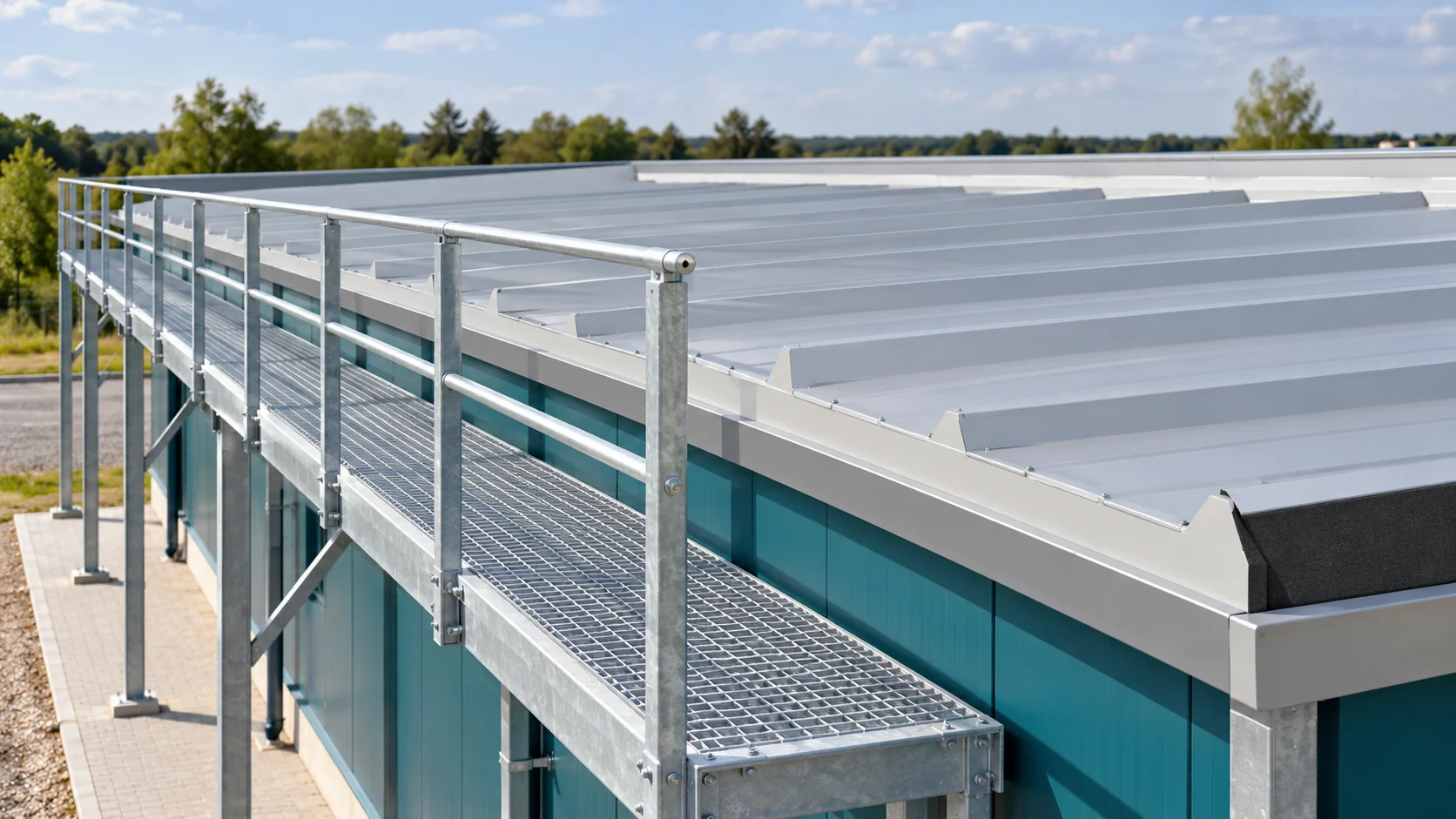
If ventilation or other equipment will be serviced regularly, include access in the design. A permanent route may require a technical walkway and separate supports. This solution must be coordinated with the equipment fixing, the weathertightness of the covering and drainage.
During modernisation, establish which teams will use the roof. Provide them with the support plan, load restrictions and safety rules. The equipment installation protocol alone does not describe all conditions of subsequent access. It is worth designating the entry point and the method of transporting spare parts so that the service technician does not choose a random route.
For frequent servicing, also plan a place for setting down parts. A route that is safe for one person may not be suitable for transporting heavy equipment. Both tasks require separate assessment.
What to inspect after work is completed?
Check the cladding in the access zone and at the work station. Look for dents, coating damage and disturbed fixings. Remove swarf, cut ends and packaging remnants. They should not remain in the profile recesses or in the gutters.
- Assess the surface in the equipment set-down areas.
- Check the flashings and seals at the equipment.
- Confirm that drainage is clear.
- Record any damage found and determine the repair method.
If the panel has been deformed, do not limit the assessment to repainting the sheet metal. The damage may also affect the core or the bond between layers. The scope of repair should follow the actual condition, not just the surface appearance.
Short answers from site
Does a greater core thickness allow walking on the roof without restrictions?
No. The facings, supports, panel condition and local loads also matter. Even a thick panel requires compliance with access rules and fall protection.
Can you step on a skylight if it lies in the same plane?
Do not assume its load-bearing capacity based on appearance. Skylights and openings require appropriate protection. The access route is planned avoiding areas not intended for foot traffic.
7 branches. Materials closer to your project.

- SEROCK — Dzierżenin 34 E
- BŁONIE — ul. Sochaczewska 138A
- RADOM — ul. Grobickiego 8
- ŁÓDŹ — Natolin 8
- OLSZTYN — Barczewo, ul. Prosta 9
- WROCŁAW — ul. Jerzmanowska 10C
- GORZÓW WLKP. — ul. Zielona 33/34