Gutters and drainage
Matching gutter capacity to a sheet metal roof
In brief
In Poland, choosing gutters for a metal roof depends primarily on the roof geometry and the arrangement of outlets, not on colour or shape alone. It is worth preparing a roof plan with dimensions, pitch and eaves lengths, marking valleys and places where water flows from several surfaces, and planning the position of downpipes. These affect the system’s capacity. The selection should take into account the assumed rainfall conditions and the system’s calculation rules, not merely a rule once used on a similar house.
What data are needed for selection?
Prepare a roof plan, the dimensions of the slopes, the pitch and the eaves lengths. Mark the roof valleys and the points where water flows from several surfaces. The planned position of the downpipes is also needed. Their arrangement affects the capacity of the system. The same gutter can handle different areas depending on the number and position of the outlets.
The selection should take into account the assumed rainfall conditions and the system’s calculation rules. It is not worth relying solely on a rule once applied to a similar house. A roof with a dormer or a valley may concentrate water in a different place. In the quote request, therefore, provide the geometry instead of limiting yourself to stating that the building has a certain floor area.
Steel or plastic: what to compare?
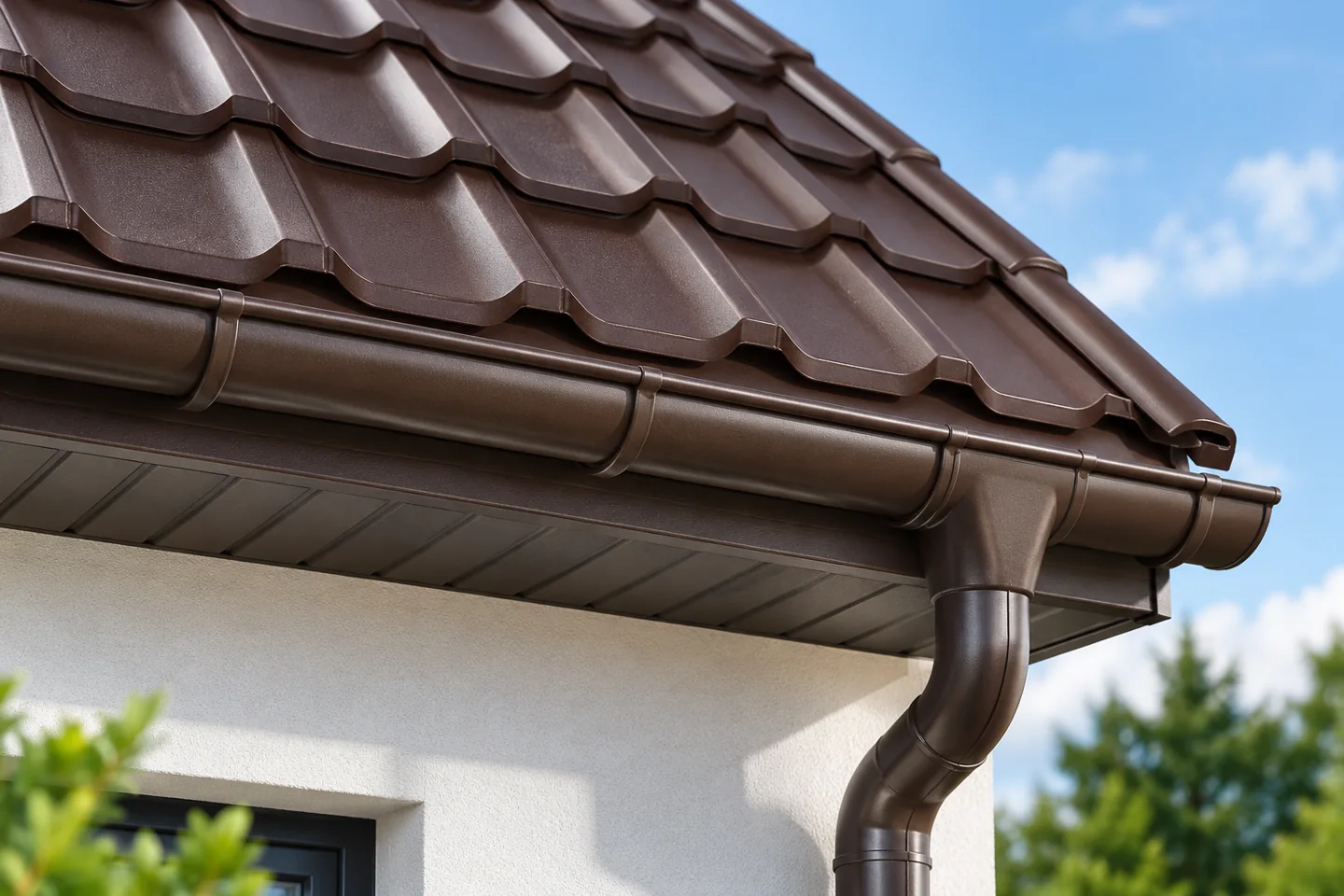
Metal and plastic systems each have their own methods of joining, fixing and accommodating temperature changes. Resistance, environmental conditions and the availability of accessories are important. Do not mix components from different series without confirming compatibility. A similar diameter does not mean that a connector or bracket will work correctly with the chosen gutter.
For steel, pay attention to the coating and to protecting cut edges. With every material, correct support and unobstructed flow are important. Durability does not depend solely on what the gutter is made of. A poorly installed high-end product can leak, while a correctly selected simpler system can perform its function for a long time.
Half-round or square?
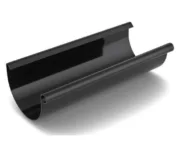
The shape influences the appearance of the eaves line and the way it connects to the façade. A half-round gutter suits many traditional and contemporary houses. A square one can emphasise the simple geometry of the building. However, performance should be checked against the technical data. It does not follow automatically from the general description of the shape.
Also distinguish between a gutter with visible fixings and a system with a cover or a fully concealed one. Each requires a different detail for access and connection to the eaves. When modernising, it is worth assessing how much modification is needed. Appearance matters, but it should not lead to connections being concealed in a way that makes later inspection difficult.

How to connect the drainage to the metal sheeting?
The position of the gutter and the termination of the covering should ensure efficient water runoff. The eaves flashing and the way moisture is drained from under the metal sheeting are important. The arrangement must match the specific profile and roof layers. Do not change the sheet overhang by eye in an attempt to correct a previously poorly positioned gutter.
Sliding snow must also be taken into account. The design provides snow guards and their fixings in the appropriate places. A gutter is not an element intended to take any arbitrary weight. The choice is determined by the roof, the location and the way the ground under the eaves is used, particularly at entrances and pedestrian routes.
Where should water from the downpipes be discharged?
Roof drainage is only complete once the water has a planned onward route. It may be directed to a compliant on-site drainage or retention system, or to a suitable installation. The outlet should not be left in a place where water constantly scours the ground by the wall. The solution must be matched to the site conditions.
With a tank or underground outlet, it is worth providing for cleaning and inspection. A blockage further along can impair the operation of the whole system. It is therefore not enough to check only the gutter on the roof. Agree with the contractor also on the section at ground level and on responsibility for its connection to the rest of the installation.
How to price and maintain a complete system?
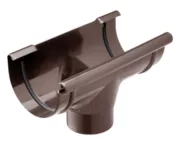
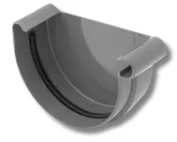
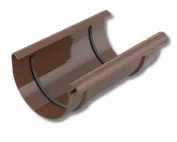
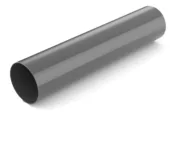
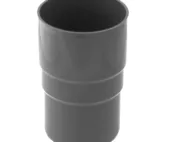
In the schedule, include brackets, connectors, corners, outlets, end caps, pipes, bends and clips. Add covers and service components if they are needed. Compare the price of the complete set including installation. A cheap metre of gutter may not mean a cheap system when you need many corners and non-standard transitions.
After installation, check that the connections are tight and that water drains freely. Plan the removal of leaves and deposits, especially after autumn and after heavy rainfall. Keep the system data so that you can buy the correct component later. Well-chosen gutters should work as a coherent whole whose condition can be regularly assessed and repaired if necessary.
7 branches. Materials closer to your project.

- SEROCK — Dzierżenin 34 E
- BŁONIE — ul. Sochaczewska 138A
- RADOM — ul. Grobickiego 8
- ŁÓDŹ — Natolin 8
- OLSZTYN — Barczewo, ul. Prosta 9
- WROCŁAW — ul. Jerzmanowska 10C
- GORZÓW WLKP. — ul. Zielona 33/34