XPS insulation
How should XPS be stored? Sunlight, temperature and protection of the boards
At a glance
XPS boards are light, easy to handle and resistant to moisture within the range specified for the product. This makes them efficient to work with on site. However, it is not worth leaving a delivery without a storage plan. Extruded polystyrene requires protection from sunlight, overheating and damage. The colloquial name Styrodur does not replace the manufacturer’s instructions, especially when the material is to wait for installation for a longer period. The substrate should allow the packs of XPS to be laid down stably. Sharp waste and uneven supports can damage the edges or deform the boards. It is worth setting aside a place away from the route of intensive traffic. The light material is easy to carry, but just as easy to accidentally shift or knock.
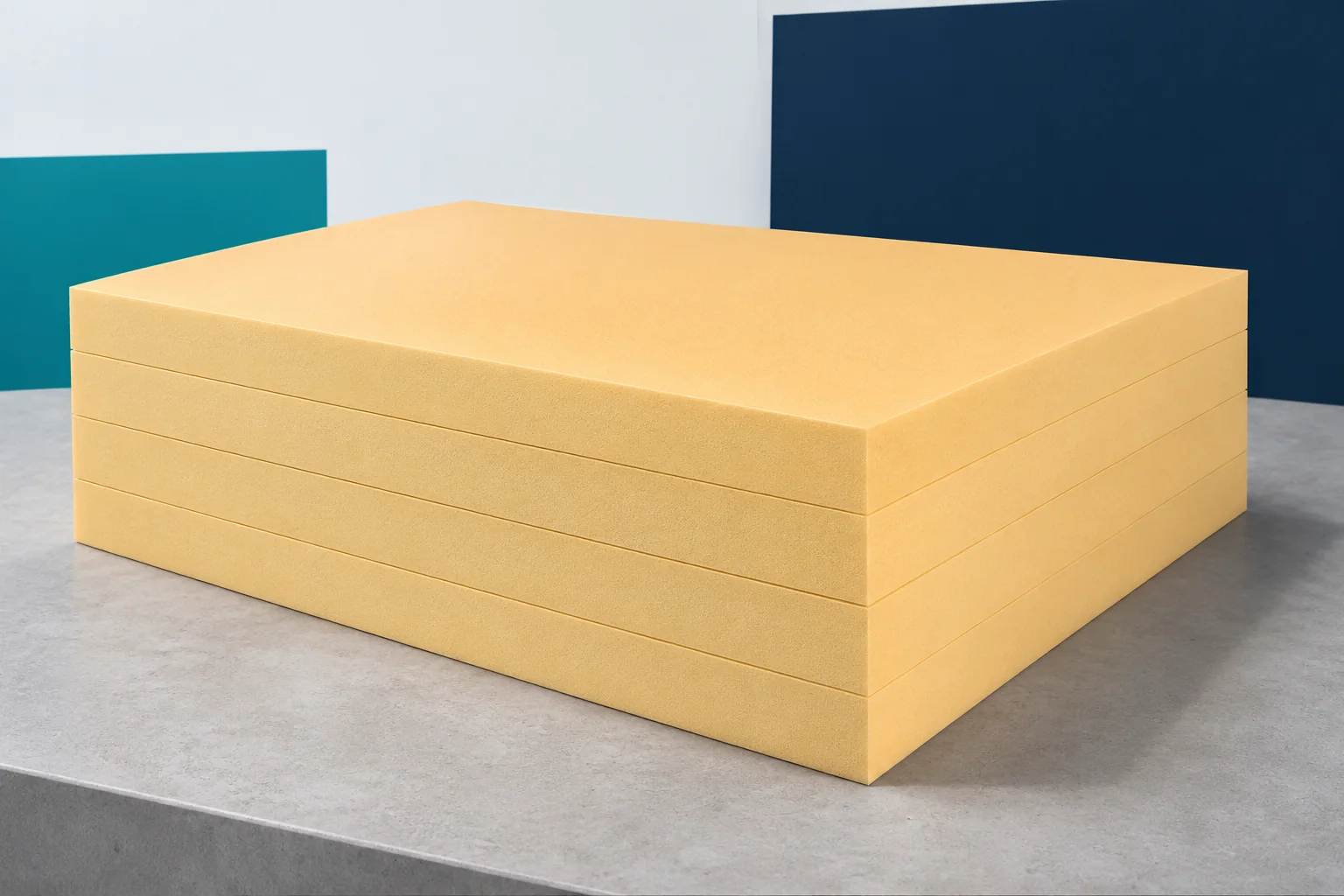
Choose an even and clean location
Extruded polystyrene retains its geometry well when it is supported in accordance with the instructions. Heavy tools should not be rested on a single board, nor should packs be used as a working platform. Keeping the delivery area tidy makes later acceptance and identification of any transport damage easier.
Sunlight affects the surface
Long-term UV radiation can deteriorate the surface condition of XPS. This is particularly important when the surface is later to work with adhesive or render. It should not be assumed that a change in colour is purely an aesthetic matter. The way forward should be based on an assessment of the material and the instructions.
Extruded polystyrene is best protected from direct sunlight. There is no single number of days that is safe for all conditions. The season, the position of the packs and the type of cover matter. Good condition of the packaging does not remove the need to check whether it fulfils its intended function during storage.
The cover should not cause overheating
Covering the XPS is necessary, but it must be done in accordance with the recommendations. A dark material exposed to the sun can heat up considerably. Conditions in which the boards deform under the influence of high temperature should not be created. UV protection and protection against overheating should work together.
It is worth using a covered location and the covers recommended by the supplier. XPS manufacturers include, among others, Finnfoam, FIBRAN and PNP. Each of them specifies the conditions for handling the product. The instructions for a specific delivery are a better basis than the general rule of covering with any airtight tarpaulin.
Rain is not the only problem
The low water absorption of XPS makes it easier to use in damp places, but it does not justify storing it in mud or standing water. Surfaces can become dirty and packaging can be damaged. Water in a depression on the site also brings contamination from other works.
Extruded polystyrene should reach installation in a condition that enables correct bonding with adjacent layers. Dirt on the bonding surface can be significant despite the good parameters of the foam itself. It is therefore worth raising the delivery above the ground and planning drainage of water from the storage zone.
Secure opened packs immediately
After unpacking, individual XPS edges are more easily damaged. Elements left loose can be displaced by wind or workers. They should be stored stably and protected in accordance with the instructions. It is worth separating offcuts from full boards so that their geometry can later be used deliberately.
Different thicknesses and grades should not be mixed without labelling. XPS of a similar colour may have different parameters. Keeping the label on an opened batch makes checking easier. This is particularly important when plinth, floor and roof elements are being installed in parallel on a construction site.
Keep heat sources and incompatible substances away
Packs should not be located near blowtorches, welding locations or hot devices. XPS is not a non-combustible material and has temperature limits. It should also be protected from contact with solvents, fuel and unknown cleaning preparations.
In practice, it helps to designate a zone for construction chemicals and hot work. Placing packaging next to the boards for convenience can result in accidental spillage. XPS is easy to work, but a chemically damaged surface does not become sound merely because it can be trimmed or covered.
Check the boards before bringing them to the installation location
The inspection should cover flatness, edges, soiling and signs of temperature effects. XPS damaged during storage requires assessment before installation. One should not count on a heavy screed or ballast straightening the material without consequences.
In the case of a longer interruption in the works, it is worth checking the packaging and markings again as well. Documenting the damage helps to separate transport problems from later handling of the delivery. Inspection at this stage is simple because the boards remain accessible and finished layers do not have to be taken apart.
Match deliveries to the pace of the works
A large stock of XPS can be organisationally convenient, but it requires space and protection. If the construction site is cramped, it is worth considering deliveries in stages. This limits the exposure time and the number of handling operations. The earliest purchase does not always give the lowest cost for the whole job.
The plan should also cover unloading and access to the material in the order of installation. Well-stored boards retain the geometry needed for careful joints. This allows the advantages of XPS to be used without additional sorting, excessive cutting and interruptions resulting from replacing a damaged part of the delivery.
7 branches. Materials closer to your project.

- SEROCK — Dzierżenin 34 E
- BŁONIE — ul. Sochaczewska 138A
- RADOM — ul. Grobickiego 8
- ŁÓDŹ — Natolin 8
- OLSZTYN — Barczewo, ul. Prosta 9
- WROCŁAW — ul. Jerzmanowska 10C
- GORZÓW WLKP. — ul. Zielona 33/34