PIR insulation
PIR and XPS on the same site: preventing material mix-ups
At a glance
Substituting PIR for XPS, or the other way round, can change more than the thickness of the layer. The crew must know how to prepare the substrate, join the elements and carry out the next stage. PIR boards should arrive on site as part of an agreed solution. Improvising during installation makes it harder to maintain its parameters. If the layer has to fit under the threshold, a low lambda becomes a practical advantage. Polyurethane boards can leave more room for the other floor components. However, they should not be selected on the basis of thickness alone. The load, contact with water and the support conditions must still be checked. Before starting work, check the thickness specified for the particular material.
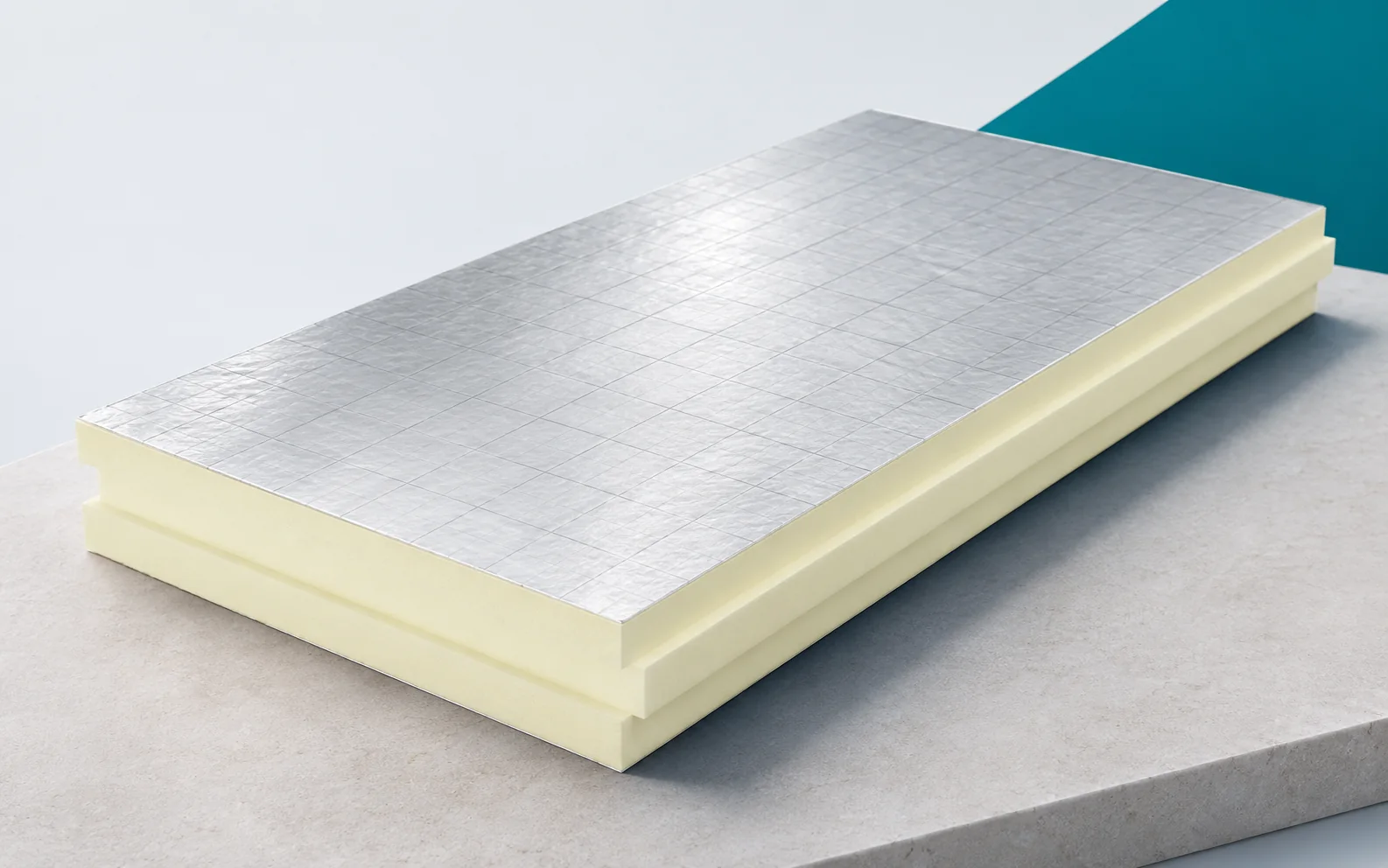
The advantage of PIR lies above all in the space
Equal thickness of two boards does not have to give equal thermal resistance. Polyurethane boards and XPS should not be substituted on site without an assessment of the design. If a different variant has been supplied, its effect on the entire build-up must be clarified. The final level must be checked at thresholds and connections before a large area is laid.
Contact with water matters more than the appearance of the core itself
In the basement and in an inverted roof build-up, the service conditions differ from those of a dry internal floor. The board may be exposed to prolonged contact with water. Therefore, the intended use and the properties suited to these conditions must be checked. A general assurance of low water absorption is not sufficient.
The method of storage and installation follows from the documentation, not from a general belief in the material’s resistance. In polyurethane insulation, the facings also require protection, not just the core. XPS also has its own recommendations for the correct product. Damp or soiled material must be assessed before covering — the next layer does not remove the effects of earlier handling.
CS and creep do not describe the same situation
Under a screed, its thickness, layout and behaviour matter, which is why polyurethane insulation should have continuous support in accordance with the design. Pipes and unevenness must not create random points of support. The care taken in preparing the substrate is reflected in the behaviour of the entire floor.
The pressure of a wheel, a support or a stored pack is often concentrated on a small area and cannot be compared directly with the CS figure without assessing the arrangement. Polyurethane foam does not replace a prepared transport route, and other insulation materials require the same protection. Work organisation should take temporary loads into account so that the board is not damaged before the layer intended to distribute forces is installed.
Facing and fixing limit the scope for substitution
When swapping PIR for XPS or vice versa, it is necessary to establish how the board connects to the next layer. Adhesion differs, vapour diffusion resistance differs, and in some assemblies a separating layer is required. Matching thickness does not settle the matter, because PIR and XPS perform different functions in the building element. PIR is treated as part of a specific solution, not as a neutral filler for the space left by another material.
With a new type of insulation, check the entire set of auxiliary materials. The adhesive used previously does not become suitable merely because both boards are rigid. Also examine the surface and the installation direction. If the instructions require a separating layer, do not treat it as an unnecessary extra. The absence of one component can change the operating conditions of the entire assembly, even if the correct insulation thickness is maintained.
The most common situations where the choice is justified
In a suitably protected building element, polyurethane insulation allows focus on the thermal function of a thin layer. In a damp environment, the priorities may be different. Then a product intended for such conditions takes precedence over a low lambda alone. This is a logical division of tasks, not a judgement that one family is bad.
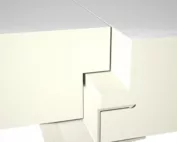
At the junction between two materials, prepare the detail before laying the next rows. PIR boards may have an edge profile that does not match the edge of the selected XPS. Such a junction should not be resolved with a random gap and excess foam. A method of maintaining continuity intended for the system is needed. Planning the cuts allows the connection to be made in a controlled location, instead of leaving it as the last improvised operation.
Compare assemblies with the same function
At the execution stage, check the continuity of the layer and the conformity of the junction with adjacent materials. A well-chosen product can be weakened by a poor detail. It is worth separating material acceptance from acceptance of the works. The first confirms delivery, the second checks how it has been used on site.
Acceptance consists in comparing the execution with the approved version of the solution. PIR should be identifiable by the material marking and a record of the installation location; if the product is changed during the works, the documentation must show this. Photographs of the surface will not reveal the difference once covered, which is why labels and a simple batch register make it possible to confirm that the delivery corresponds to what went into the building envelope.
Checks before covering the layers
For delivery to several zones, mark the packs according to the installation location. A seemingly similar thickness can facilitate a mistake. The label and the cutting plan help maintain conformity with the design. It is particularly important to separate products for the floor from those for zones exposed to water.
The practical choice of insulation should end with instructions for the specific section of work. What is needed is the thickness, the arrangement of joints and compatible accessories. If any element is unclear, clarify it before installation begins. A good lambda will not fix an incorrect contact or a damaged surface. PIR and XPS boards require their own installation conditions. Knowing these differences allows the right material to be used without transferring habits from another technology onto it.
7 branches. Materials closer to your project.

- SEROCK — Dzierżenin 34 E
- BŁONIE — ul. Sochaczewska 138A
- RADOM — ul. Grobickiego 8
- ŁÓDŹ — Natolin 8
- OLSZTYN — Barczewo, ul. Prosta 9
- WROCŁAW — ul. Jerzmanowska 10C
- GORZÓW WLKP. — ul. Zielona 33/34