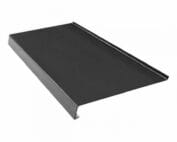
Flashings
Getting long sheet metal flashings to site and storing them before fitting
In brief
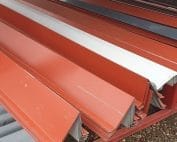
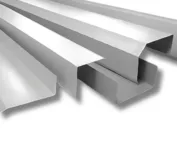
Fabricating a long flashing can reduce the number of joints on the building. However, it must be delivered without permanent deformation. The thin profile requires support and proper surface protection. When planning an order, it is worth checking access, the unloading area and how the parts will be carried in. Ridge caps, barge flashings and gutter aprons may be the same length and yet behave differently when handled. Before confirming production, establish whether the vehicle can safely reach the unloading point. Check the available space and the route for carrying the elements. A long profile should not be bent to fit between obstacles. Such deformation may remain visible after installation.
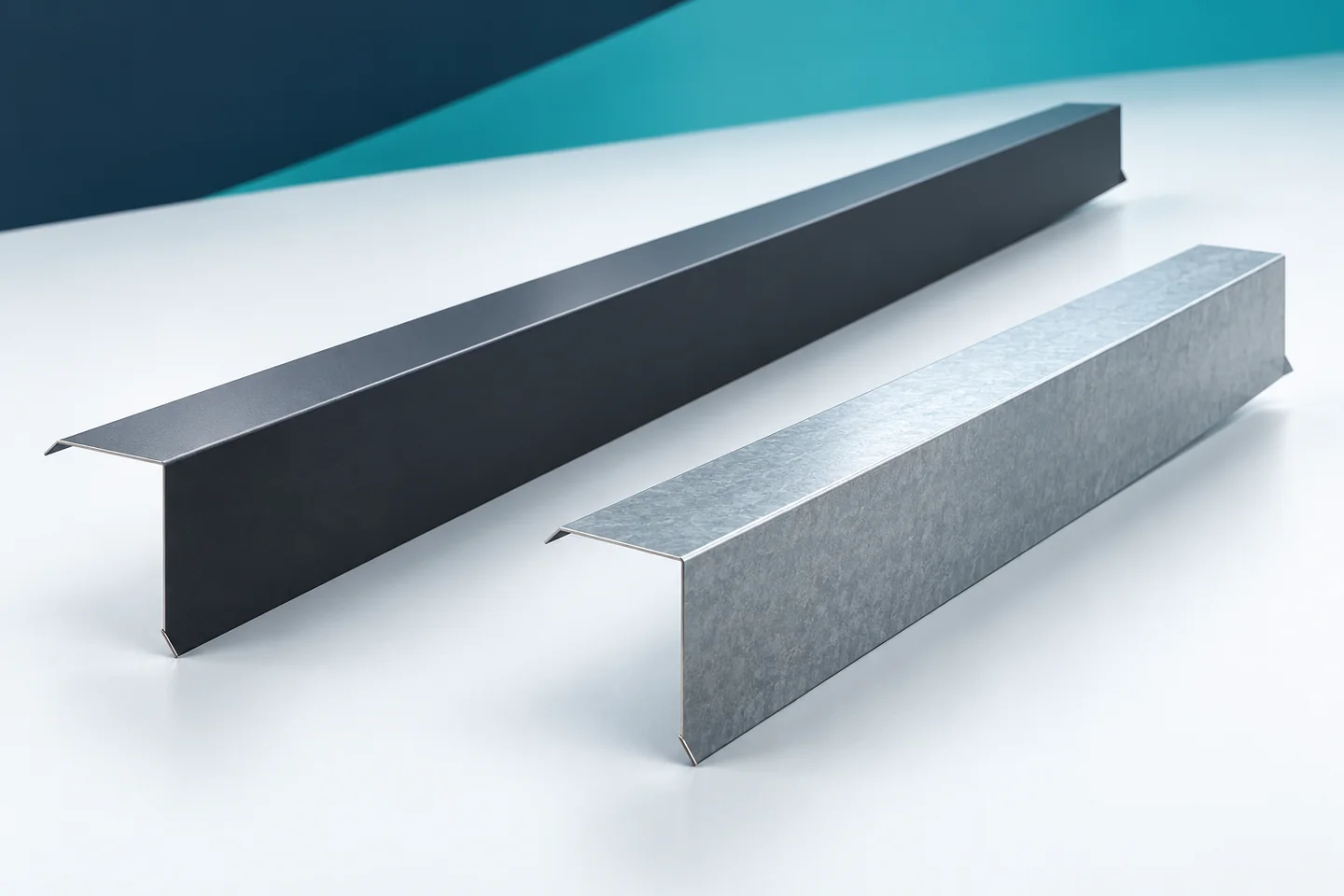
Choose the length to suit the delivery route too
It is worth comparing the benefit of fewer joints with transport requirements. The longest possible section is not always the best choice. Non-standard flashings should have a division agreed with the detail and work organisation. This decision should not be left solely until loading.
Support matters for the cross-section
Flashings must be secured so that they do not sag without adequate support. A wide flat surface may deform, and a small fold may be crushed. The type of spacers should match the shape of the parts. Pressure against an accidental sharp point can damage both the profile and its coating.
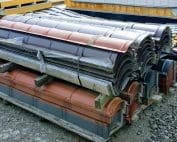
A set of different sections requires checking how they are arranged. Verge flashings do not have to be arranged in the same way as ridge caps. Starter profiles may have delicate clips. Parts should not be pressed into one another just to reduce the volume of the pack. They may become jammed or scratched.
Load securing and unloading
The pack of flashings should be secured against shifting independently of other transported products. The pressure must hold the load but not deform the edges. The exact method of securing should be matched to the packaging, the vehicle and the length of the elements. The film on the surface does not replace transport securing.
During unloading, it is worth checking the condition of the packaging before opening it. Visible damage should be documented. A long element should be lifted with adequate support, without dragging it along the ground. Work organisation is matched to weight, dimensions and conditions, not just to the number of pieces.
Limit friction between surfaces
Coated steel sheets can become scratched by sliding against each other. Galvanised and aluzinc sheets also require surface protection. When removing parts, avoid dragging sharp edges across the visible face of the adjacent profile. Fine swarf can additionally act as an abrasive.
It is worth keeping the storage area clean. Sand, screws and cut-off sheet fragments should not be under the pack. Chimney flashings and corners are often supplied as separate shaped pieces. They should be stored so that they are not accidentally crushed by longer elements.

Moisture should not remain in the pack
The storage location should protect the material from moisture and allow handling in accordance with the manufacturer’s instructions. Water trapped between sheets hinders drying. A tightly wrapped wet pack should not be regarded as a properly protected store.
If the delivery has become wet, its condition must be assessed and the recommendations for drying and re-stacking the material applied. It is not enough to wait until the outer film dries. Flashings can retain moisture at contact points that are not visible without opening the pack.
Protective film has a limited role
The film is intended for temporary protection during transport and installation. The deadline for its removal depends on the specific material and the supplier’s recommendations. One deadline should not be applied to all coatings. Leaving it in the sun for a long time can make subsequent peeling and cleaning of the surface more difficult.
Before installation, also check the places that will become inaccessible once assembled. The film should not be accidentally enclosed in details if the instructions require its removal. The coloured surface beneath it must be inspected. Transport protection can hide a scratch or a dent.
Acceptance before work begins
Compare the number of pieces, lengths and markings with the order. Then check the shape and condition of the edges. Gutter aprons with a bent end may require assessment before fixing. An attempt to hide damage in the lap is not always a technically correct solution.
After separating the pack, it is worth arranging the parts in installation order. Ridge caps, verge flashings, starter profiles and chimney flashings are stored separately. Such order reduces the number of additional handling operations. It protects the surface and makes it quicker to notice a missing item or a mistake in the cross-section.
Questions and answers
Is the protective film sufficient for transporting flashings?
No. It does not protect against load shifting or crushing of the profile. Proper packaging, support and securing are required.
Can long flashings be stored in wet packaging?
Moisture must not be left between surfaces. Storage instructions and procedures for wet material must be followed.
7 branches. Materials closer to your project.

- SEROCK — Dzierżenin 34 E
- BŁONIE — ul. Sochaczewska 138A
- RADOM — ul. Grobickiego 8
- ŁÓDŹ — Natolin 8
- OLSZTYN — Barczewo, ul. Prosta 9
- WROCŁAW — ul. Jerzmanowska 10C
- GORZÓW WLKP. — ul. Zielona 33/34