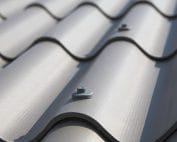
Fibre cement roofing
Cutting fibre cement: edges, dust and tool selection
In brief
A good cut starts with the cutting plan and a prepared workstation. Fibre cement sheets must be worked in a way that does not damage the edges and keeps dust to a minimum. Asbestos-free fibre cement contains no asbestos, but fine mineral particles are still produced during cutting. The choice of tool should follow the instructions for the specific product. Rules for a new sheet with a confirmed composition must not be transferred to an old roof. Neither the wave profile nor the colour allows asbestos to be identified. If the origin of the material is unknown, do not begin with a trial cut. Documentation or proper identification is needed. An old product containing asbestos requires a suitably prepared contractor and a separate procedure.
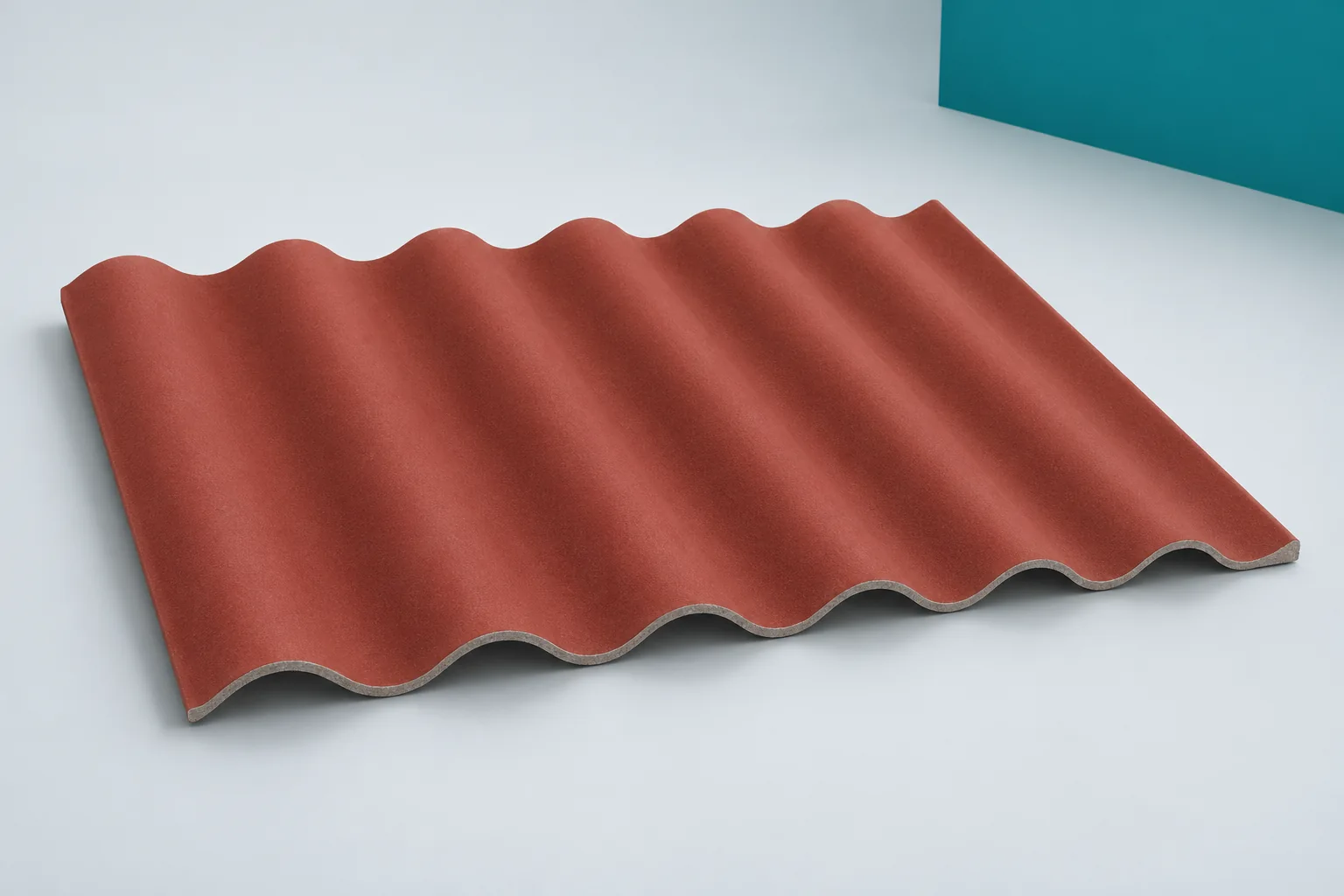
First make sure which material you are working with
It is not a material for self-fitting in the workshop. The description of working new sheets applies only to confirmed asbestos-free products. This boundary should be clearly established before starting the renovation.
Layout reduces unnecessary work
Fibre cement sheets are selected according to working dimensions and the roof layout. Before the first offcut is created, it is worth drawing out the rows, edges and passage points. This allows checking whether the available format will limit the number of cuts. Less processing also means less dust and fewer opportunities for damage.
Not every cut can be made in any location. The required overlaps, support and position of fixings are important. A narrow fragment left behind may not be suitable for installation. Therefore the cutting plan should correspond to the system instructions, and not solely to the most economical division of the surface.
Choose the tool to suit the material and recommendations
The sheet instructions indicate permitted cutting methods and equipment that limits dust. In some systems, hand tools or slow-running plunge saws are recommended. It should not be assumed that a fast angle grinder will be suitable. Such a tool can generate a lot of dust and make edge control difficult.
Asbestos-free fibre cement should not be worked with a random disc left over from cutting metal. The purpose of the accessory, its condition and its compatibility with the tool are important. The operating parameters are checked in the documentation. A universal speed or one type of blade for all sheets would be an unjustified simplification.
Support the sheet without forcing its shape
The workstation should be stable, and the sheet supported in line with its geometry and the planned cut. The offcut must not tear away suddenly under its own weight. Such a movement can damage the edge beyond the marked line. Fibre cement sheets are brittle and should not be bent to speed up the work.
It is worth planning a place to set down the finished piece before starting the cut. Moving the tool while holding the sheet in an awkward position increases the risk of impact. Processing is best organised in a prepared zone, away from open stock and people not involved in the work.
Limit dust at source
Cutting releases fine particles that may contain silica. Technical and organisational measures arising from the safety data sheet and the risk assessment are needed. Extraction, the right tool and ventilation of the workstation matter. Respiratory protection should not be the only way of limiting exposure.
Fibre cement sheets also require eye protection and a suitable way of gripping them. Dust should not be blown about or swept dry across the whole site. The collection method is chosen to suit the equipment and recommendations. The aim is to remove the particles without raising them again into the surroundings.
Corners and openings have their own requirements
Cutting the corner bevel serves the correct arrangement of the joints, not decoration. The dimensions and direction depend on the specific system. A bevel must not be copied from another profile simply because it looks similar. Factory-prepared sheets also require the correct position to be maintained.
Larger openings for service penetrations are planned together with the support and flashing. An accidental cut can weaken the required part of the sheet. Fibre cement sheets should not carry the weight of equipment on the edge of the opening. The structural solution and sealing must be known before processing.
Assess the edge before transferring to the roof
After cutting, check for cracks, chipping and damage to the coating. Dust is removed without delay using a method permitted for the surface. Residual deposits left behind can cause stains. A crack should not be masked with paint or assumed to disappear harmlessly under a lap.
Asbestos-free fibre cement may have different requirements for finishing cut edges. Some systems need no additional treatment, while others have specific recommendations. It is not worth automatically painting every cut section with an arbitrary preparation. The decision should follow from the product documentation and the warranty conditions.
Tidiness at the workstation helps maintain quality
Cut-off pieces are set aside so that they do not cause injury or obstruct passage. It is worth separating pieces useful for the layout from waste. Not every small piece is suitable for installation, even if it geometrically fills a gap. The requirements for support and fixing remain important.
Before the end of the day, the tools, the cleanliness of the sheets and the protection of the remaining packs are checked. Well-executed cutting should leave the component ready for proper installation. A straight, undamaged edge and a clear marking of where it is to be used are more valuable than sheer cutting speed.
Before cutting, check the tool instructions, the laying plan and how dust is to be limited. Cutting should prepare the component for installation, not force later corrections on the roof.
7 branches. Materials closer to your project.

- SEROCK — Dzierżenin 34 E
- BŁONIE — ul. Sochaczewska 138A
- RADOM — ul. Grobickiego 8
- ŁÓDŹ — Natolin 8
- OLSZTYN — Barczewo, ul. Prosta 9
- WROCŁAW — ul. Jerzmanowska 10C
- GORZÓW WLKP. — ul. Zielona 33/34