House appearance
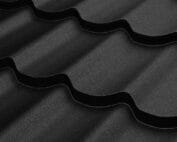
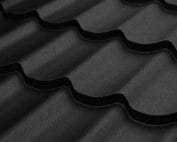
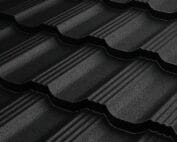
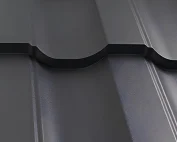
Cut-to-length tile-effect sheets for a traditional home
In brief
Start choosing cut-to-length metal roof tiles for a traditional house with a calm pattern, colour and details that suit the building’s proportions. Cutting sheets to length limits the number of joints on a simple slope. When judging the profile, compare the rhythm of the pressings with the façade divisions and the eaves width – a strong wave will emphasise the roof, yet on a small slope with many details it may take over. Check the structure and prepare the measurement so the classic roof is technically sound.
Which profile suits a classic form?
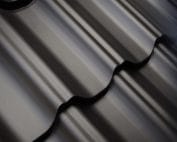
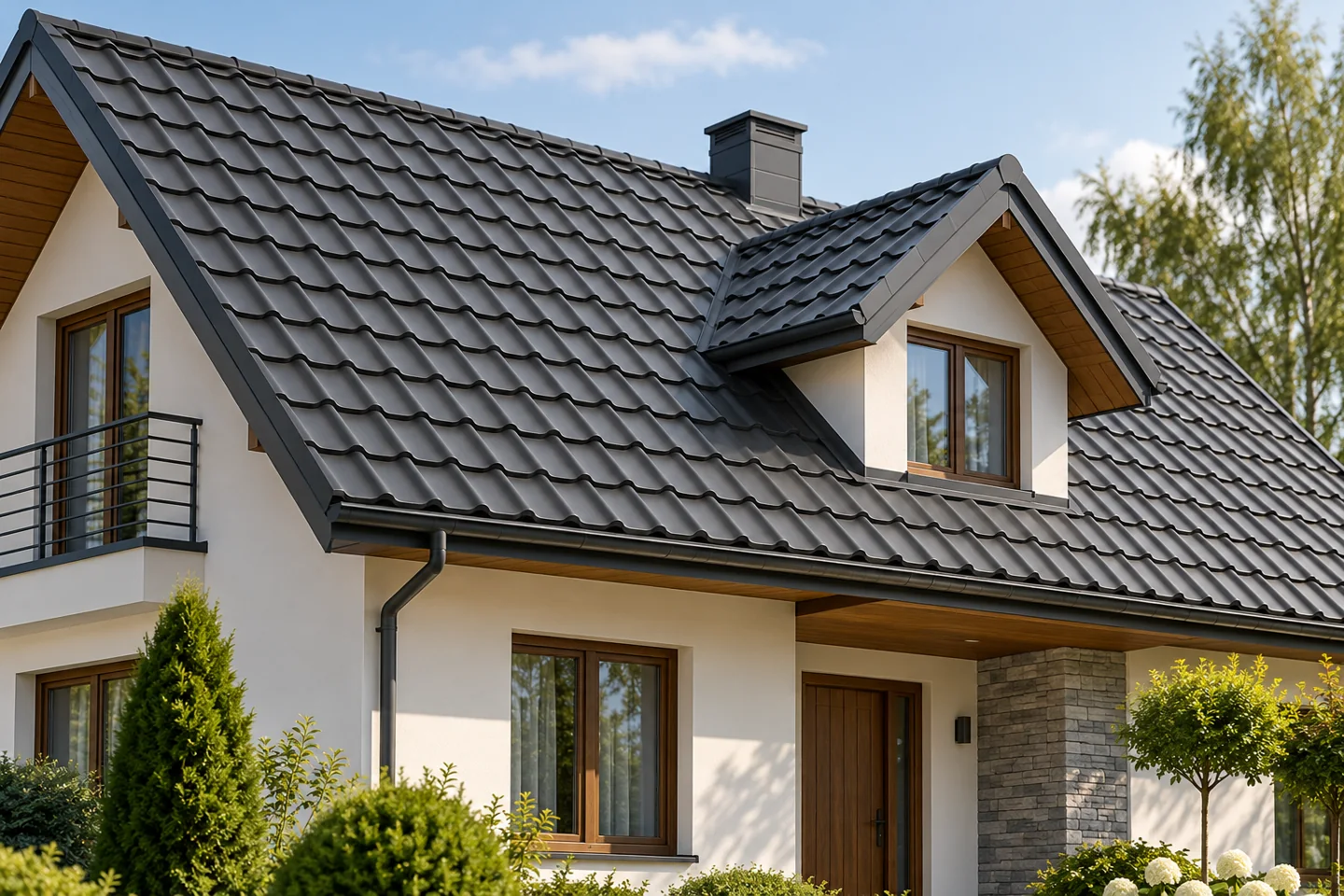
On a traditional house, it is worth assessing the rhythm of the pressings in relation to the windows, porch and eaves width. A pronounced wave can emphasise the character of the roof, but on a small roof area with many details it can be too dominant. There is no single pattern suitable for all such buildings. It is best to compare larger samples and the view of the whole building.
Pay attention to the proportion of the roof to the façade. The steeper and more visible the roof slope, the greater the influence of the colour and pattern of the tile-effect metal roofing. On a small house, wide flashings can become as visible as the covering itself. It is worth agreeing their shape with the installer before purchase, while maintaining the requirements for a tight edge finish.
What does cutting sheets to length achieve?
Producing sheets to the size of the roof slope allows the material to be matched to the specific roof. On simple surfaces, it can reduce transverse joints and make covering more efficient. However, the construction of the chosen profile must be taken into account. The permissible lengths and where a sheet may end depend on the pressings and the rules given in the documentation.
A long sheet requires appropriate support during transport and handling. It is not always worth ordering the maximum possible length. A narrow access route, trees or a lack of space near the house can make it difficult to deliver the material safely. The division must be agreed together with the supplier and the roofer, taking into account the pitch and the rules for making overlaps.
How to choose colour and type of coating?
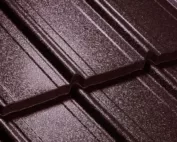
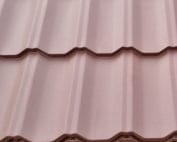
Brick, brown and graphite colours can be combined with traditional façade materials. The final effect depends on the shade and gloss. View the sample next to render, wood or brick, preferably in sun and shade. On a large surface, the colour may be perceived differently than on a small sample. It is also worth checking compatibility with gutters and joinery.
The coating is selected separately in terms of resistance and environmental conditions. A matt appearance is not in itself confirmation of a specific durability. Ask for the parameters of the specific variant and the warranty conditions. If you order flashings at a different time, make sure that the shade and texture will match. The colour number alone does not always describe all surface differences.

What to check on the roof of an older house?
Before replacing the covering, assess the condition of the roof structure, connections and battens. The low weight of tile-effect metal roofing can be advantageous during modernisation, but it will not repair a weakened structure. A check of the pitch and evenness of the roof slope is also needed. New sheets can strongly reveal old deformations if the substrate has not been properly prepared beforehand.
If the loft is to be used, it is worth assessing thermal insulation and moisture flow straight away. PIR boards can be one of the solutions where limited thickness matters, but they must fit the whole system. Adding insulation affects the height of the layers, the eaves and the flashings at chimneys. These changes must be coordinated before the final measurement.
How to measure and plan accessories?
Do not base the order solely on an old house plan. Measure the actual roof slopes, check the diagonals and the penetration points. The effective cover width is needed to calculate the number of runs. Allow for cuts and the overlaps required in the given system. For roof valleys and dormers, it is worth asking for a sheet layout that shows the planned waste.
Together with the covering, select the ridge tiles, barge boards, eaves strips and suitable fixings. Plan access to the chimney and the safeguards resulting from the design. The shape of these elements should harmonise with the profile. A random set in a similar colour may not fit geometrically. A complete specification will also make it easier to compare quotes and accept delivery.
How to maintain a good appearance after installation?
During installation, even lines of the pressings and careful execution of the flashings are important. The sheets must not be damaged by incorrect cutting or by sliding sheets over one another. Swarf should be removed as work proceeds. Screws are selected and tightened according to the system rules, without deforming the surface. These are details visible throughout the service life.
After completion, accept the documentation and establish how the roof will be inspected. Drainage outlets require cleaning, and any damage noticed should be assessed before the problem grows. A traditional appearance can be combined with a modern material when the decisions are consistent. A well-chosen cut-to-length tile-effect metal roofing should suit the house, its structure and the real installation conditions.
7 branches. Materials closer to your project.

- SEROCK — Dzierżenin 34 E
- BŁONIE — ul. Sochaczewska 138A
- RADOM — ul. Grobickiego 8
- ŁÓDŹ — Natolin 8
- OLSZTYN — Barczewo, ul. Prosta 9
- WROCŁAW — ul. Jerzmanowska 10C
- GORZÓW WLKP. — ul. Zielona 33/34