Roof and energy
Can a photovoltaic roof power your home during a grid outage?
In brief
A roof that generates energy does not by itself guarantee that the home will have power after a grid failure. What is needed is a system designed for backup operation, with proper isolation from the grid and matching devices. Storage can extend the availability of energy, but its presence alone is not enough. Before buying, it is worth determining which loads should keep running, for how long and with what permissible interruption. A grid-tied inverter must respond to the loss of grid supply and must not accidentally feed energy into a disconnected section. That is why normal production stopping during a failure does not have to mean a roof fault. It follows from the principle of operation and the protective devices of the installation.
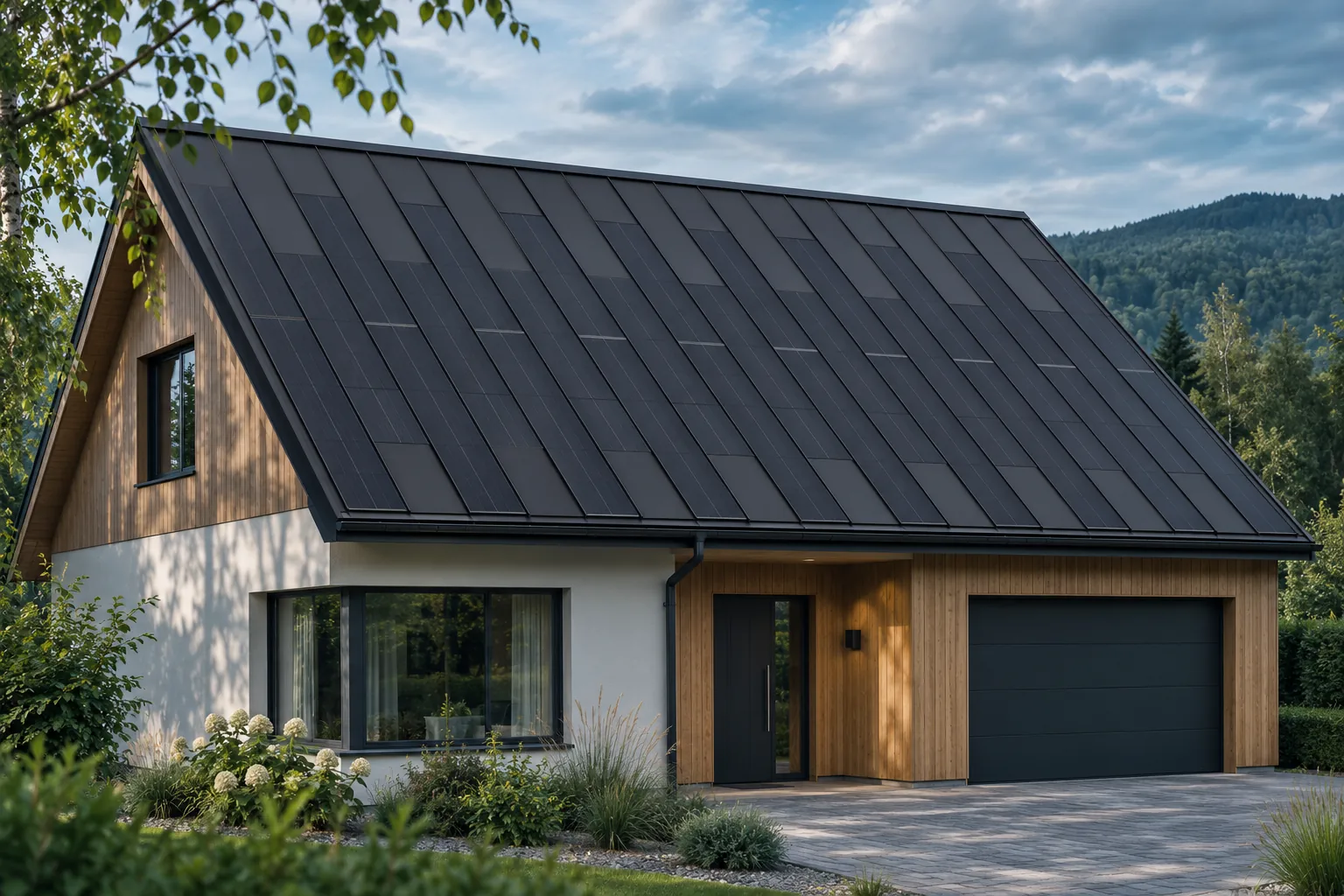
Why can a standard installation shut down?
The cells may still be illuminated, but the house will not receive energy from them in normal mode.
This distinction is worth explaining to all household members. A power outage in the area is no reason to switch cables yourself or bypass safety devices. If the system has a backup function, only the prepared procedure should be used. It should be described during handover and kept alongside the device documentation.
What must a backup solution include?
The scope depends on the chosen system. Devices capable of such operation, a suitable disconnection arrangement from the grid and correctly designed circuits are required. Sometimes the supply covers a selected socket or a designated part of the installation, and sometimes a wider scope of the house. These variants have different capabilities and should not be described under one general label.
Also ask how the switchover takes place. Not every system operates without an interruption noticeable to the devices. If you want to support sensitive equipment, its requirements must be given to the designer. A backup function for household loads is not automatically the same as a power supply ensuring continuity of operation for every device.
Is energy storage always necessary?
There are solutions offering limited backup power from photovoltaics without a battery, under specific conditions. Their operation then depends on the available light and the capabilities of the devices. However, energy at night or stable support of any load should not be expected. The details must be checked in the instructions for the specific set.
A storage unit makes it possible to use previously stored energy, but it also has limitations. The state of charge, usable capacity and output power matter. If the battery was heavily discharged for everyday consumption before the outage, the reserve may be small. The settings should match the intended purpose, not only savings in normal operation.
How to choose loads to be supported?
First identify the essentials: specific lighting, communication devices or other important loads. Then determine their power, operating time and starting requirements. Attempting to supply the whole house without such a selection can significantly increase the cost. A large load can quickly use up the reserve intended for longer support of smaller devices.
Capacity in kilowatt-hours does not indicate whether the system will start every appliance. Power and the method of connection are separate limitations. In multi-phase installations, it is also necessary to check which circuits the backup mode actually covers. A reliable design shows this list unambiguously, instead of promising general energy independence.
What should you check during handover?
The installer should explain how it works, the required settings and the behaviour after the grid returns. The owner needs clear labelling and instructions. If a functional test is planned, it should be carried out according to the procedure and the result recorded. The system should not be tested by randomly disconnecting installation components.
Ask whether the roof can recharge the storage in backup mode and what conditions are required for this. The behaviour after the energy is depleted is also important. These details differ between devices. The answer should relate to the ordered set, not to the possibility of another variant available in the catalogue.
What are the benefits of planning alongside the roof?
With a new integrated roof covering, the location of the inverter, storage and cable routes can be determined from the outset. This makes it easier to prepare the installation for the selected backup scope. The entire roof area does not have to be subordinated to this task, but it is worth including it in the electrical design. This saves later modifications to the building.
The roof provides an aesthetic source of energy, while the backup function is created by a suitably selected arrangement of devices. These two benefits should not be confused. A good quote will show what works during a power failure and what the limits are. Then the owner knows what they can rely on, instead of discovering the installation’s limitations only during a grid outage.
Manufacturers and brands of solar roofs include ML System, Megasol Energie, GAF Energy, MDM NT (MyRoof), Wienerberger Wevolt, SunRoof, Solarstone, Tesla, SolRoof and Electrotile.
7 branches. Materials closer to your project.

- SEROCK — Dzierżenin 34 E
- BŁONIE — ul. Sochaczewska 138A
- RADOM — ul. Grobickiego 8
- ŁÓDŹ — Natolin 8
- OLSZTYN — Barczewo, ul. Prosta 9
- WROCŁAW — ul. Jerzmanowska 10C
- GORZÓW WLKP. — ul. Zielona 33/34