PIR insulation
IKO enertherm MG: preparing the surface for a roofing membrane
At a glance
Before laying the membrane on IKO enertherm MG, check the condition of the glass fleece and the cleanliness of the substrate; work by other crews can alter a surface that was previously accepted, so establish who is responsible for protecting it between stages. The next operation can begin in accordance with the system requirements only once the condition of the substrate has been confirmed. Before starting work on a flat roof under a synthetic membrane, establish the unloading point and the sequence of execution. A key detail is how the membrane connects to the fleece-faced boards, so the crew should have a roof cross-section showing the confirmed method of fixing the membrane, and not just a list of purchased materials.
Preparation of the working section
The insulation thickness and the condition of the surface must be confirmed before the covering is installed, because a discrepancy revealed only after cutting means material losses. The detail decisions are passed on by the roof designer together with the specific synthetic membrane.
The product itself and the scope of its data
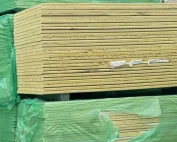
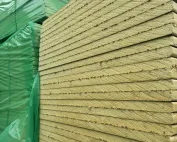
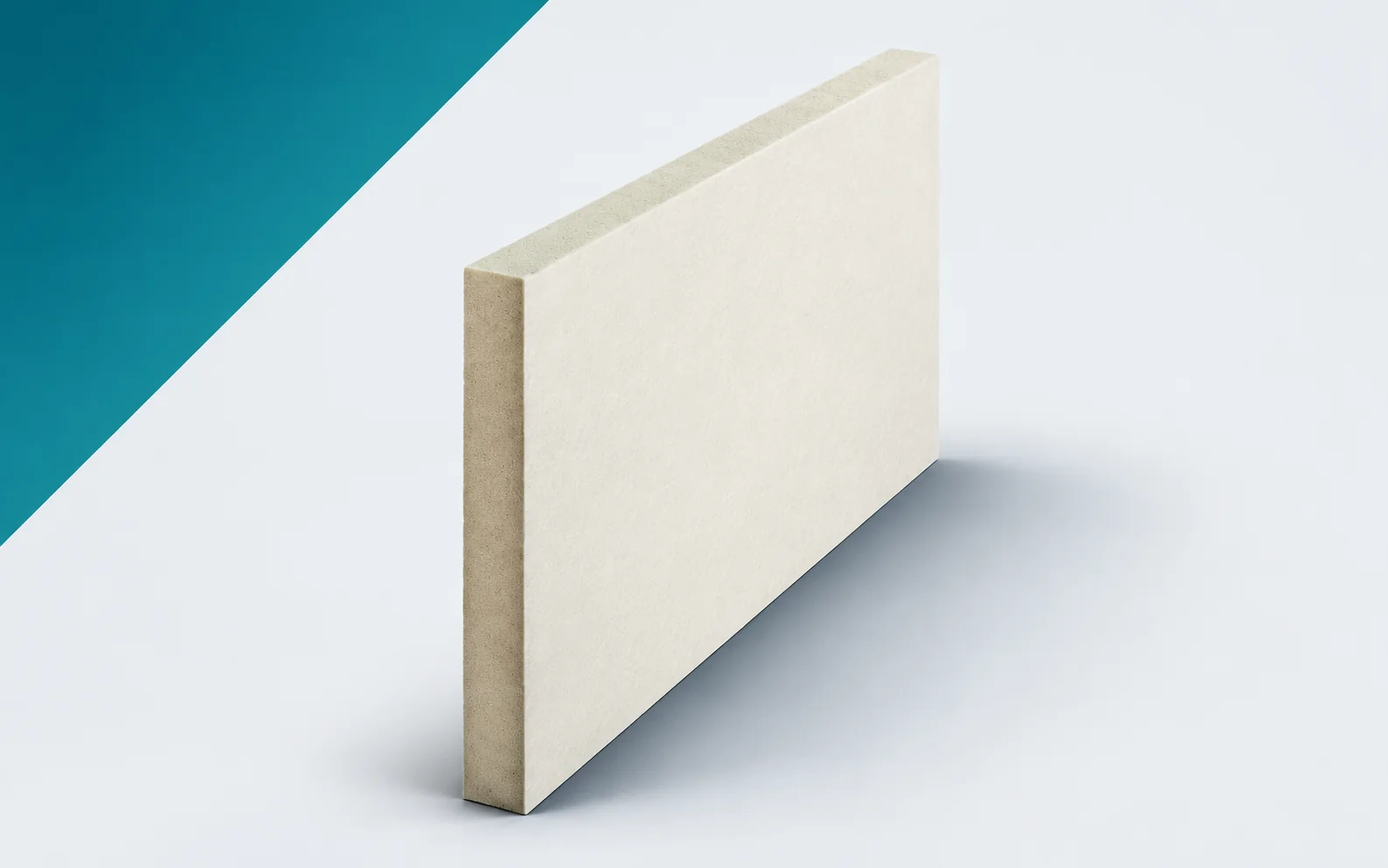
When allocating IKO enertherm MG to workstations, link the thickness to the correct RD: for 120 mm it is 4.80 m²K/W, for 100 mm — 3.80 m²K/W. The 120 mm boundary also separates the declared conductivity λD: thinner boards have 0.026 W/(m·K), and the others 0.025 W/(m·K). According to the manufacturer, this is the variant intended for synthetic membranes. The PIR core is faced on both sides with a perforated, coated glass fleece, whose condition must be preserved during handling. The data for the finished product, not the core alone, include compressive stress of at least 150 kPa and reaction to fire E.
A calculation to help with planning
An IKO enertherm MG layer with an area of 48 m² and a thickness of 100 mm corresponds to a geometric volume of 4.80 m³ in a perfectly full field. Delivery may require a different transport volume because of packs and allowance, and the calculation does not give the permissible load on the structure at the storage location. The material requires support that protects it against point loading, while maintaining access to the contact area between membrane and fleece facing. The volume serves for planning space and does not replace the principles of safe support of the material.
Before laying IKO enertherm MG under a synthetic membrane, the roof cross-section with the membrane fixing method must be confirmed, because this determines how work proceeds on the coated glass fleece. The lambda declaration of 0.026 below 120 mm and 0.025 from 120 mm alone helps to distinguish the variant, but does not say how much surface has actually been prepared. After breaking full packs, the MG marking must remain legible so that the board is not confused with another variant.
Decision before replicating the layout
Before the first section, it is worth establishing whether the project includes the selection of MG thickness for the required thermal resistance and the chosen covering. The second possibility under consideration is a reassessment of the entire system following a proposal for a different facing, if this results from an agreed change. Checking the first section with IKO enertherm MG should cover the membrane connection to the glass-fleece facing, and not only the easy unobstructed area. A particular mistake would be to attribute to the MG board the lambda of 0.022 that is proper to another variant. The result should be assessed by the roof designer with the specific synthetic membrane before the team moves on to a larger scope. After the change, the MG description covering thickness, format and the way the membrane is worked must be updated so that delivery and the cutting station work to the same data.
What to check during fitting
When laying IKO enertherm MG, keep a simple butt joint of the boards under the continuous covering layer; handle the boards without damaging their perforated, coated glass fleece. The layer build-up must provide support and protection against point loading. Before covering, record the MG designation and the condition of the fleece at the place where the work is being carried out. Separately check the interface between the membrane and the boards’ fleece facing, where continuity is most easily lost when cutting or changing the direction of work.
Delivery matched to the team’s capacity
Delivery of IKO enertherm MG should correspond to the scope that can be prepared and secured, and the material layout should be based on the MG description covering thickness, format and the way the membrane is worked. Where the membrane meets the fleece-faced surface, access must be left so that acceptance does not require moving the entire delivery. The working break must take into account the covering with the synthetic membrane in the agreed installation and the protection of the open boundary; after a change of front, one returns to the set of requirements for the coated fleece and the waterproofing. The boards remain identifiable by variant, not by where the pack was placed.
Handover of the completed layer
Handing over a flat roof for a synthetic membrane requires checking the condition of the works against the drawing and the agreed corrections. For IKO enertherm MG, the basis for identification is the record of the MG designation and the condition of the fleece before covering. It should be noted whether the completed scope allows the thickness and a compatible method of connection to the membrane to be selected. The next team should receive a roof section with the confirmed method of fixing the membrane and information on places requiring care. Acceptance does not end with establishing that insulation is present – it is worth recording how the membrane connection to the fleece-faced surface was made and who approved this part. Polyurethane insulation is then handed over as a checked part of the works, and not merely as occupied site area.
7 branches. Materials closer to your project.

- SEROCK — Dzierżenin 34 E
- BŁONIE — ul. Sochaczewska 138A
- RADOM — ul. Grobickiego 8
- ŁÓDŹ — Natolin 8
- OLSZTYN — Barczewo, ul. Prosta 9
- WROCŁAW — ul. Jerzmanowska 10C
- GORZÓW WLKP. — ul. Zielona 33/34