PIR insulation
PIR on site: receiving, storing and tracking board quantities
At a glance
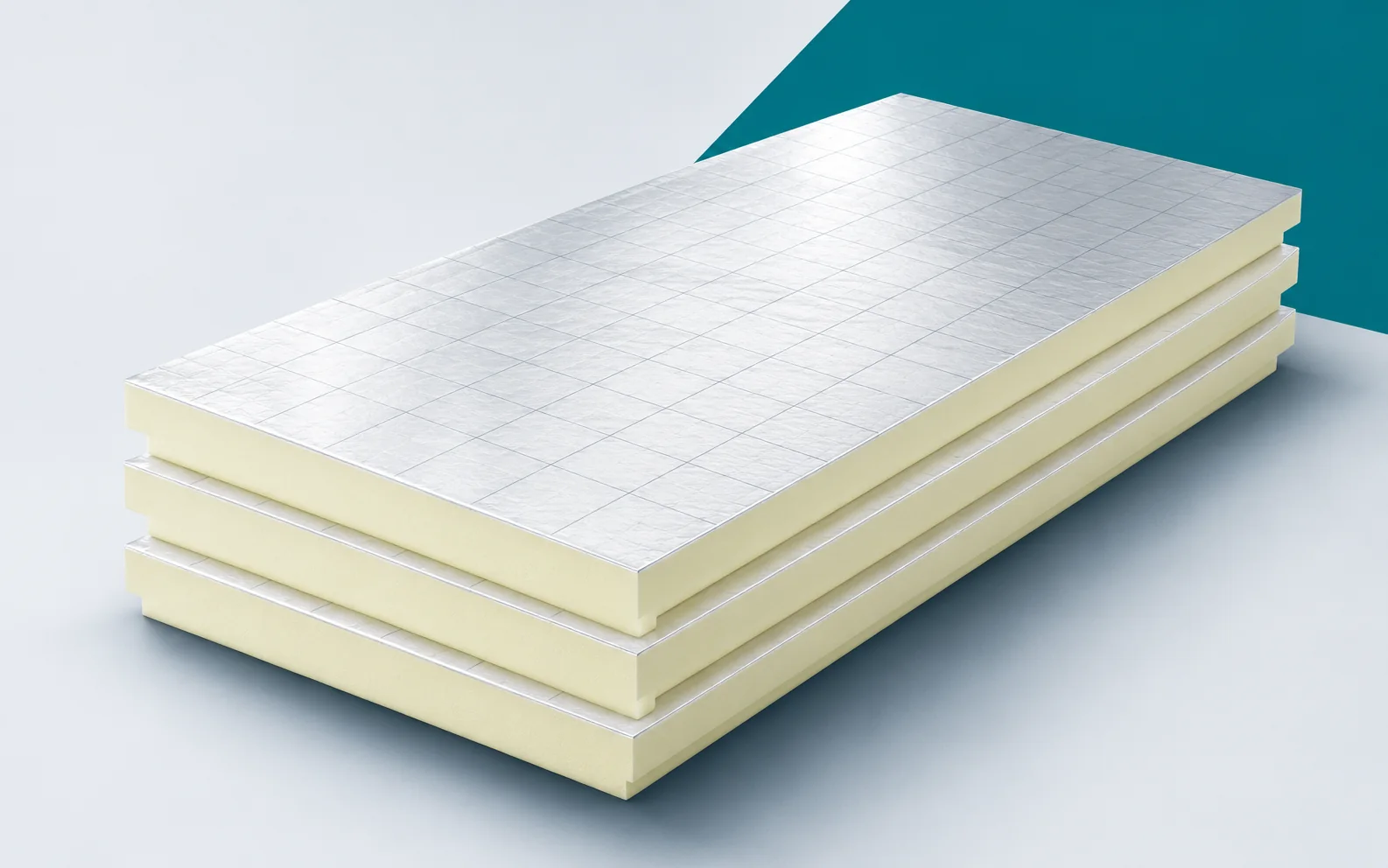
The organisation of the material affects the quality and the pace of the thermal insulation. PIR boards should arrive on the prepared site in the agreed variant. Receiving the packs, protection from the weather and a cutting plan help to limit losses. It is also worth keeping information about the batches from the outset. PIR boards can look similar yet have different facings, strength and intended use. Before purchase, a current technical data sheet, a declaration of performance and installation instructions are needed. The label should be checked before laying out the boards in different zones. Establishing later where an incorrect delivery was used can be considerably more difficult. On accepting the delivery, the markings should be compared with the material list for the given zone.
The document describes the correct variant
Boards differing only in a fragment of their name may have a different application. It is worth keeping photographs of the labels and the storage location of individual batches. If a discrepancy occurs, the material can be excluded before use. Checking at the outset limits the scope of later searching for elements installed in the wrong place.
Comparable scope of offers
Offers should be compared for the same task. The same thickness does not ensure equal thermal resistance, and the same lambda does not guarantee compatibility of the facing with the adhesive. Material settlement should take into account the established covering area.
The number of gross square metres delivered does not always describe the area of the finished system. Before settlement, it is worth agreeing whether the quantity refers to gross area, covering area or the finished scope of works. Edge profiles and cut-offs can affect the utilisation of the boards. It is good to separate installed material, reserve stock and waste. Not every difference means an error, but it should have an explanation. Such a record makes it easier to assess actual consumption without comparing unequal units.
Format and organisation of delivery
A large format can reduce the number of elements to be laid. A small one makes it easier to carry in narrow spaces and to work on a divided surface. The storage location must protect the material from water and damage.
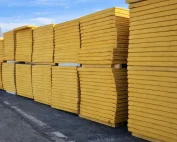
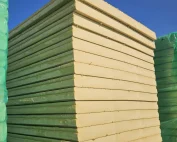
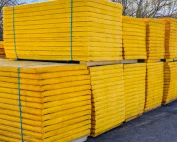
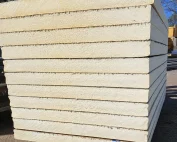
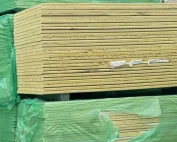
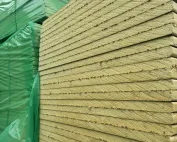
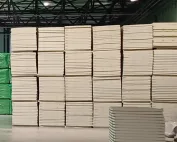
It is worth arranging the packs so that they do not require repeated moving. The storage area should be prepared before the lorry arrives. The boards should be protected against water and damage in accordance with the product requirements. It must remain possible to take the correct batches without knocking over the entire stock. A well-thought-out sequence reduces the number of times the material is handled. In practice, this helps to preserve the edges and to supply the crew with components in the condition needed for installation.
Cutting plan and edge joints
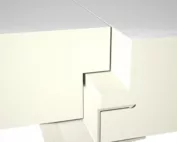
Cutting to size makes it possible to use full boards in repetitive locations and to reduce waste. A square edge, a rebate and a tongue-and-groove joint require the adjacent components to be properly matched. For repetitive cuts, a simple plan for using offcuts can be prepared.
Every piece used must retain the dimension and condition needed for correct contact. Offcuts should be set aside according to dimension and edge condition. They may be useful in planned locations, but they should not create a random mosaic in an important detail. The cutting of a repetitive field can be checked on the first rows. After that, it is easier to reduce waste without worsening the joint layout. Material savings should result from preparation, not from using every fragment at any cost.
Materials at the interface between layers
Most ambiguities arise at the boundary between materials. The tape must work with the facing, the adhesive with the substrate, and the fixing with the structure. Accessories should reach the site before the stage at which they are needed.
The absence of the correct tape should not lead to covering up sealing that has not been carried out. Tapes, adhesives and fixings should be issued in line with the stage of the works. The absence of the correct component should not lead to the use of a random substitute. It is worth checking the expiry date and the storage conditions of the accessories in accordance with the documentation. The board may be correct, and the joint may still be incorrect. A complete delivery helps maintain the pace without omitting functions that will later be covered up.
Cost of use and subsequent maintenance
The cost of complete insulation includes not only the purchase of boards. Substrate preparation, labour, offcuts, supplementary components and protection of the works all matter. It is worth describing the remaining stock by variant and thickness.
This makes it easier to use the material later without confusing it with a board of a different function. After completion, it is worth describing the remaining full boards and useful offcuts. Information on thickness and variant allows their further use to be assessed. Stock with different facings should not be mixed merely because it looks similar. The installation documentation should, however, indicate the arrangement actually executed. This facilitates later repairs and reduces guesswork on the next delivery to the same site.
Example of checking the quantity of material
Example of a quantity take-off: for an assumed area of 180 m² and a full board of 1200 × 600 mm, pure geometry gives at least 250 pieces. For the 2400 × 1200 mm format, this would be at least 63 pieces. The calculation does not include losses on offcuts, the edge profile or the actual covering area. It is not a ready order. It only helps to check the scale of the delivery, which must then be corrected in accordance with the cutting plan and the requirements of the selected product. Polyurethane boards are worth buying according to the exact designation, not the appearance: the board has its own purpose and installation technology, and polyurethane foam for gaps is a separate component. The offer should therefore separate the boards from the sealing materials.
7 branches. Materials closer to your project.

- SEROCK — Dzierżenin 34 E
- BŁONIE — ul. Sochaczewska 138A
- RADOM — ul. Grobickiego 8
- ŁÓDŹ — Natolin 8
- OLSZTYN — Barczewo, ul. Prosta 9
- WROCŁAW — ul. Jerzmanowska 10C
- GORZÓW WLKP. — ul. Zielona 33/34